



 Roller blinds
 Double roller blinds
 Roman blinds
 Venetian blinds
 Vertical blinds
 Panel blinds
 Order Free Samples
 Spare Parts
 How To Guides
 Book A Design Consultation
 Inspiration
 Upload Your Plans
 Curtains
 Double curtains
 Design PVC plantation shutters
 Design Australian PVC plantation shutters
 Design motorised roller blinds
 Design motorised curtains
 Success Stories
 Blogs
Blogs FAQ
FAQ

Blockout Blinds in Real Australian Homes: What They Look Like Installed
A blockout blind is the one product everybody thinks they understand and most people order slightly wrong. The fabric is the easy part — it's opaque, full stop. The result in the room depends on the fit, the colour and what you put around it. These are real homes with our blockout blinds in them, fitted by the people who live there, with the decisions behind each.
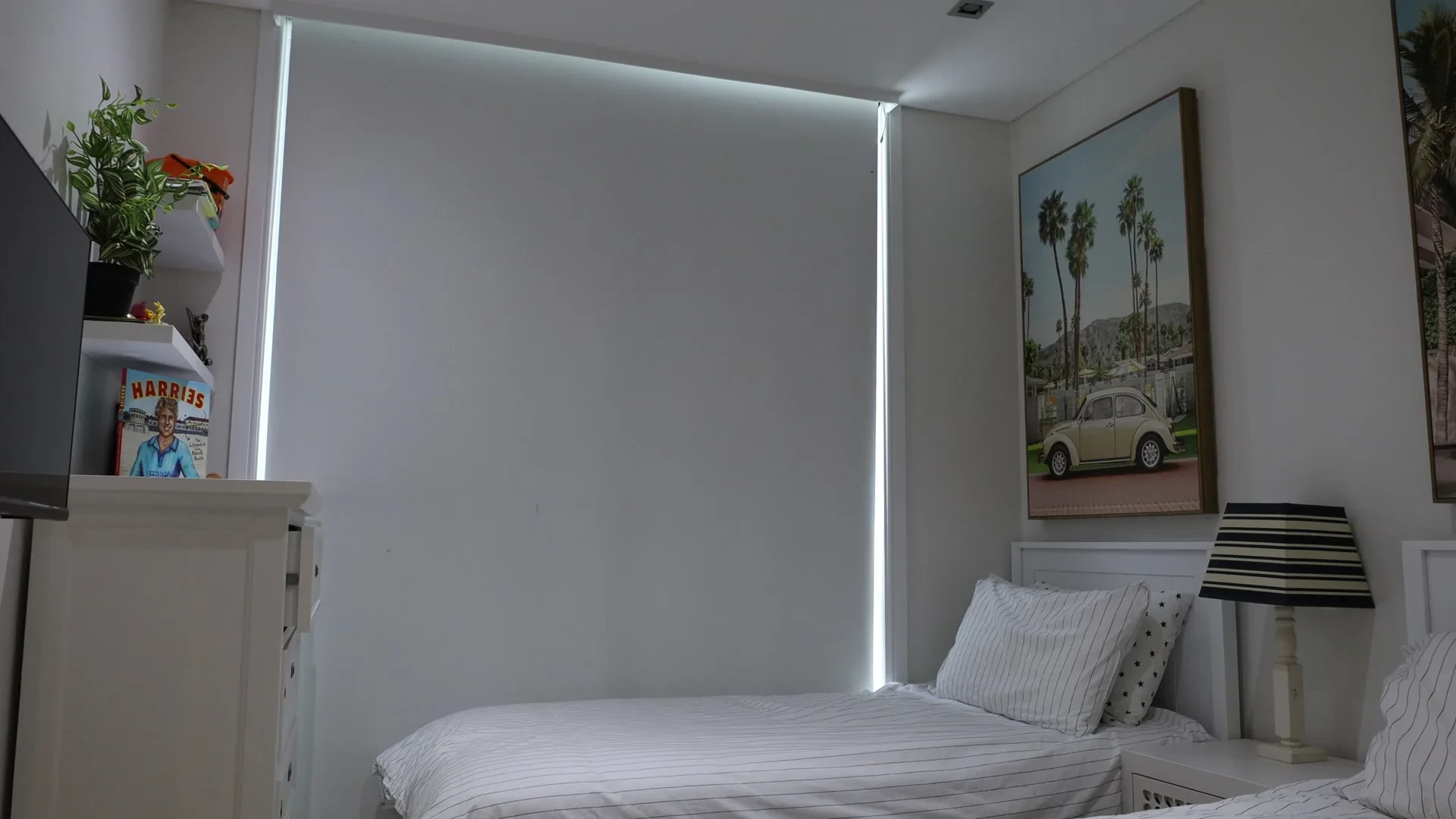
Harries and Emily's kids' room in Bondi, blockout roller down for a day sleep. Recess fit, so there's a fine line of light each side — the trade for a clean look with nothing on the wall.
What "blockout" actually means
Our blockout roller fabrics are coated so that no light passes through the cloth. Not a little, none. Hold a swatch up to the sun and you'll see the outline of your hand and nothing else. That means every bit of light you see in a room with a blockout blind down is coming around the fabric — over the top of the roll, or down the sides — and that's what the examples below are really about. (For the full product rundown — fabrics, fit, options — see the roller blinds buying guide.)
Blockout is also the fabric that does the most for temperature. It reflects summer sun back out through the glass before it warms the room, and it slows heat leaving through the glass on a winter night. Our summer heat guide goes into that side of it.
Example 1: the kids' room, recess fit
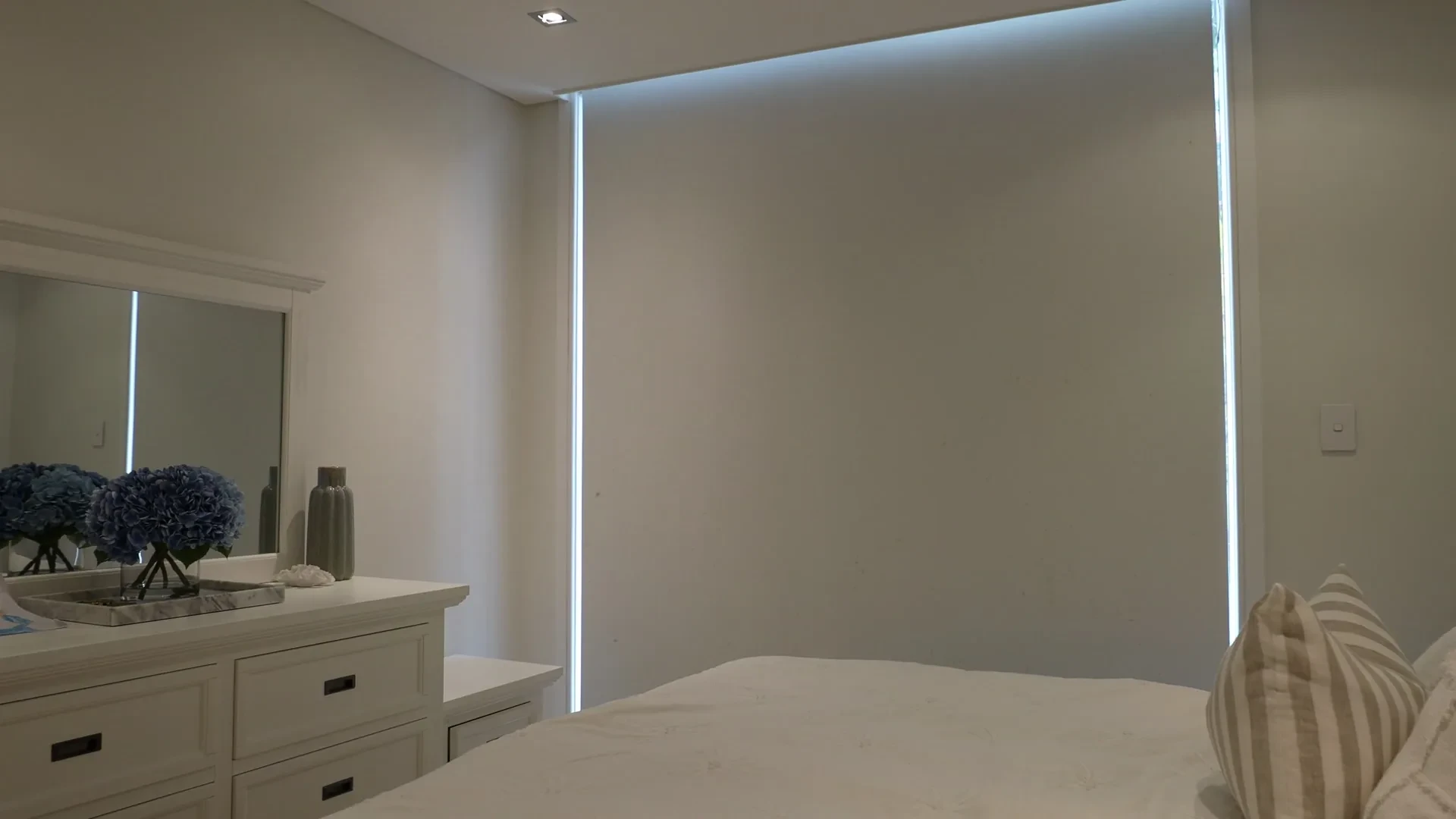
The same room from the bed. The blind sits inside the window frame; the light at the edges is what a recess fit leaves.
A light grey blockout roller, recess fitted inside the window opening. This is the most common way people order a blockout and it's a good result: dark enough for a day sleep, neat, nothing on the wall. The bright lines you can see down the left edge and across the top are the compromise — a recess-fit blind is a little narrower than the opening, and the roll sits below the top of the frame. A face fit with a pelmet would close both. For a kids' room that also has to be a bright play room by day, the recess fit is a fair call.
Colour note: a pale blockout is exactly as opaque as a black one, but pale fabric glows a little where light hits its edges, so it reads brighter in the room than a charcoal would. If darkness were the only goal, go darker.
Example 2: the black blockout, bedroom
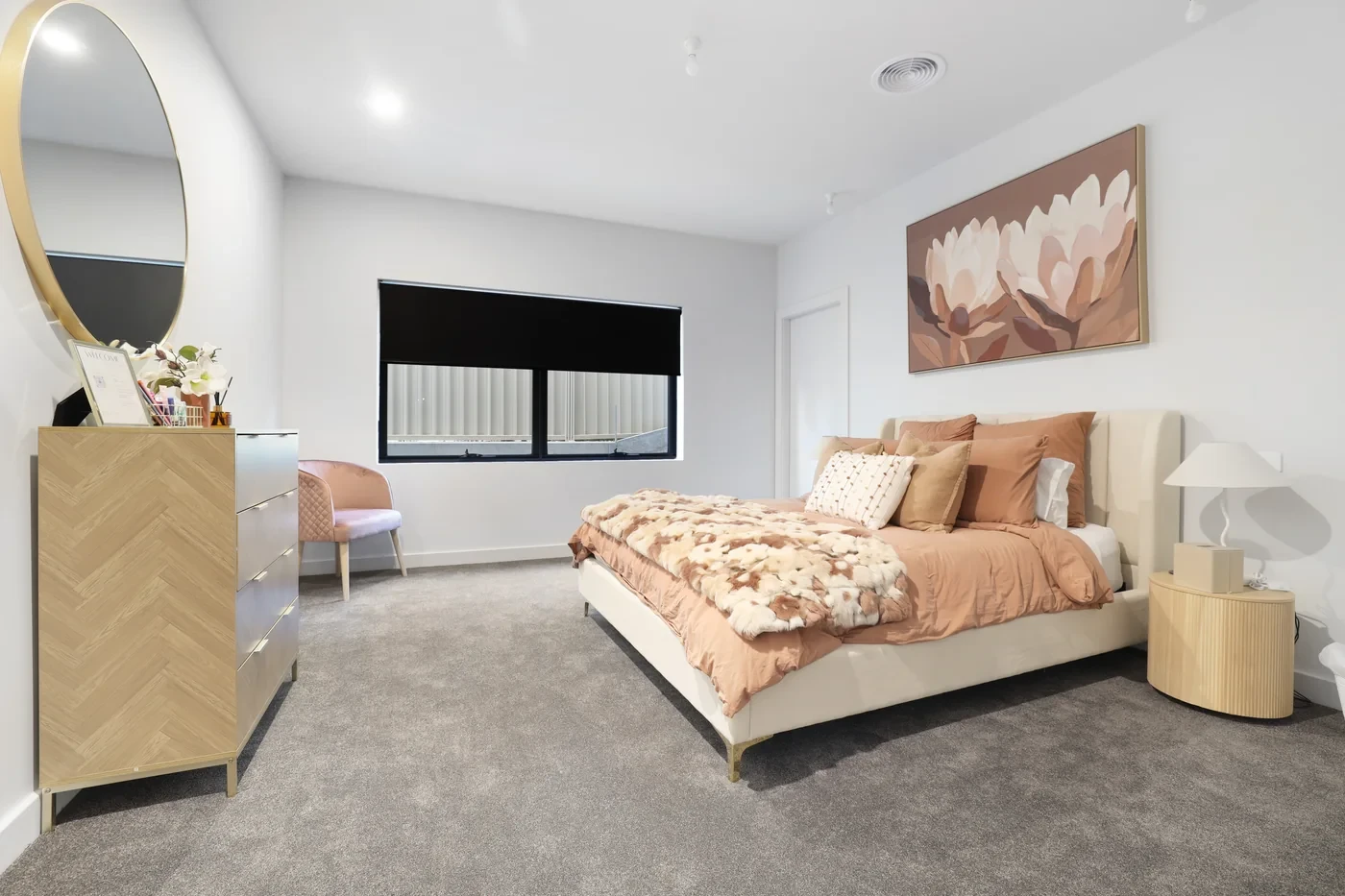
A black blockout roller, rolled up, over a bedroom window at a customer's home. Up, it's a slim dark bar above the glass; down, it's about as dark as a single blind gets.
The opposite colour choice. A black blockout roller on a small bedroom window, photographed rolled up so you can see how little space the roll takes. Same fabric family as the grey one above, but when it's down the dark colour means the edges don't glow, so the room reads darker for the same fit. Against white walls the black bar is a deliberate accent that picks up the window frame.
If you're choosing between two colours for a room that has to be dark, this is the tie-breaker: go darker. Order both as free samples, tape them to the window at midday, and look at the edges rather than the middle.
Example 3: blockout behind a sheer
The living-room version. You don't notice the blockout by day because it's rolled up behind a sheer curtain; at night it comes down and the room is private and dark. This is the setup in most of the new homes we photograph, and it's the answer when you want a blockout's performance without a blockout's look. Our guide on layering sheers over rollers covers the clearances and the install order.
And when it's a wide window rather than a single one, the usual move is to split it into two or three blinds side by side, face fitted so the fabrics overlap the openings and meet each other. One wide roller is heavy and its chain is a chore; three narrower ones on one remote — a bank like this is the strongest case for a motorised roller — drop together at the press of a button.
Where blockout fabric goes beyond rollers
The same coated blockout fabrics run through a few other products, which matters if a roller isn't the right shape for the window:
- Double roller — blockout behind, sunscreen or light-filter in front, one bracket. The day-and-night answer for a room you actually live in.
- Roman blind — blockout fabric that folds up in soft pleats instead of rolling. More furnished than a roller; more expensive too, because there's a lot more sewing in it.
- Panel glide — wide flat blockout panels on a track, for sliding doors where a roller's roll would get in the way.
- Blockout curtain — the softest option, and the tightest seal, because fabric hangs past the window on every side.
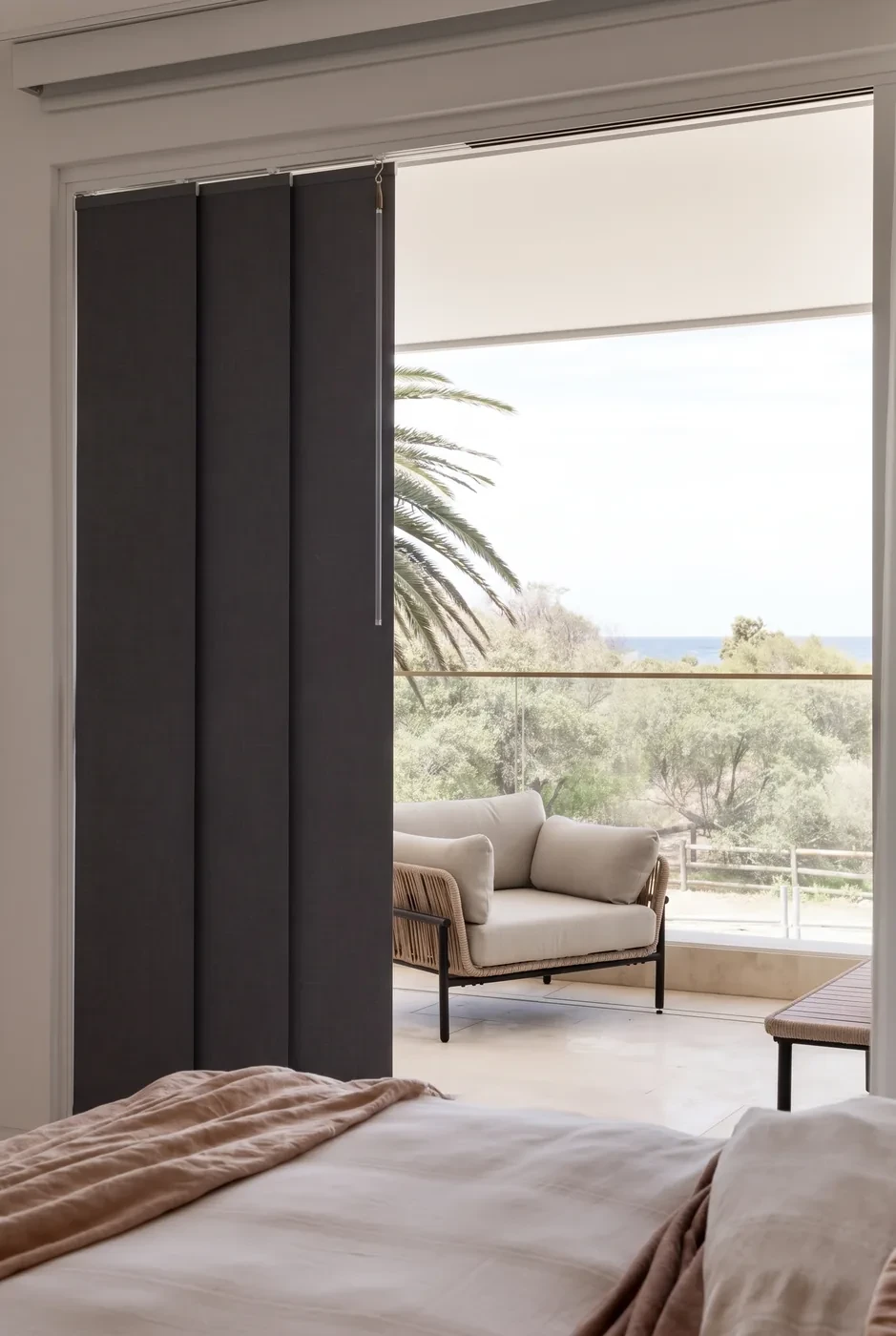
A charcoal panel glide on a bedroom slider — our render on a real room. Panels in a blockout fabric do the roller's job on an opening a roller can't handle.
Getting the same result at your place
- Decide the fit first. Recess fit for neat and nothing on the wall (fine lines of light at the edges). Face fit, about 50mm wider each side, when the room has to be dark. Add a pelmet to close the gap over the top of the roll.
- Pick the colour for the edges, not the middle. All our blockouts are opaque; darker ones show less glow around the sides (colour guide).
- Put the chain where it's safe. Away from the bed or cot, tensioner fitted — or skip the chain and motorise.
- Measure and order. Our measuring guides take ten minutes; the Perfect Fit Guarantee is an optional paid add-on: we video call you to check your numbers before we make the blind. Blinds are dispatched in 8–15 business days.
- Fit it. Two brackets, four screws (yours — every wall is different), a level, twenty minutes.
Common questions
Do blockout blinds block 100% of light?
Through the fabric, yes. Around the edges, no — a recess-fit roller leaves a slim line of light each side and a little over the top of the roll. Face fit with a pelmet gets you closest to total darkness from a single blind; a blockout curtain in front gets the rest. Privacy is a different question, covered in how to choose blinds for privacy.
Are white blockout blinds as good as black ones?
Equally opaque. A white one glows slightly at the edges where light bends around the fabric, so the room reads a little brighter. If darkness is the priority, go darker.
What's the difference between blockout and blackout blinds?
Nothing — two names for the same coated, opaque fabric. Australia mostly says blockout.
Are blockout blinds good for hot rooms?
They're the most effective internal blind for heat, because they stop the sun landing inside the room and reflect it back out. Keep them down through the hot hours.
Can I see these blinds anywhere in person?
We're online-only, but every photo on this page is a real customer's home. Free samples let you see the actual fabric in your own light.
Order free blockout samples
Then build the blind in the roller blind configurator. Made to measure in Australia, five-year warranty. More real homes in our success stories.
You may also like

You may also like
Subscribe for new fabrics and install tips.
One email a month: new fabrics, install tips, the occasional honest before/after.
No spam, no daily-deal noise.

It’s never too early to consider window furnishings when you’re planning on renovating or building. Our expert team of design consultants can help create unique solutions and seamless designs and even quote directly off your house plans.





More Info
InspirationAbout UsContact UsOur ArticlesSuccess StoriesPerfect Fit GuaranteeDelivery InformationCustomer ReviewsFrequently Asked QuestionsGet in Touch
Address: 16 Bradwardine Road, Robin Hill NSW 2795
Email: hello@homeblindsaustralia.com.au
Phone: 1300 195 797
More Info
InspirationAbout UsContact UsOur ArticlesSuccess StoriesPerfect Fit GuaranteeShipping & Return PolicyCustomer ReviewsFrequently Asked QuestionsGet in Touch
Address: 16 Bradwardine Road, Robin Hill NSW 2795
Email: hello@homeblindsaustralia.com.au
Phone: 1300 195 797
© Copyright Home Blinds Australia 2026. All Rights Reserved.
Payments Accepted:
