



 Roller blinds
 Double roller blinds
 Roman blinds
 Venetian blinds
 Vertical blinds
 Panel blinds
 Order Free Samples
 Spare Parts
 How To Guides
 Book A Design Consultation
 Inspiration
 Upload Your Plans
 Curtains
 Double curtains
 Design PVC plantation shutters
 Design Australian PVC plantation shutters
 Design motorised roller blinds
 Design motorised curtains
 Success Stories
 Blogs
Blogs FAQ
FAQ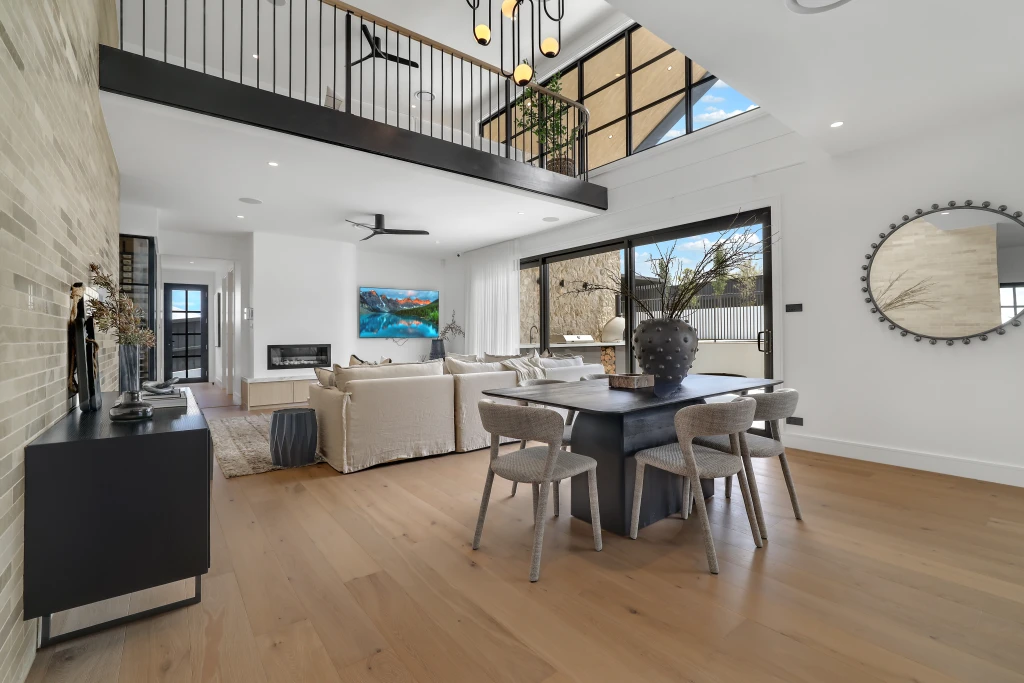

Do Roller Blinds Keep the Heat Out? What Actually Works in an Australian Summer
Yes — a roller blind makes a real difference to a hot room, and the wrong one makes almost none. The fabric, the colour and how tightly it fits the window decide which you get. Here's how to pick for a west-facing room in January.
Sunscreen roller s in a living room. The weave cuts glare and a good share of the heat while you keep the view — this is the summer fabric for rooms you live in during the day.
How heat gets in, in one paragraph
Sunlight comes through the glass as radiation, hits whatever is behind the window and turns into heat. A blind stops the sun landing on your floor and furniture, and reflects or absorbs it at the window instead. It can't stop the glass itself getting hot — that's what external awnings and good glazing are for — but it stops the room becoming a solar oven, which is most of the problem. The more of the window the blind covers and the more it reflects, the better it works.
Blockout, sunscreen or light-filter for heat?
| Fabric | What it does in summer | You lose | Use it in |
|---|---|---|---|
| Blockout | Stops all light and the most heat. Pale backing reflects; the room stays dark and noticeably cooler. | The view and the daylight — it's a shut curtain | Bedrooms, media rooms, a west room you only use at night |
| Sunscreen | A woven mesh that cuts glare and a good share of the heat while you still see out. The tighter the weave, the more it blocks. | Night privacy — with the lights on inside, people can see in (privacy guide) | Living rooms, kitchens, offices, anywhere you're in during the day |
| Light filtering | A closed weave that turns hard sun into a soft glow and gives privacy day and night. | The view (it's translucent, not transparent) and some heat performance vs blockout | Bathrooms, bedrooms that want light, street-facing living rooms |
For pure heat, blockout wins (see it in real homes). For a room you actually sit in at 4 pm, sunscreen is the honest answer: it takes the sting out of the sun and the glare off the TV without turning the room into a cave. A lot of people put a double roller on the worst window — sunscreen at the front for the afternoon, blockout behind for the night — and stop thinking about it.
Colour matters more than people expect
Two blinds in the same fabric, different colours, will perform differently. A light-coloured face reflects sunlight back out of the window; a dark face absorbs it and re-radiates some into the room. So for heat, pale on the window side is better.
The catch is glare and view. With sunscreen fabric, a dark weave is easier to see through and cuts glare harder, which is why the charcoal blinds in the photo above look so good from inside. If your priority is the view and the glare off a screen, go dark. If it's pure temperature in a room you don't look out of much, go light. (More on choosing a blind colour.) Most of our blockout fabrics have a pale backing on the window side whatever colour faces the room — turn the swatch over to check — so with blockout you can usually pick the colour you like.
This is exactly what free samples are for. Tape two colours of the same sunscreen to a west window at 4 pm and put your hand behind each. You'll feel the difference before you see it.
The fit decides how much of the blind's work you keep
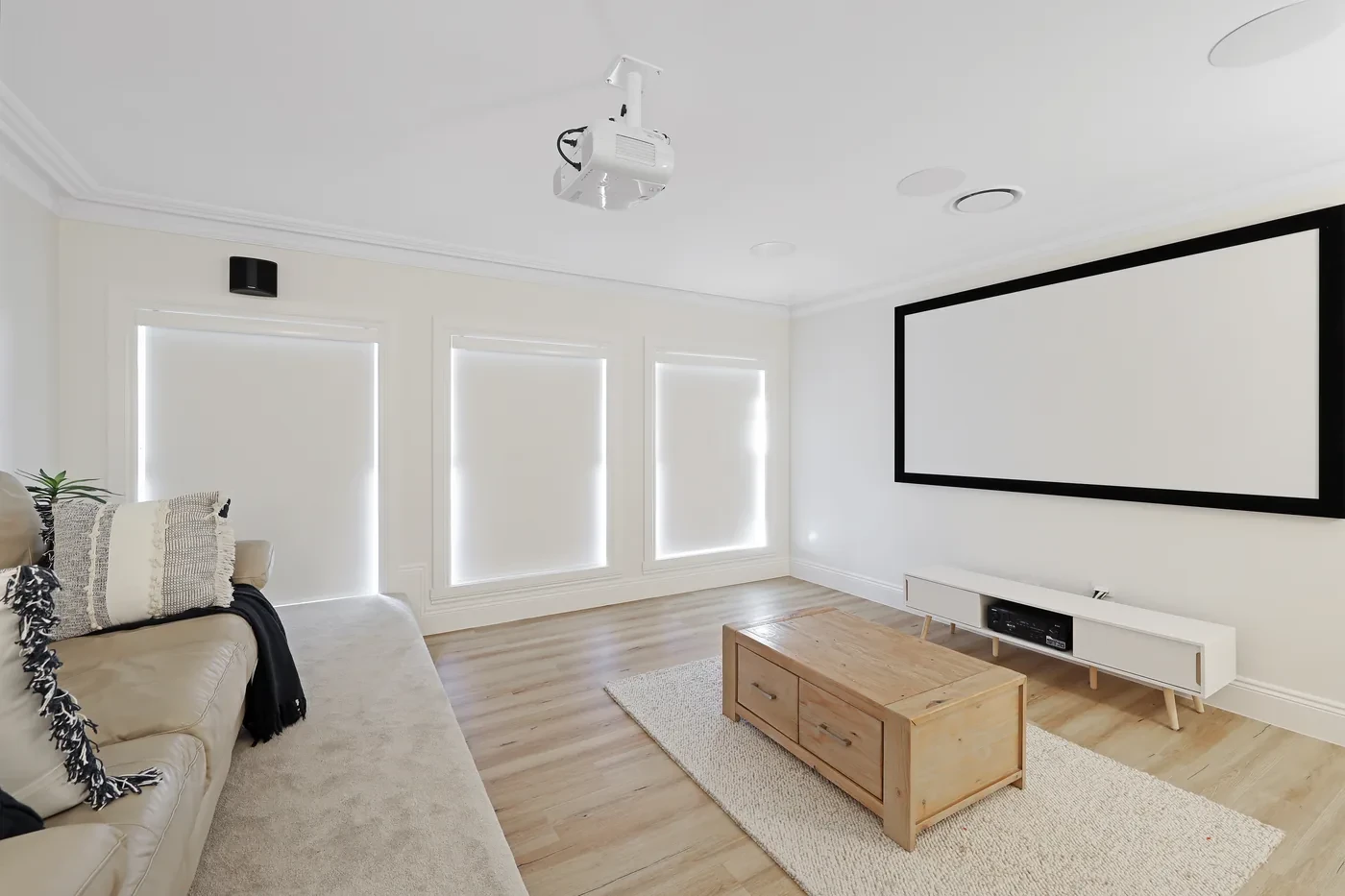
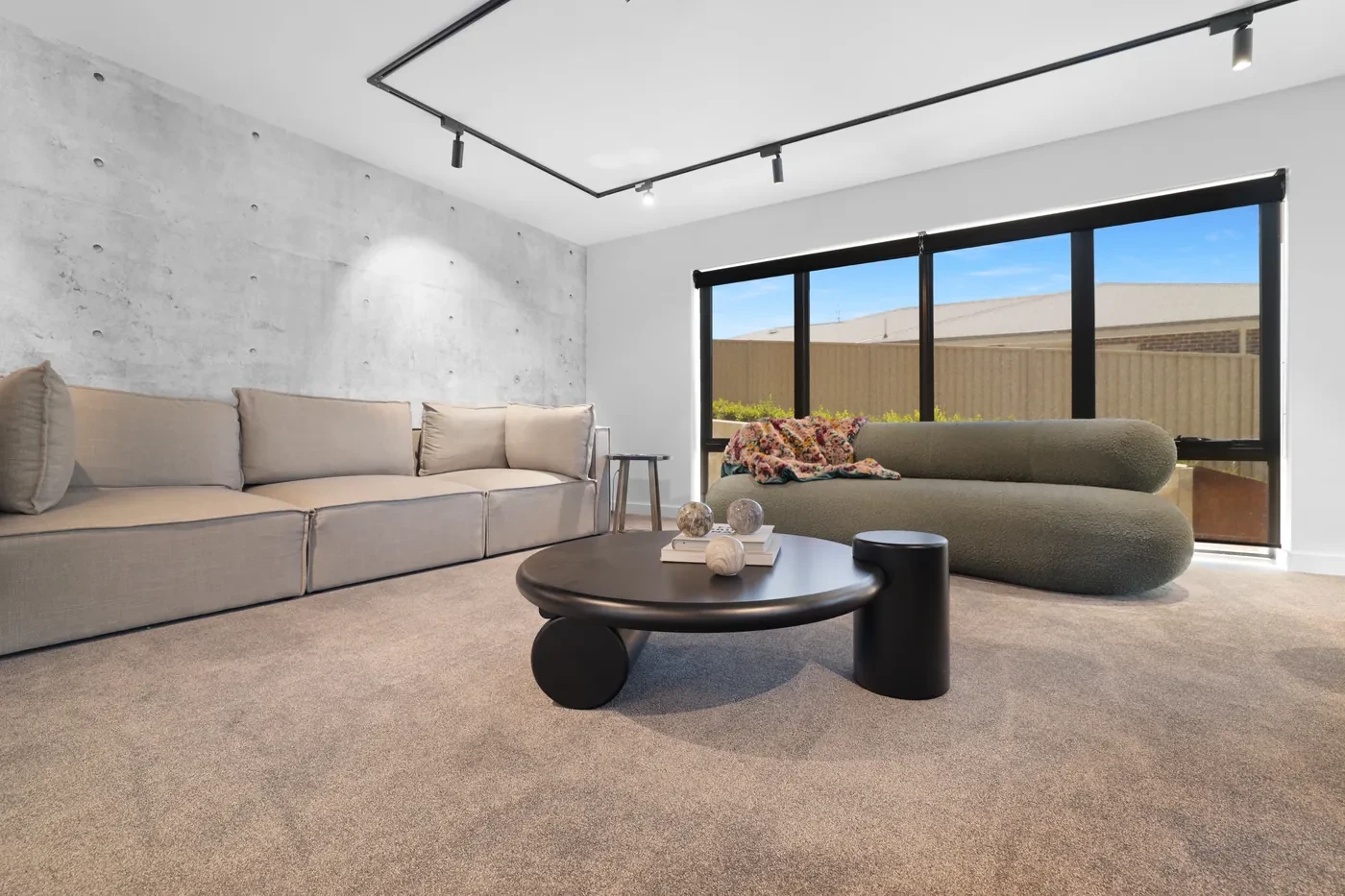
Three white rollers down in a media room. Fitted on the face of the wall so they overlap the openings — no bright edges, no heat sneaking round the sides.
A roller fitted inside the window recess leaves a slim gap each side and the roll sits a little below the top of the frame. On a shaded window that's fine. On a west window in summer those gaps are bright, hot stripes, and the light bouncing around the recess warms the reveal. The roller blinds buying guide walks through recess versus face fit.
- Face fit the hot windows — mount the blind on the wall or architrave above the opening and make it 50mm wider each side. The fabric now covers the whole hole.
- Add a pelmet if the sun clears the top of the roll in the late afternoon. It's a shallow box over the tube; it closes the top gap and hides the hardware.
- Leave it down all afternoon. The blind can only reflect the heat it stops. A blind you drop at 5 pm has already let the room warm up.
A simple plan for a hot room
- North and west windows: sunscreen roller, face fit, medium-to-light colour if temperature is the priority, dark if glare is. Down by lunchtime on hot days.
- Bedrooms that cop afternoon sun: blockout roller, face fit, pelmet. Down before you leave for work. The room you come home to will be several degrees kinder.
- Living room with a view you won't give up: double roller — sunscreen for the day, blockout for the night and the hottest hours.
- Sliding doors: a panel glide in sunscreen fabric or a vertical blind, so you can still get out to the deck.
- Everything: open the house up at night and drop the blinds before the sun reaches the glass in the morning. The blind is half the system; timing is the other half. A motorised roller on a schedule does the timing for you.
What about curtains?
A curtain hanging clear of the glass traps a layer of air, which helps both in summer and winter, and a lined blockout curtain in a west bedroom is excellent. Sheers alone are lovely but do little for heat. The combination that turns up in most of the homes we photograph — sheer curtain in front, blockout or sunscreen roller behind — gives you the soft look and a blind doing the thermal work.
Common questions
Do blockout blinds keep a room cool?
Yes, more than any other internal blind. They stop the sun landing inside the room and their pale backing reflects it. Fit them so they overlap the window and keep them down during the hot hours.
Do sunscreen blinds keep heat out?
They cut a good share of it and most of the glare, while keeping your view. Tighter weaves block more. For the worst west windows, pair a sunscreen with a blockout on a double roller.
Are white or dark blinds better for heat?
A pale window-side face reflects more heat. A dark sunscreen is easier to see through and cuts glare harder. Pick by what you care about most in that room, and test with samples.
Will blinds lower my power bill?
If your air conditioner is fighting a sun-soaked room, keeping that sun out means it runs less. We don't publish a percentage because it depends on your windows, your orientation and your habits — but the physics is straightforward.
Do roller blinds help in winter too?
A blockout roller closed at night slows heat leaving through the glass. Curtains do this better because they trap more air. Open everything on the north side during a winter day to let the free heat in.
Order free sunscreen and blockout samples
Test them on your hottest window at 4 pm, then build the blind in the roller blind configurator. Made to measure in Australia, five-year warranty.
You may also like

You may also like
Subscribe for new fabrics and install tips.
One email a month: new fabrics, install tips, the occasional honest before/after.
No spam, no daily-deal noise.

It’s never too early to consider window furnishings when you’re planning on renovating or building. Our expert team of design consultants can help create unique solutions and seamless designs and even quote directly off your house plans.





More Info
InspirationAbout UsContact UsOur ArticlesSuccess StoriesPerfect Fit GuaranteeDelivery InformationCustomer ReviewsFrequently Asked QuestionsGet in Touch
Address: 16 Bradwardine Road, Robin Hill NSW 2795
Email: hello@homeblindsaustralia.com.au
Phone: 1300 195 797
More Info
InspirationAbout UsContact UsOur ArticlesSuccess StoriesPerfect Fit GuaranteeShipping & Return PolicyCustomer ReviewsFrequently Asked QuestionsGet in Touch
Address: 16 Bradwardine Road, Robin Hill NSW 2795
Email: hello@homeblindsaustralia.com.au
Phone: 1300 195 797
© Copyright Home Blinds Australia 2026. All Rights Reserved.
Payments Accepted:
