



 Roller blinds
 Double roller blinds
 Roman blinds
 Venetian blinds
 Vertical blinds
 Panel blinds
 Order Free Samples
 Spare Parts
 How To Guides
 Book A Design Consultation
 Inspiration
 Upload Your Plans
 Curtains
 Double curtains
 Design PVC plantation shutters
 Design Australian PVC plantation shutters
 Design motorised roller blinds
 Design motorised curtains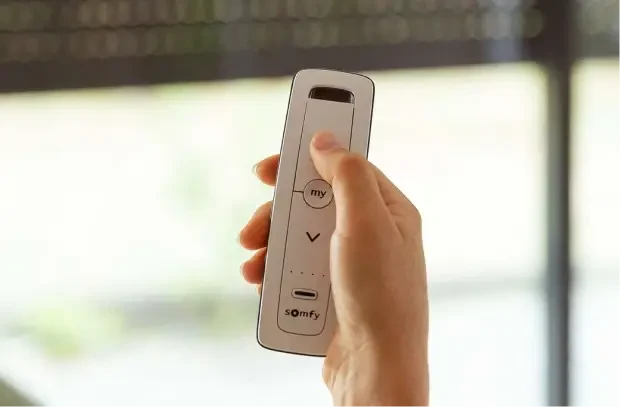
 Success Stories
 Blogs
Blogs FAQ
FAQ

Motorised Blinds and Curtains: Battery or Wired, Somfy or Acmeda, and What It's Like to Live With
A motorised blind is an ordinary blind with a motor inside the tube instead of a chain on the side. You press a button, it moves. That's the whole idea — the decisions are about power (battery or wired), brand (Somfy or Acmeda), and how much control you want (a remote, an app, a schedule, your voice). Here's how we'd walk a friend through it. To see what we motorise and what it costs, go to our motorised blinds page.
What you can motorise
At Home Blinds Australia, the motor is an option you tick while you configure the product. Right now that's:
- Roller blinds — the most common motorised product by a long way. Any of our fabrics, blockout to sunscreen (roller blinds buying guide).
- Double roller blinds — you can motorise one blind or both. Most people motorise the blockout and leave the sunscreen on a chain, or do both so the pair runs off one remote.
- Curtains and double curtains — the track is motorised, not the fabric, so it works with sheers, blockouts or both layers on a double track.
Our roman, venetian, vertical and panel blinds and our plantation shutters are manual — chain, wand or hinge. If you want a dark bedroom on a remote, a motorised blockout roller is the way to do it.
Battery or hard-wired?
| Battery (wire-free) | Hard-wired (240V) | |
|---|---|---|
| Install | Same as a chain blind: two brackets, four screws. No electrician. | Needs power at the window — a licensed electrician, and ideally a new build or renovation |
| Running it | Rechargeable lithium battery inside the tube. Charge with the supplied lead when it slows down; how often depends on the blind size and how many times a day it runs — for most bedrooms that's months between charges | Never think about it |
| Suits | Existing homes, rentals, one or two blinds, anywhere there's no power point near the window | New builds, big banks of blinds, curtain tracks you'll run every day |
| Downside | You'll charge it eventually. A flat battery is a blind that's stuck where it is until you plug it in | The electrician's bill and the cabling — you can't add this after the plaster is on without some mess |
For an existing home the answer is nearly always battery. For a house that's still at frame stage, tell your electrician where the blinds are going and run the cable — you'll never charge anything.
The motors we sell
We use two brands. Somfy is the French company that more or less invented the blind motor; their radio system is called RTS, and their newer motors talk Zigbee. Acmeda is an Australian hardware company whose motor range is called Automate. Both are quiet and reliable. The option list in the roller blind builder looks like this:
| Motor | Brand | Power | Good to know |
|---|---|---|---|
| Automate Wire Free 1.1Nm / 2.0Nm | Acmeda | Battery (Li-ion) | The everyday battery motor. 1.1Nm for standard windows, 2.0Nm for wider, heavier blinds. Minimum blind width about 645mm (1.1) / 745mm (2.0) |
| Sonesse 30 Wire Free 2Nm RTS | Somfy | Battery (Li-ion) | Somfy's battery roller motor. Works with Somfy RTS remotes and the TaHoma hub. Minimum blind width about 710mm |
| Sonesse 28 WireFree Zigbee | Somfy | Battery (Li-ion) | Slimmer tube, two-way Zigbee radio so the app knows where the blind is. Sold on its own product page |
| Automate E6 ARC | Acmeda | Hard-wired | Two-way radio, favourite position, quick limit setting. Minimum blind width about 700mm |
| Sonesse 40 RTS | Somfy | Hard-wired | The classic 240V Somfy motor — quiet, strong, runs all day. Minimum blind width about 595mm |
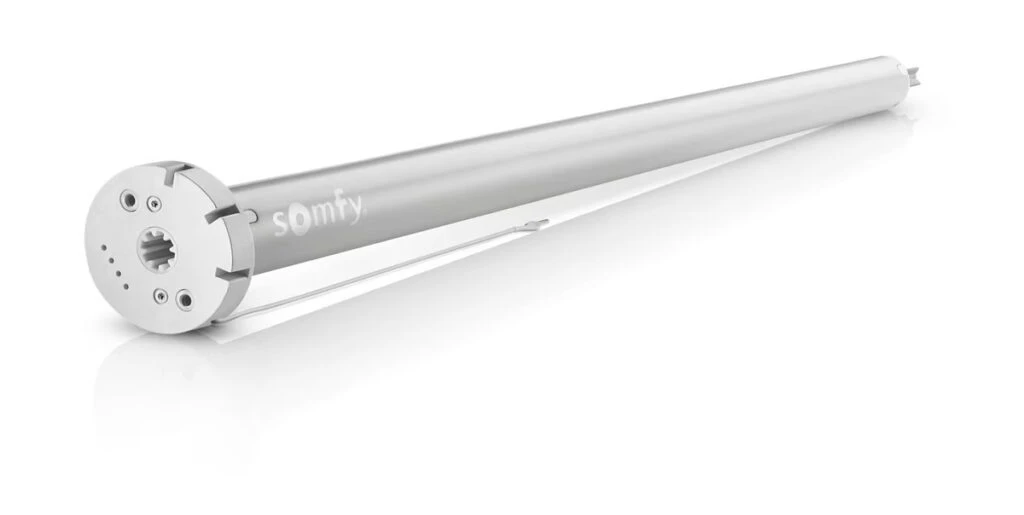
Somfy Sonesse 28 WireFree — battery, Zigbee
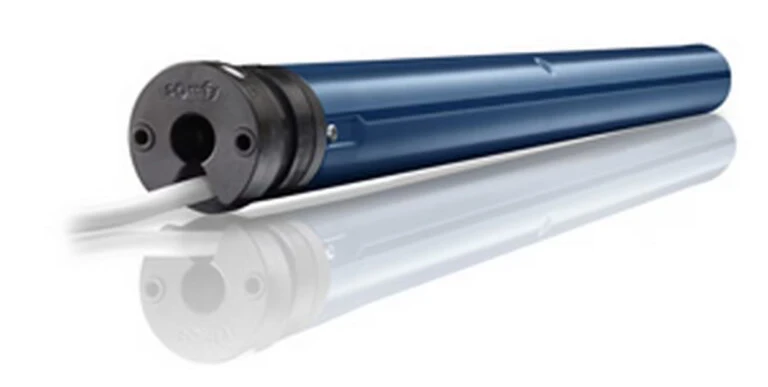
Somfy Sonesse 40 RTS — hard-wired
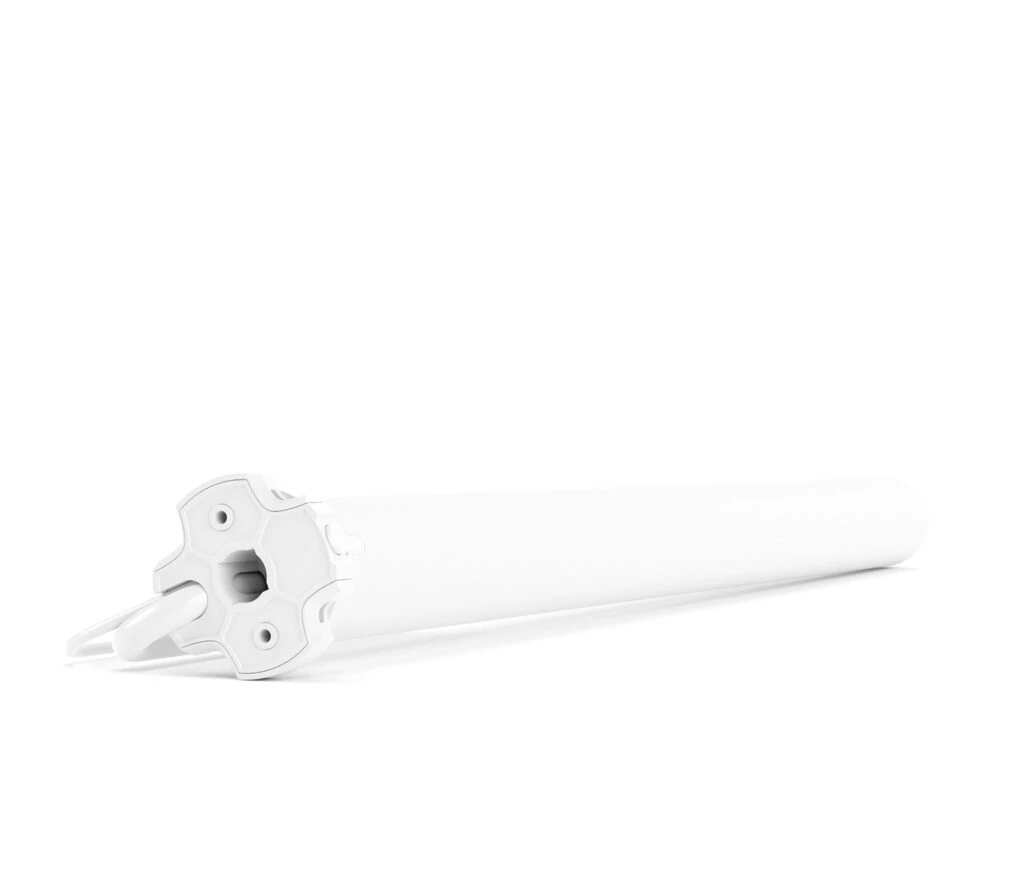
Acmeda Automate E6 — hard-wired, two-way
For curtains, the motor is in the track: a Somfy Movelite battery track or a hard-wired Somfy Glydea 35e track, each with a Situo 1 remote. You pick the track in the curtain configurator.
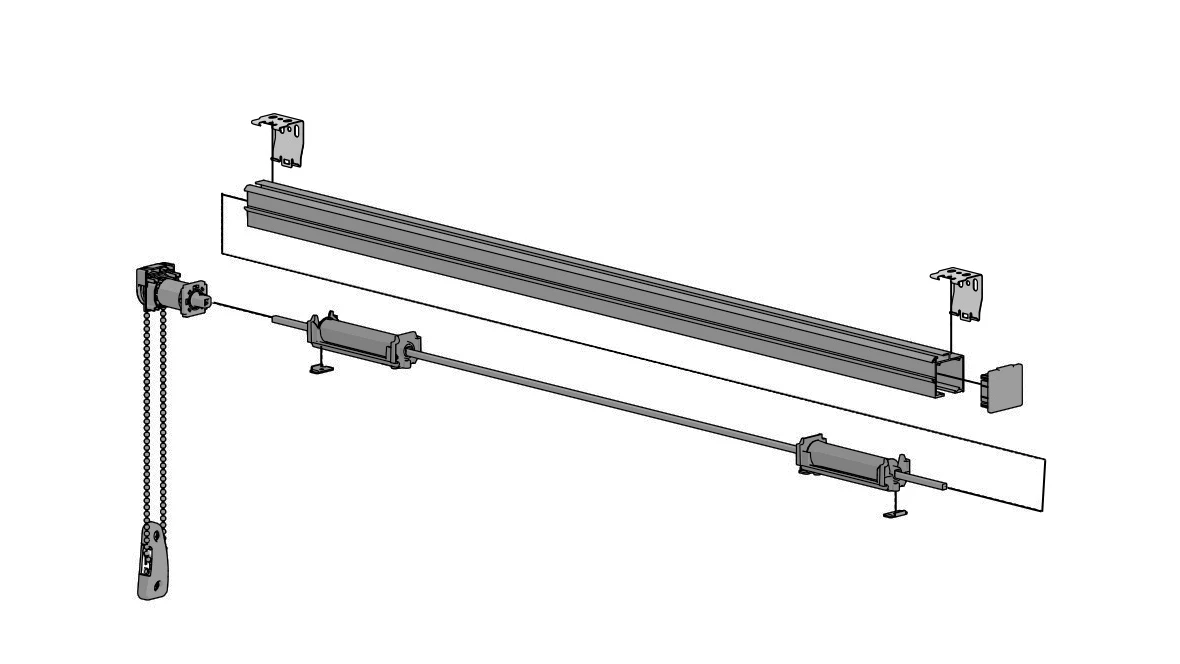
Where the motor lives: inside the tube, between the brackets
Those minimum widths matter. A motor has to fit inside the tube with room for the fabric to wind, so a narrow toilet window can't take one. If your window is narrow, call us before you order and we'll check the motor fits.
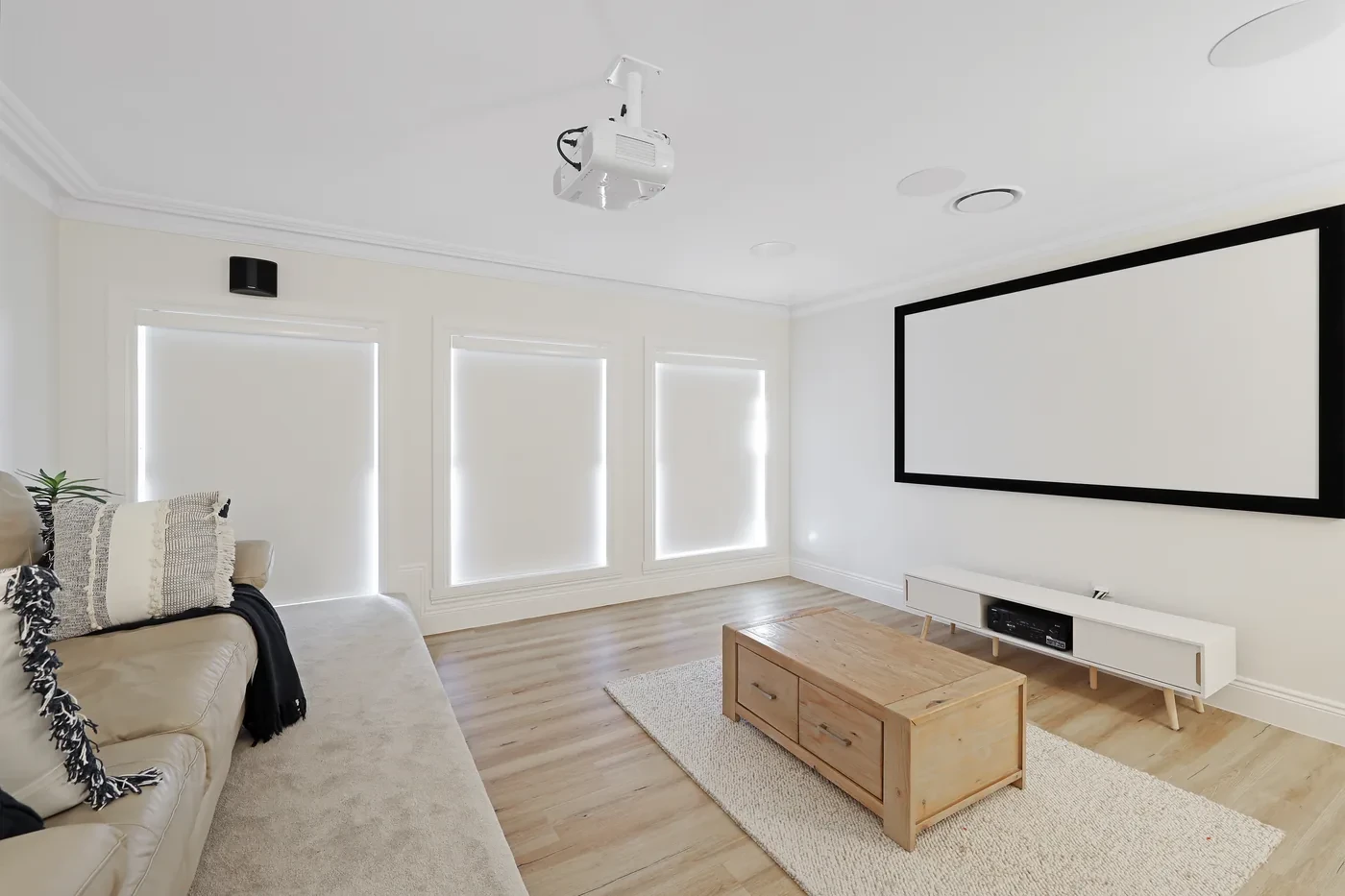
A bank of rollers like this is where a motor pays for itself. One remote channel moves all three at once instead of you working three chains one after the other.
Remotes, hubs, apps and voice
You add a remote when you design the blind (curtain tracks come with one), and for a lot of people that's all they ever use. A multi-channel remote runs several blinds separately or together — bedroom on channel one, living room on two, everything on the "all" channel. Each motor also stores a favourite position: press once and it goes to two-thirds down, or wherever you set it.
If you want the blinds in an app, on a schedule or on your voice, you add a hub. Somfy motors pair with the TaHoma hub, which gives you scenes ("Good morning" opens the bedroom sheers and raises the living room rollers), sunrise and sunset timing, and control while you're away. Acmeda's Automate motors use Acmeda's own hub and app. Both connect to Google and Alexa for voice.
Two honest notes. First, we don't sell hubs, so if the app matters to you, you'd buy one separately. Second, RTS is one-way radio — the remote talks, the blind listens — so an RTS blind can't report its position back to the app without the hub doing some bookkeeping. Zigbee and the Automate E6 are two-way, which is why the app can show you they're actually closed. In practice both work; it's a detail that matters more to the smart-home crowd than to anyone else.
Where a motor makes the most sense
- High or awkward windows. Stairwell voids, windows behind a bath or a kitchen bench, anything you'd need a step for. The chain is the problem; the motor removes it.
- A row of three or more. Anything you'd otherwise adjust one chain at a time, several times a day.
- Kids' rooms. No chain at all is the cleanest answer to cord safety, and you can drop the blind from the doorway without waking anyone.
- Heat and light on a timer. A west-facing living room that lowers itself at midday in summer and raises at dusk does more for the room temperature than any fabric on its own — see our summer heat guide.
- Wide curtain tracks. A six-metre S-fold sheer across a living room is heavy to drag and easy to pull off the runners. On a motor it glides. If the sheer has a roller behind it, motorise the roller first.
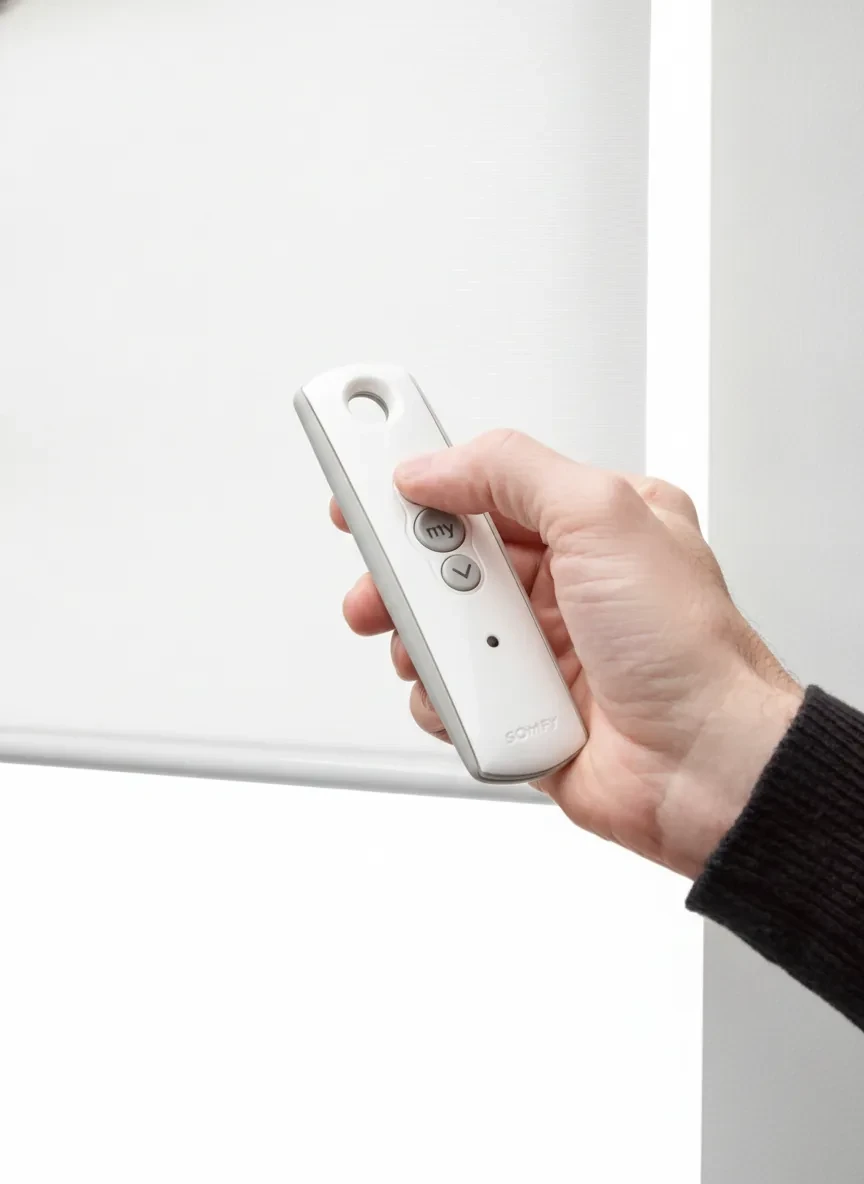
A Somfy remote and a white motorised roller. Up, down, and the "my" button in the middle for your favourite position.
Installing a motorised blind yourself
It's the same job as a chain blind, plus about ten minutes with the remote. The brackets are the same, the measuring is the same, and our how-to guides cover both. The things that are different:
- Charge the battery motor fully before you hang the blind. The charging port is on the motor head; it's easier to reach on the bench than up a ladder.
- Pair the remote and set the limits. The instructions that come with the motor walk you through it — press and hold, blind jogs, set the top, set the bottom. Five minutes per blind once you've done one.
- Hard-wired motors need the electrician first. They run the cable and fit the point; you hang the blind and plug in. Don't wire a 240V motor yourself.
- Fixings aren't in the box. Same as all our blinds: buy screws or anchors for your wall type, because a motorised blind is a little heavier than a manual one.
Motorised blinds are covered by the same five-year warranty as everything else we make. The Perfect Fit Guarantee is an optional paid add-on: we video call you to check your numbers before we make it.
Common questions
Do motorised blinds need an electrician?
Battery motors don't — you install them exactly like a chain blind. Hard-wired motors do, because they run on 240V.
How long does the battery last between charges?
It depends on blind size and how often it runs. A bedroom blockout that goes up and down once a day will go months; a big living-room blind on a schedule will need charging more often. The motor slows noticeably as it gets low, which is your cue.
Can I add a motor to a blind I already have?
Our motors ship fitted inside a new blind, sized to the tube and fabric. If you have an old roller you love, get in touch through the site and we'll tell you honestly whether a new motorised blind is the better path.
Will they work with Google Home or Alexa?
Yes, through the hub — TaHoma for Somfy motors, Acmeda's hub for Automate. The remote works without any hub at all.
Are they noisy?
The Somfy and Acmeda motors we sell are quiet enough to run while someone's asleep in the room. You'll hear a low hum for the few seconds the blind is moving, and that's it.
What happens in a blackout?
A battery blind doesn't notice. A hard-wired blind stays where it was until the power comes back; there's no manual override, so if that worries you, put the bedroom blinds on battery.
Build a motorised roller blind
Pick your fabric, tick the motor, and the builder prices it for your exact size. Or start with free fabric samples and see the full motorisation range.
You may also like

You may also like
Subscribe for new fabrics and install tips.
One email a month: new fabrics, install tips, the occasional honest before/after.
No spam, no daily-deal noise.

It’s never too early to consider window furnishings when you’re planning on renovating or building. Our expert team of design consultants can help create unique solutions and seamless designs and even quote directly off your house plans.





More Info
InspirationAbout UsContact UsOur ArticlesSuccess StoriesPerfect Fit GuaranteeDelivery InformationCustomer ReviewsFrequently Asked QuestionsGet in Touch
Address: 16 Bradwardine Road, Robin Hill NSW 2795
Email: hello@homeblindsaustralia.com.au
Phone: 1300 195 797
More Info
InspirationAbout UsContact UsOur ArticlesSuccess StoriesPerfect Fit GuaranteeShipping & Return PolicyCustomer ReviewsFrequently Asked QuestionsGet in Touch
Address: 16 Bradwardine Road, Robin Hill NSW 2795
Email: hello@homeblindsaustralia.com.au
Phone: 1300 195 797
© Copyright Home Blinds Australia 2026. All Rights Reserved.
Payments Accepted:
