



 Roller blinds
 Double roller blinds
 Roman blinds
 Venetian blinds
 Vertical blinds
 Panel blinds
 Order Free Samples
 Spare Parts
 How To Guides
 Book A Design Consultation
 Inspiration
 Upload Your Plans
 Curtains
 Double curtains
 Design PVC plantation shutters
 Design Australian PVC plantation shutters
 Design motorised roller blinds
 Design motorised curtains
 Success Stories
 Blogs
Blogs FAQ
FAQ

How to Choose Blinds for Privacy: Day, Night and Room by Room
Privacy from a blind comes down to one question most people never ask in the showroom: what does this look like from the footpath at 9 pm with the lights on? A fabric that seems perfectly private at noon can be a lit stage at night. Here's how each blind behaves after dark, and which one to put where.
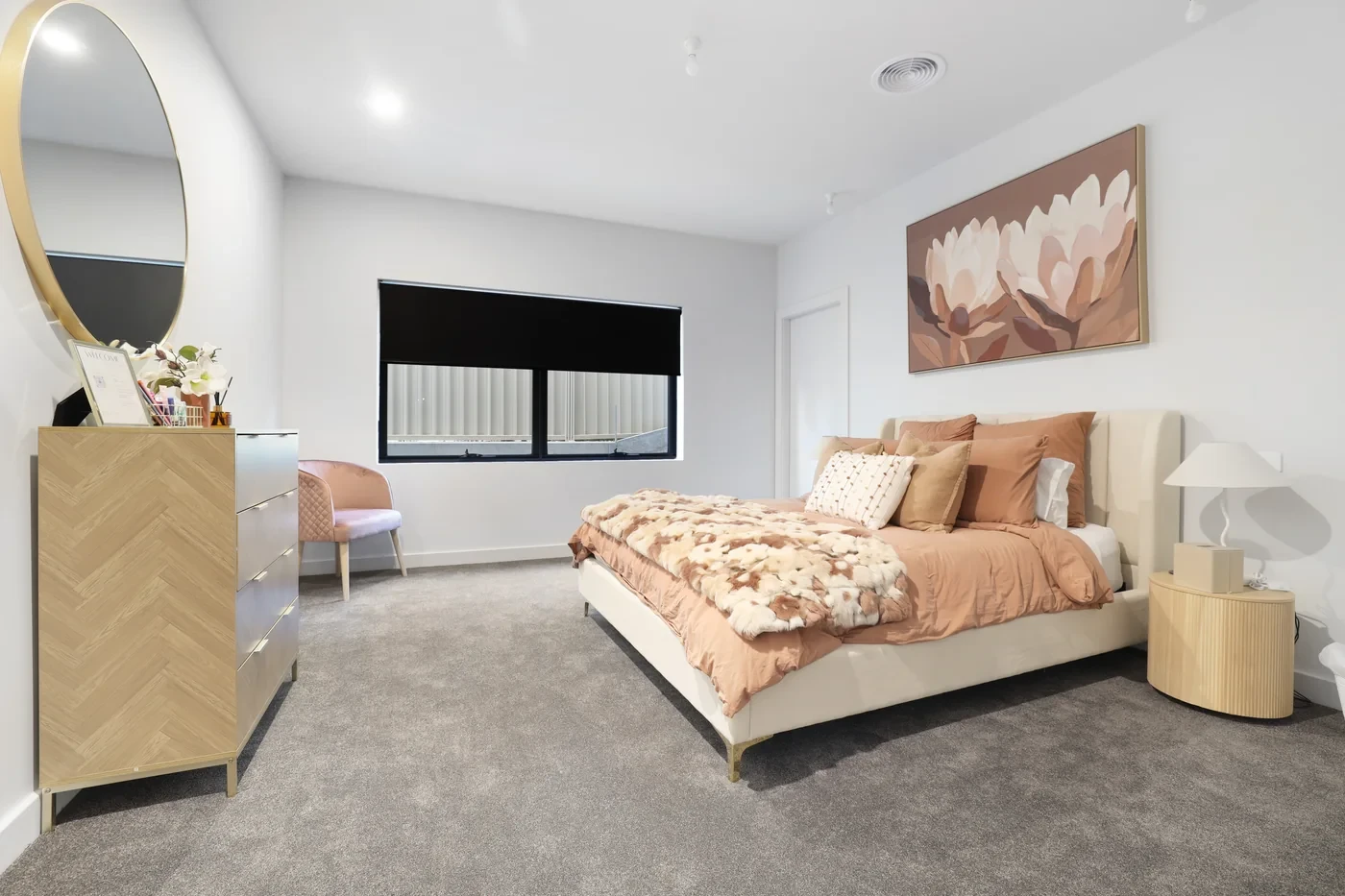
A black blockout roller in a bedroom. Nothing through the fabric, day or night — the only light or sight line is around the edges, and the fit takes care of that.
The night test
By day, the outside is brighter than the inside, so almost any fabric hides the room. At night it flips: the room is lit, the street is dark, and anything translucent shows silhouettes or a full view. So there are really two privacy questions — daytime privacy, which is easy, and night-time privacy, which is where blinds are chosen well or badly.
The quickest way to know how a fabric behaves is to order a free sample, tape it over a window, turn the room lights on after dark and walk outside. Two minutes, and you'll never argue about it again.
Which fabrics pass
| Fabric | Daytime | Night, lights on | What you give up |
|---|---|---|---|
| Blockout | Complete | Complete — the fabric is opaque | Daylight and the view; it's either up or down |
| Light filtering | Complete | Soft glow through the fabric, shapes visible | The view out |
| Sunscreen | Good — you see out, they see a dark window | Poor — with the lights on, people can see in through the mesh | Night privacy, unless you pair it with something |
| Sheer curtain | Good | Poor — transparent against a lit room | Night privacy on its own |
Sunscreens and sheers earn their place for view and glare, so the usual answer for a room you live in is a pairing — a double roller with sunscreen and blockout on one bracket, or a sheer curtain with a blockout roller behind it. The same table holds for roman blinds: a blockout roman passes the night test, and a light-filtering one shows shapes.
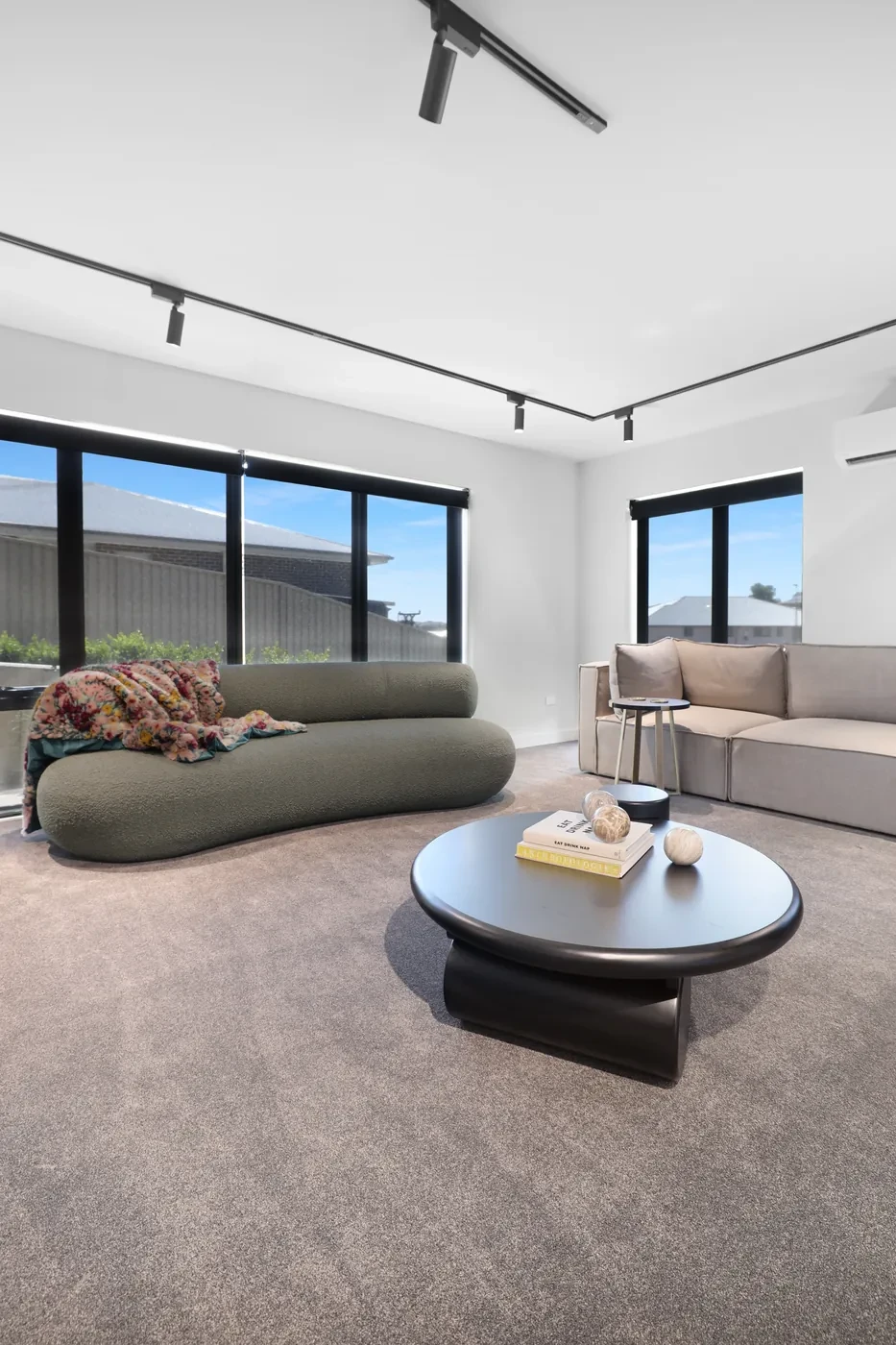
Charcoal sunscreen roller s half down by day: you see the garden, the garden sees a dark window. After dark the same fabric needs a blockout partner.
Colour matters less than weave, but it isn't nothing. A dark sunscreen is easier to see out through and slightly harder to see in through than a pale one. A dark blockout shows less glow at the edges. If two fabrics tie on privacy, pick the darker one for a street-facing room. Our blind colour guide goes deeper on this.
The tilt trick: venetians and shutters
Slatted products give you something fabric can't: privacy and light at the same time. Tilt the slats of a venetian or the louvres of a plantation shutter upwards and someone at street level sees the underside of the slats and the ceiling, while daylight still bounces into the room. Fully closed, they're close to opaque, with a little light at the slat edges. The trade-off is that a tilted slat is never as sealed as a blockout fabric, so for a bedroom that needs to be dark, add a blockout behind or pick a roller instead.
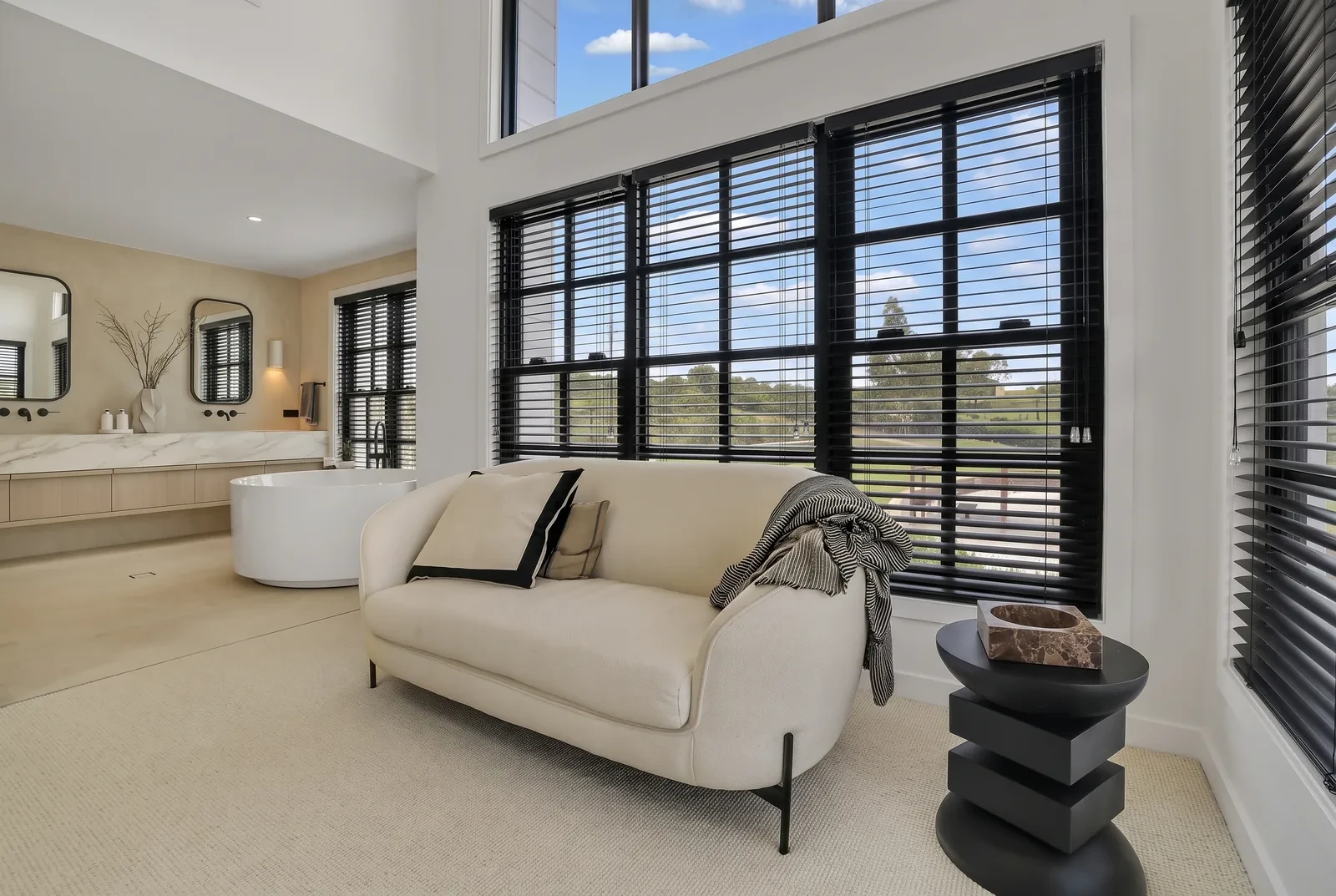
Our 50mm aluminium venetian on a real Better Built bathroom (our render). Slats tilted up: private from outside, bright inside — the reason venetians and shutters live in bathrooms.
Room by room
| Room | What we'd fit | Why |
|---|---|---|
| Street-facing living room | Sheer + blockout roller, or a double roller | Soft by day, sealed at night |
| Living room with a private outlook | Sunscreen roller | Keep the view, kill the glare; nobody's there to look in |
| Bedroom | Blockout roller, face fit | Total privacy and darkness; face fit closes the side gaps — see the real blockout examples |
| Nursery | Blockout roller, motorised or tensioner fitted | Dark for day sleeps; fit the chain's safety clip. See the nursery guide |
| Bathroom / ensuite | Visionwood or aluminium venetian, or PVC shutters | Tilt for privacy with the window open; nothing to soak up steam |
| Kitchen over the sink | Light-filtering roller | Bright by day, wipes clean |
| Home office | Sunscreen roller (add a blockout if you work late) | Glare off the screen; the desk lamp makes a sunscreen see-through after dark |
| Front door sidelight or hallway | Light-filtering roller or a 25mm aluminium venetian | Narrow, no view worth keeping |
| Sliding door to the street or a shared driveway | Vertical blind or panel glide in blockout or light-filter | Covers the width; vanes tilt for daytime privacy |
Gaps: where privacy actually leaks
The fabric is only half of it. A blind that stops 50mm short of the frame, or sits inside a recess with a strip of glass showing each side, gives a passer-by exactly the sliver they'd need. Three fixes:
- Face fit where it matters. Mount the blind on the wall above the window and make it about 50mm wider each side. The fabric now covers the whole opening. Bedrooms, bathrooms and anything on the street get this by default.
- Recess fit where the outlook is private. Neater, and the slim side gaps don't matter when there's a fence outside. The roller blinds buying guide covers both fits in detail.
- Measure properly. Width at the top, middle and bottom, height at both sides and the centre, smallest width and largest height for a recess fit. Our measuring guides walk through it, and the Perfect Fit Guarantee is an optional paid add-on: we video call you to check your numbers before we make the blind.
Common questions
Which blinds give the most privacy?
Blockout roller blinds, face fitted so they overlap the window. The fabric is opaque, so the only sight line is around the edges — and the fit closes that.
Can people see through sunscreen blinds at night?
Yes, when the room lights are on. Sunscreen is a daytime privacy fabric. Pair it with a blockout on a double roller, or use it only where the outlook is private.
Are venetian blinds good for privacy?
Very good by day and good at night when closed, with a little light at the slat edges. Tilting the slats up gives privacy and daylight at once, which is why they suit bathrooms and kitchens. For a fully dark bedroom, a blockout roller does more.
Do I need blinds on a frosted window?
Not for privacy — the glass does that. People add a blind for glare, to darken the room, or because the bare window looks unfinished.
Which blinds let you see out but stop people seeing in?
By day, a sunscreen roller: you keep the view, and people outside see a dark window. It only works while it's brighter outside than in. At night with the lights on it turns see-through, so pair it with a blockout on a double roller.
How do I angle blinds so people can't see in?
On a venetian or a shutter, tilt the slats upwards. Someone at street level then sees the underside of the slats and the ceiling, not the room, and daylight still comes in. A roller has no tilt, so lower it, and use a blockout fabric at night.
Order free fabric samples
Blockout, light-filtering and sunscreen swatches, posted free. Tape them up, turn the lights on, walk outside — then build the blind in the roller blind configurator.
You may also like

You may also like
Subscribe for new fabrics and install tips.
One email a month: new fabrics, install tips, the occasional honest before/after.
No spam, no daily-deal noise.

It’s never too early to consider window furnishings when you’re planning on renovating or building. Our expert team of design consultants can help create unique solutions and seamless designs and even quote directly off your house plans.





More Info
InspirationAbout UsContact UsOur ArticlesSuccess StoriesPerfect Fit GuaranteeDelivery InformationCustomer ReviewsFrequently Asked QuestionsGet in Touch
Address: 16 Bradwardine Road, Robin Hill NSW 2795
Email: hello@homeblindsaustralia.com.au
Phone: 1300 195 797
More Info
InspirationAbout UsContact UsOur ArticlesSuccess StoriesPerfect Fit GuaranteeShipping & Return PolicyCustomer ReviewsFrequently Asked QuestionsGet in Touch
Address: 16 Bradwardine Road, Robin Hill NSW 2795
Email: hello@homeblindsaustralia.com.au
Phone: 1300 195 797
© Copyright Home Blinds Australia 2026. All Rights Reserved.
Payments Accepted:
