



 Roller blinds
 Double roller blinds
 Roman blinds
 Venetian blinds
 Vertical blinds
 Panel blinds
 Order Free Samples
 Spare Parts
 How To Guides
 Book A Design Consultation
 Inspiration
 Upload Your Plans
 Curtains
 Double curtains
 Design PVC plantation shutters
 Design Australian PVC plantation shutters
 Design motorised roller blinds
 Design motorised curtains
 Success Stories
 Blogs
 FAQ

How to Remove Roller Blinds and Venetian Blinds (and Take Them Down Without Breaking the Brackets)
Most roller blinds come down in about five minutes once you know which end lets go. Roll the blind all the way up, unclip the chain from its tensioner, then free the pin end: on ours you twist a small adjuster anticlockwise and the pin pulls back. Venetians are different: the headrail sits in box brackets that open like a gate. Here are the steps for every blind and curtain we make.
Before you start
- Tools: a flathead screwdriver for the releases, and a Phillips head or a drill on a low setting for the brackets.
- A sturdy step ladder, set up square under the window. Not a chair.
- A second person for anything wide or heavy: double rollers, timber venetians, panel glides and long curtain tracks.
- Your phone, to photograph each bracket before you touch it.
Replacing them? Measure before they come down
Measure the window, not the old blind, and decide recess fit (inside the opening) or face fit (on the wall or architrave) first, because it changes what you measure. A roller needs at least 60 mm of depth to fit inside the opening, and a double roller about 125 mm.
Measure width and drop in millimetres, three places each. For a recess fit, give us the smallest number with nothing taken off; we make the deductions. The measuring guide has a video. Then leave the old blinds up. Ours are DIY made to measure: we make them to your sizes in Australia, dispatch them in 8 to 15 business days, and you fit them yourself.
How to remove a roller blind
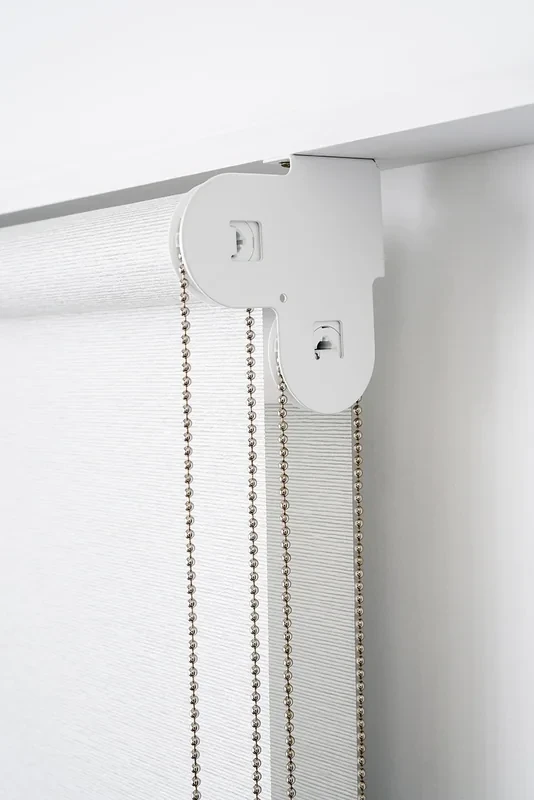
A roller sits in two brackets: the chain drive (or motor) at one end, a spring-loaded pin at the other. Ours use the Acmeda RB09 control with powder-coated steel brackets, and the pin end has an adjuster you twist to move the pin in or out. Removal is the install in reverse.
- Roll the blind all the way up. A tight roll is easier to carry.
- Unclip the chain from the tensioner, the little guide screwed to the frame or wall that holds the chain loop taut.
- Hold the blind and twist the adjuster at the pin end (the end without the chain) anticlockwise. The pin pulls back.
- Lower the pin end out of its bracket, then lift the chain end out. Carry it by the tube, not the fabric.
To re-hang it, go chain end first, then the pin, turn the adjuster clockwise to close any gap and clip the chain back into its tensioner. The roller blind install guide shows it on video.
If your old roller has no adjuster
Many other brands hook on at the chain end instead. Lift the chain end a few millimetres off its lugs, push the whole blind towards the pin end so the spring pin squashes in, then swing the chain end out and slide the pin free. Most brackets have a release, so look for a wheel, a plate you can turn with a flathead, or a tab before you pull harder. Jammed in a tight recess? Don't lever the bracket off the wall; ease the flathead between bracket and blind for a millimetre of play, with a hand under the tube.
Spring and cordless rollers
There's no chain. Let it roll all the way up so the spring isn't wound tight, then lift it out. On the older style, a flat pin lifts straight up out of a slotted bracket and the round pin slides out after it.
Motorised rollers
A battery blind comes down like a chain blind, because the brackets are the same. Unplug any charging lead first.
Wired motors run on 240V. If the motor plugs into a power point by the window (ours do, once an electrician has fitted the point), switch it off, unplug it and take the blind down as normal. If the cable runs straight into the wall or ceiling with no plug, don't touch the wiring: get a licensed electrician to disconnect it. Our motorised blinds guide explains the difference.
Re-hanging a blind with a snapped chain or a cracked bracket? We sell roller blind parts: brackets, chains, chain drives, idle ends, bracket covers and end caps. Parts for verticals, romans, curtains and panel glides are in all spare parts.
How to remove double roller blinds
A double roller is two blinds on one double bracket, one in front of the other. Ours come on a Regular or a Slimline bracket. Each blind comes out on its own: roll both up, unclip both chains, then take out the room-side blind first using the roller steps above. On a wide window, have someone take the other end. Replacing a pair? See our double roller blinds.
How to remove venetian blinds
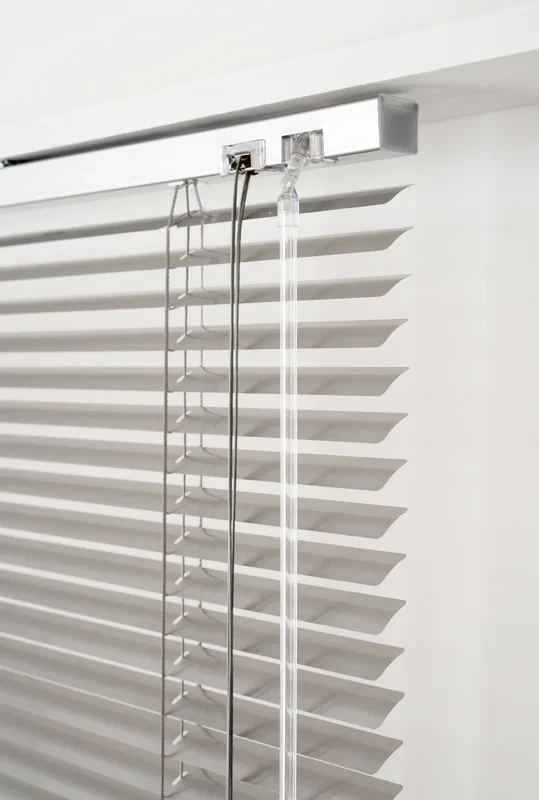
A venetian's headrail sits in a bracket at each end. On ours, each bracket has a gate that opens and locks shut, wide blinds have a centre support too, and the valance hangs over the front on clips.
- Raise the blind all the way, lock the cord and lift the valance off its clips.
- Free the bottom and the cord. On a door, unclip the bottom rail from its hold-down clips. Unclip the cord from its tensioner.
- Open the gate on each bracket, centre support included. With a helper holding the headrail, tilt it forward and lift it out.
The tilt wand can stay on; if it unhooks, take it off so it doesn't swing about. Timber venetians are much heavier than aluminium, so get help with a wide one. The venetian install guide shows the brackets, and if yours are past saving, here are our venetian blinds.
Older venetians: the release varies by maker. Look for a front cover that swings open or slides out, a small tab you can ease up with a flathead, or a screw through the bracket into the headrail. Still stuck? There's usually a centre bracket you haven't opened.
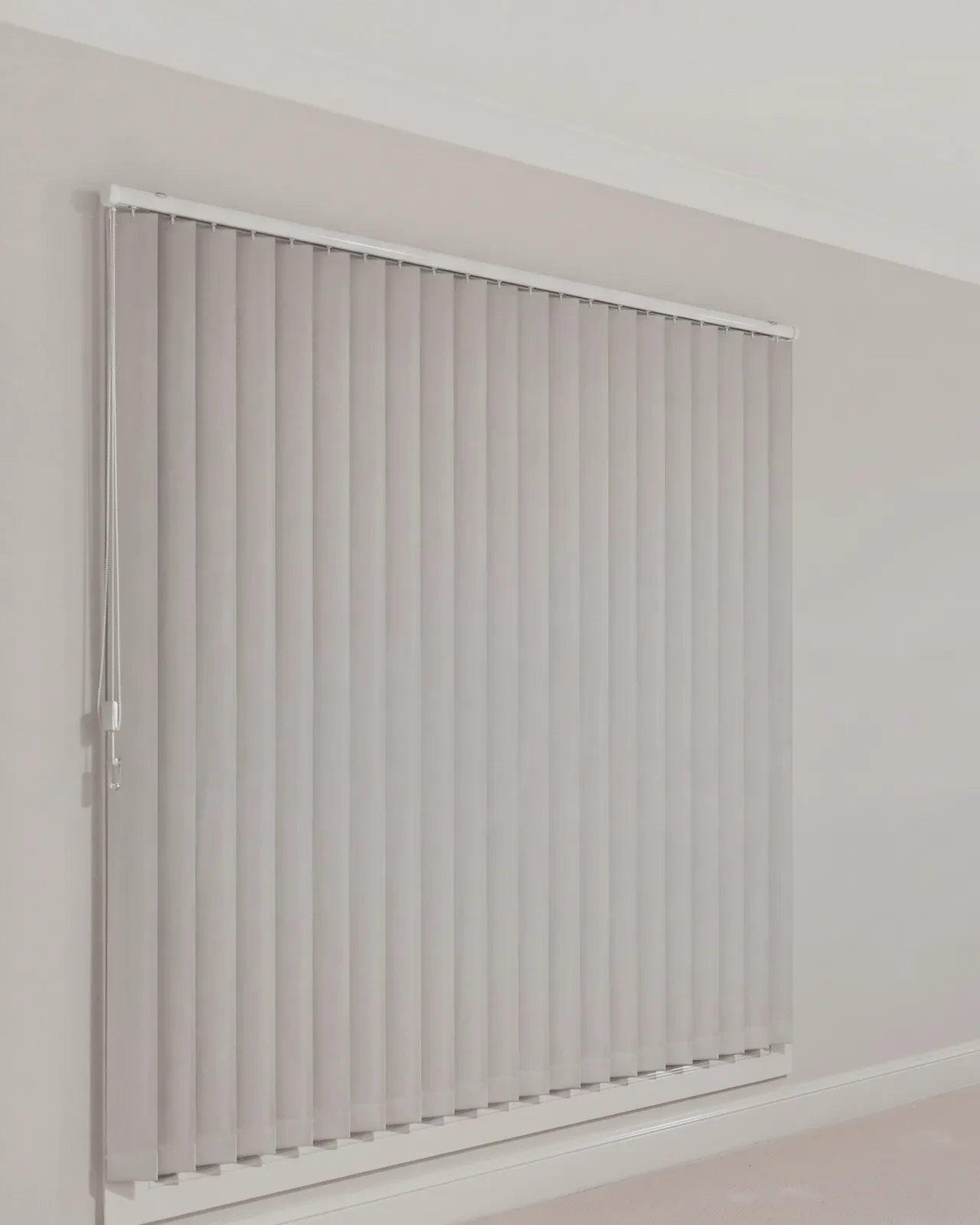
How to remove vertical blinds
Vanes first, then the track.
- Turn the vanes open so they're side-on to the window and the clips sit at 90 degrees to the wall.
- Unclip the vanes one at a time and stack them flat. Most let go if you lift the vane slightly and ease it towards you; if one won't, look for a tab on the clip. Older verticals sometimes have a chain joining the bottom weights, so unhook that first. Ours don't have one.
- Press the release tab on each bracket and roll the track forward off it.
The vertical blind install guide shows the tab on video.
How to remove panel glide blinds
Panel glides are wide fabric panels on a multi-channel track, made for big doors. The fabric slides into a panel bar, and the track clicks into brackets spaced about a metre apart.
- Unscrew the end cap on the rail and slide the fabric out of each panel bar.
- With someone holding the other end, unclip the track from every bracket, including the middle ones.
- Unscrew the brackets.
How to remove roman blinds
Our romans clip into brackets along the top, one about 2 cm in from each end and the rest spaced between. Unclip the chain from its tensioner, then lift the headrail slightly and push back the clip on each bracket in turn. Romans carry a lot of fabric, so get help with a wide one.
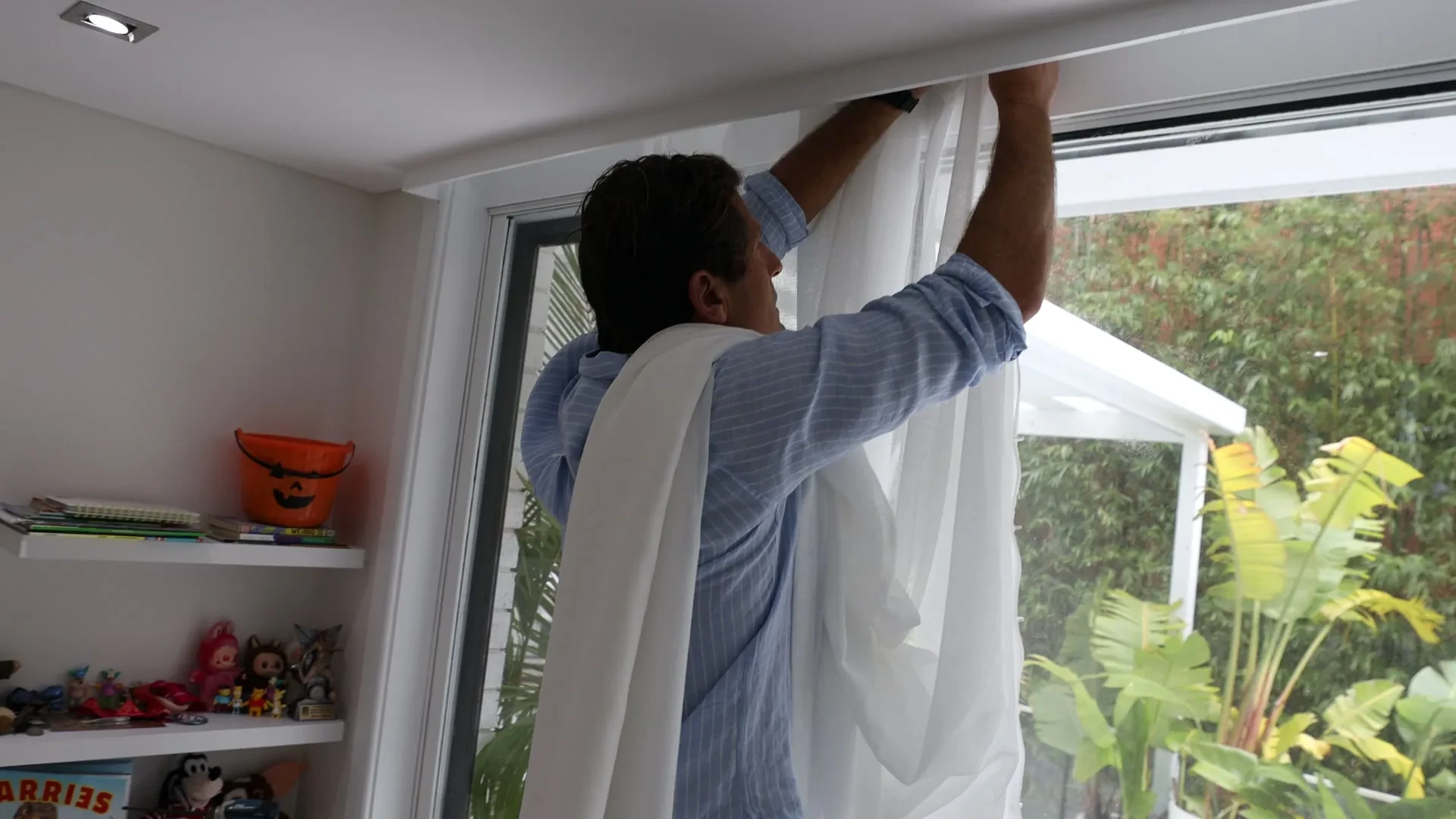
How to take down curtains and the track
- Open the curtain so it's stacked at one end, then lift the hooks out of the runners one at a time. On a long or heavy curtain, have someone take the weight of the fabric.
- Take the track off its brackets. Most tracks clip in, so look for a lever, tab or small screw on each bracket and release them one by one while someone holds the track.
- Unscrew the brackets from the ceiling or wall.
A motorised track follows the blind rule: unplug a battery track's charger, and get an electrician for a wired one with no plug. Replacing them? Our curtains are made to measure, and the track comes with brackets.
Taking the brackets down and filling the holes
If the blind is going back up, leave the brackets alone and it clicks straight back in, still level. If you're replacing it, take them down, because new blinds come with their own brackets.
- Run a utility knife around any bracket that's been painted over, so the paint doesn't lift with it.
- Back the screws out by hand or with the drill on low, holding the bracket so it doesn't scratch the wall.
- Pull plastic wall plugs out with pliers, or push them in a touch and fill over them.
- Fill each hole with ready-mixed filler (wood filler on timber), let it dry, sand it flush and touch up the paint.
Renting? Check with your property manager before you take blinds or brackets down.
What to do with the old blinds
If they still work, keep them for a spare room or give them away. Aluminium venetians, and a roller's tube and base rail (usually aluminium too), can go to a scrap metal recycler once the fabric is off. The rest goes in general waste or your council's hard rubbish collection.
Common questions
How do you unclip a blind from its bracket?
Find the end that lets go first. On a roller, release the pin end, then lift the chain end off. On a venetian, open the gate on each box bracket. Romans and vertical tracks clip in at the back: release the clip or tab and roll them forward.
How do you remove blinds with hidden brackets?
Take the cover off first. A valance usually lifts off its clips. On a cassette or pelmet, look underneath for clips or a release tab rather than prising the front off. Then the blind comes out like any other.
Can you remove venetian blinds to clean them?
You can, but you rarely need to. Close the slats and dust them, or wipe them with a damp cloth where they hang. PVC and aluminium handle a wipe-down; timber just needs a dust.
Can I reuse my old brackets for new blinds?
Usually not. Ours come with their own brackets. We don't include screws, because brick, timber and plasterboard each need different fixings.
Can you take plantation shutters down yourself?
Yes. Each panel hangs on hinges held by a hinge pin: pull the pin and lift the panel off. The frame is screwed in at the corners and at every hinge, so expect more holes to fill than with a blind.
Design your new roller blind
Start with free samples and the measuring guide, then design yours and see the price as you go. Made to measure in Australia; you measure and fit it yourself.
You may also like

You may also like
Subscribe for new fabrics and install tips.
One email a month: new fabrics, install tips, the occasional honest before/after.
No spam, no daily-deal noise.

It’s never too early to consider window furnishings when you’re planning on renovating or building. Our expert team of design consultants can help create unique solutions and seamless designs and even quote directly off your house plans.





More Info
InspirationAbout UsContact UsOur ArticlesSuccess StoriesPerfect Fit GuaranteeDelivery InformationCustomer ReviewsFrequently Asked QuestionsGet in Touch
Address: 16 Bradwardine Road, Robin Hill NSW 2795
Email: hello@homeblindsaustralia.com.au
Phone: 1300 195 797
More Info
InspirationAbout UsContact UsOur ArticlesSuccess StoriesPerfect Fit GuaranteeShipping & Return PolicyCustomer ReviewsFrequently Asked QuestionsGet in Touch
Address: 16 Bradwardine Road, Robin Hill NSW 2795
Email: hello@homeblindsaustralia.com.au
Phone: 1300 195 797
© Copyright Home Blinds Australia 2026. All Rights Reserved.
Payments Accepted:
