



 Roller blinds
 Double roller blinds
 Roman blinds
 Venetian blinds
 Vertical blinds
 Panel blinds
 Order Free Samples
 Spare Parts
 How To Guides
 Book A Design Consultation
 Inspiration
 Upload Your Plans
 Curtains
 Double curtains

 Design PVC plantation shutters
 Design Australian PVC plantation shutters
 Design motorised roller blinds
 Design motorised curtains
 Success Stories
 Blogs
 FAQ
Complete step-by-step instructions for perfect Installation
How to Install Roller Blinds
Installing a roller blind takes four screws and about 20 minutes. Fix two brackets, click the chain end in, slide the pin end in, twist the adjuster to close the gap, then fit the chain tensioner. Our roller blinds are DIY: you measure, we make them to your sizes in Australia, and you fit them yourself. Here's every step for a recess fit and a face fit, plus double rollers and motorised blinds.
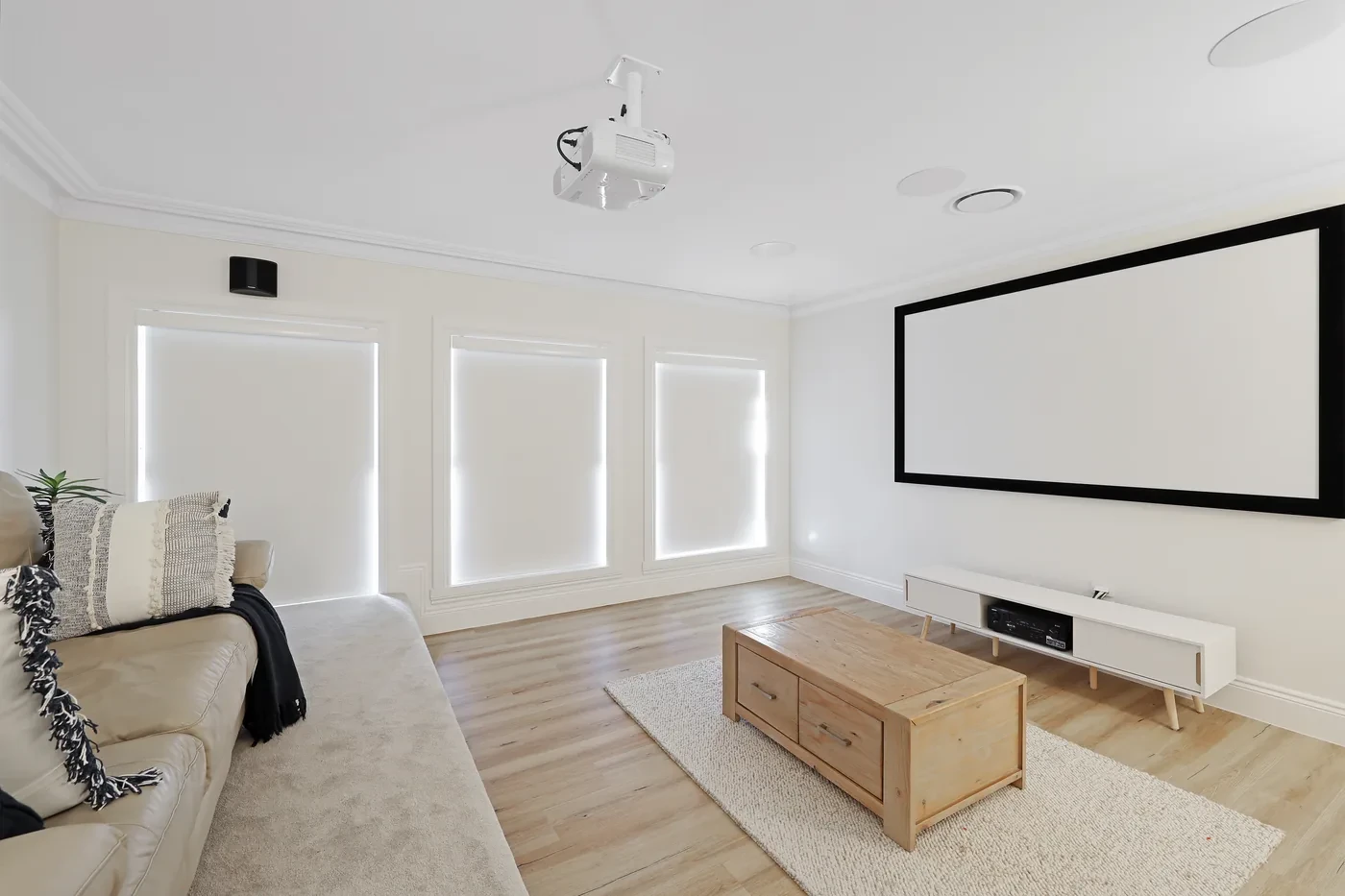
Can you install roller blinds yourself?
Yes. Ours are made to go up at home with a drill and a level. Our instructions put it at 10 to 20 minutes a blind, and one person is usually enough. Grab a helper for a wide blind or a double roller.
Our rollers run on the Acmeda RB09 control, a 45 mm aluminium tube and powder-coated steel brackets, and the steps below are for that hardware. Re-hanging another brand's blind? The release can differ, and our guide to taking blinds down covers the common types.
What's in the box, and what you need
In the box: the blind, a bracket for the chain end, a bracket for the pin end, bracket covers and the chain tensioner. Before you drill anything, check the chain is on the side you ordered.
- A drill with a bit to suit your wall, and a Phillips head driver or screwdriver.
- A pencil, a steel tape and a spirit level.
- A sturdy step ladder, set up square under the window. Not a chair.
- Screws, plus plugs or anchors to suit your wall. They aren't in the box.
Why no screws? Every window goes into something different, so we leave the fixings to you. Timber screws go straight into a timber frame or a stud. On plasterboard, hit a stud or use a rated hollow-wall anchor. On brick, concrete or tile, use a masonry bit and matching plugs. Not sure what you're drilling into? Send us a photo and we'll tell you.
Recess fit or face fit? Check before you drill
You chose this when you ordered, and it decides where the brackets go. A recess fit (inside mount) sits inside the window opening and needs at least 60 mm of depth, or about 125 mm for a double roller. A face fit (outside mount) screws to the architrave or the wall above the window and covers the whole opening.
Look for anything sticking into the opening, like a handle, a winder or a lock. If one sticks out more than 45 mm, the 55 mm extension bracket clears it, and a front roll keeps the fabric off it. Both are choices you make when you order.
Haven't ordered yet? Start with our measuring guide for blinds: give us the real numbers and we make every deduction. The roller blinds buying guide explains which fit suits which room.
How to install roller blinds inside the recess (inside mount)
- Hold the chain-end bracket in the top corner of the recess, on the side you ordered the chain. Push it up to the frame and to the front of the recess, and mark two holes.
- Fix it with two screws through two different holes.
- Do the same with the pin-end bracket in the other corner. Lay your level across the two before you go on. A roller shows any slope the moment the fabric comes down.
- Put the chain end in first. Line the control up with the tongue on the bracket and seat it.
- Lift the other end and slide the pin through the guide on the pin-end bracket.
- Turn the adjuster clockwise to push the pin out and close any gap. Keep going until the blind is held firm and won't lift out.
- Run the blind down and up a couple of times, then fit the chain tensioner (below).
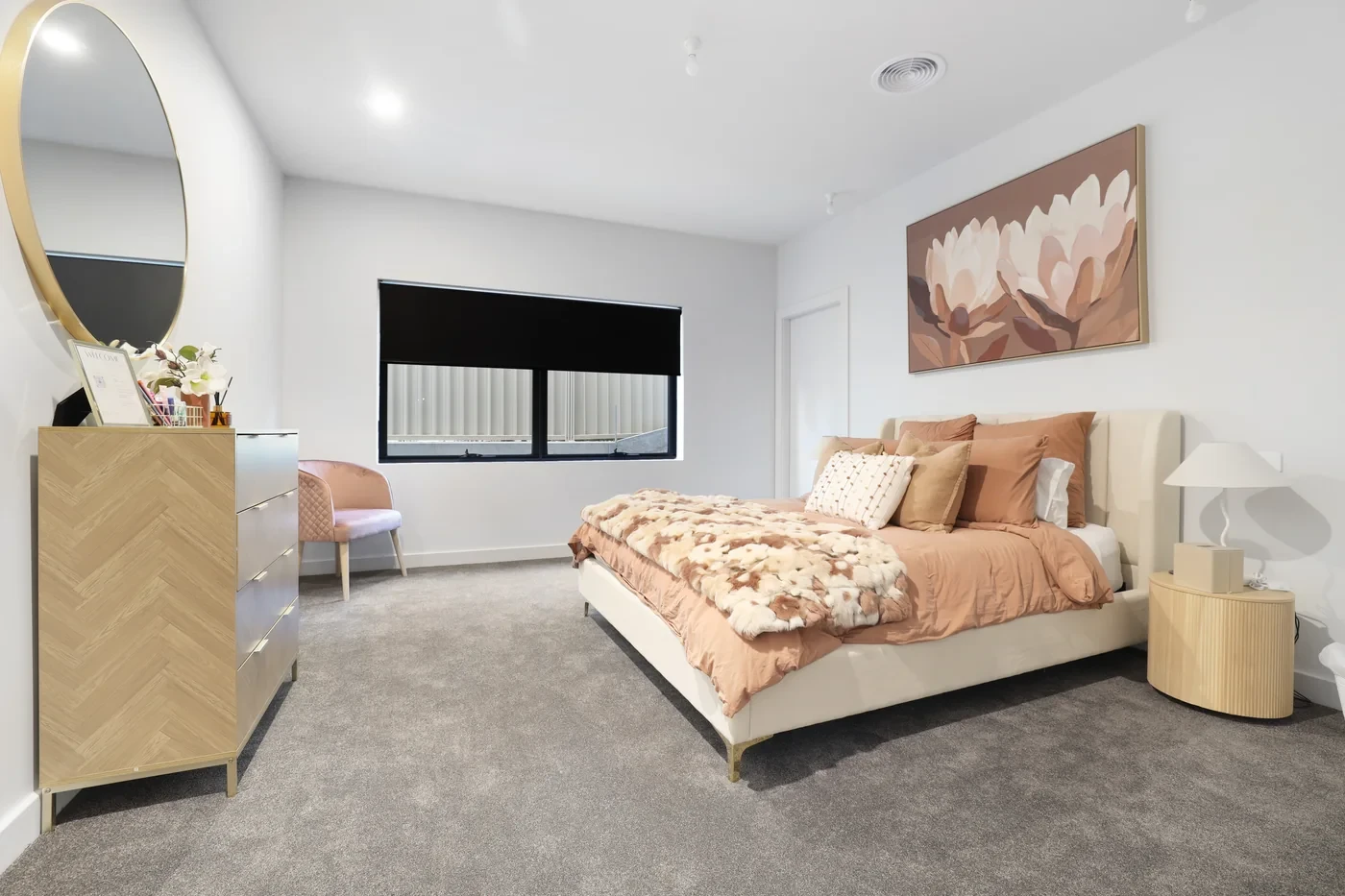
A recess-fit blind is made a little narrower than the opening so it runs freely. You'll see a slim line of light down each side, and that's normal.
How to install roller blinds on the face (outside mount)
A face fit screws to the front of the architrave, or to the wall where there isn't one. Once the brackets are up, the blind goes in exactly the same way. It's the marking out that's different.
- Mark the ends of the blind. Centre the width you ordered over the window. That's the overall width, so the outer edge of each bracket sits on a mark.
- Set the height. The top of each bracket goes where you measured the drop from, which is usually at least 70 mm above the opening. Mark the holes.
- Check the marks with your level before you drill.
- Screw each bracket on with two screws through different holes, into the architrave, a stud or a wall plug.
- Hang the blind: chain end first, then the pin end, then turn the adjuster clockwise until it's firm.
A face fit blocks more light than a recess fit, because the blind overlaps the opening by at least 50 mm each side.
Fit the chain tensioner
Every chain blind comes with a chain tensioner: a small guide that screws to the frame or wall and holds the chain loop taut. It takes one screw. Fit it before anyone uses the blind.
- Click the tensioner over the chain, near the bottom of the loop.
- Hold it a few centimetres above the bottom of the loop, so the chain is taut but still runs freely.
- Screw it into something firm, like the timber window frame. Not bare plasterboard: it pulls out too easily.
- Test the blind again.
We cut the chain so its end sits about 1 m off the floor. Leave the warning label on the blind.
Check the roll and adjust it
- Won't sit in the brackets? The pin probably needs to come out further. Turn the adjuster clockwise.
- Gap at the pin end? Same fix. Clockwise closes it.
- Rolling to one side? It's nearly always a bracket that isn't level. Loosen it, re-level and tighten. Still tracking? Call us on 1300 195 797, as there's an easy fix.
- Need to take it down again? Twist the adjuster anticlockwise and the pin pulls back. The full steps are in how to remove blinds.
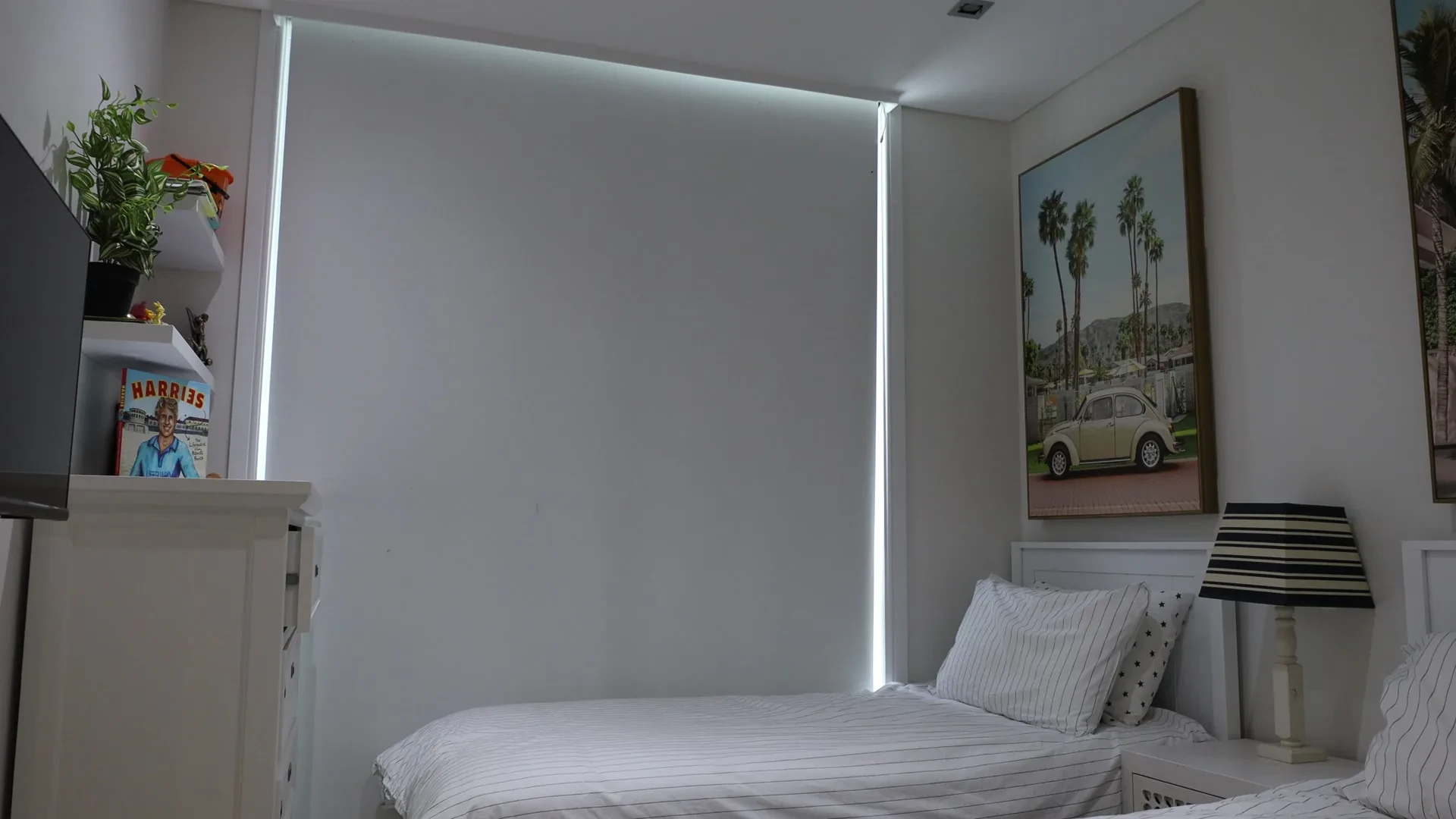
A snapped chain or a cracked bracket later on doesn't mean a new blind. We sell roller blind parts: brackets, chains, chain drives, idle ends, bracket covers and end caps.
How to install double roller blinds (day and night blinds)
A double roller is two blinds on one double bracket, one in front of the other. Some people call them day and night blinds or dual rollers. The install is the same as a single, with three differences.
- Depth. A recess fit with the regular double bracket needs about 125 mm. Under that, choose the Slimline double bracket, which holds the two rolls closer together, or fit it on the face.
- Order of hanging. Fix the double brackets like singles: level, two screws each. Then hang the back blind (the one nearest the glass) first and the front blind second, chain end first each time.
- Two chains. Each blind runs on its own chain, and each chain needs a tensioner fitted.
It's heavier than a single, so have someone take the other end on a wide window. You choose which blind sits in front when you design it on our double roller blinds page.
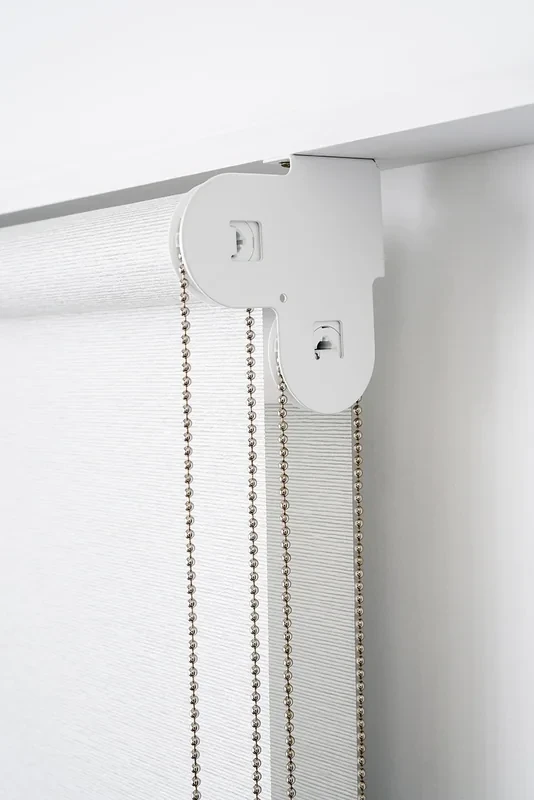
Two roller blinds in one window
A wide window can take two blinds side by side instead of one. Our measuring guide suggests it once a window is wider than we can make a single blind. Each blind goes up with the same steps as above.
Two tips. Put the chains on the outer edges, so nothing hangs in the middle. And level all the brackets to one line, so both blinds sit at the same height. If you're not sure how to split the width before you order, call us on 1300 195 797.
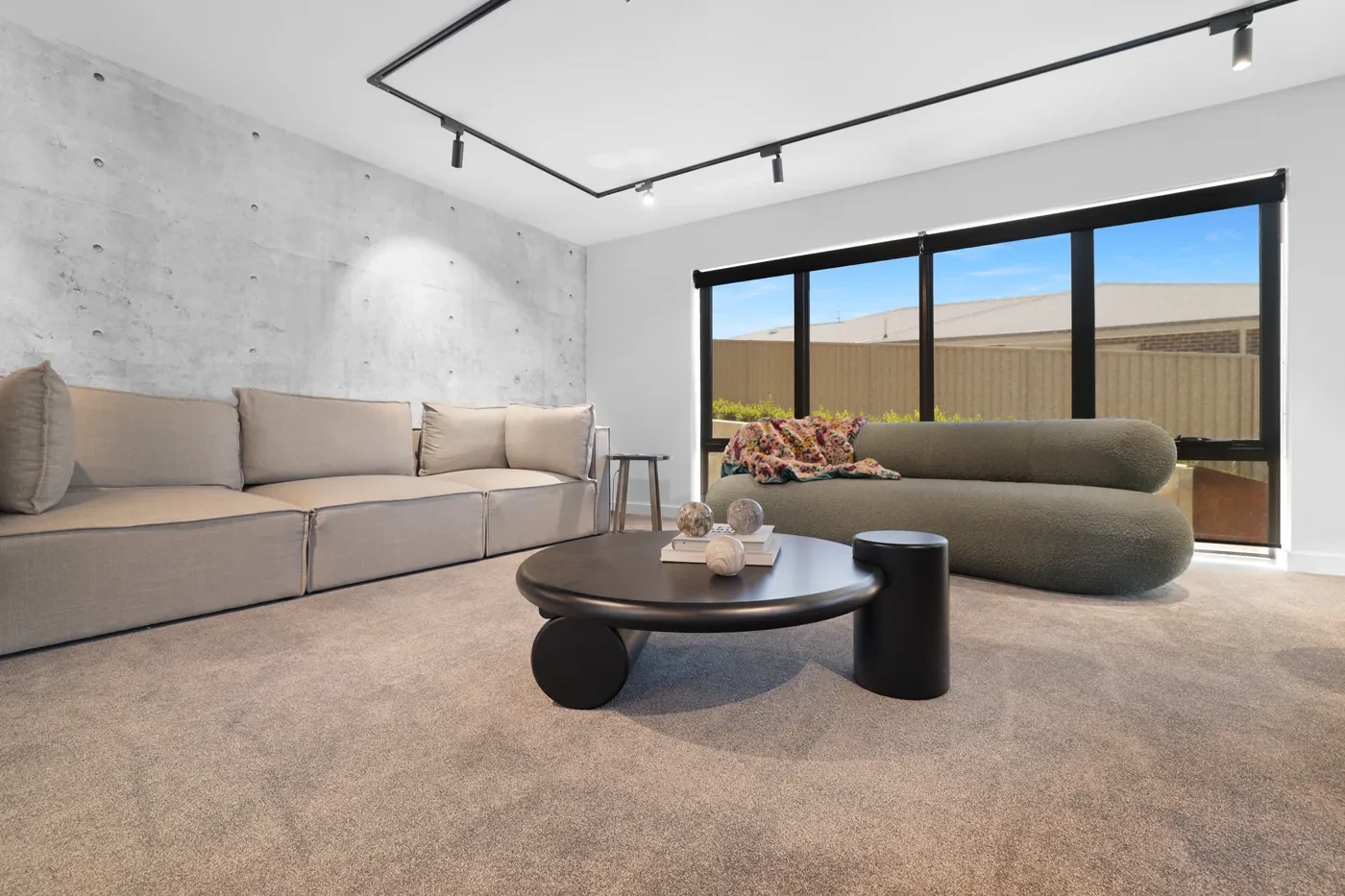
Want two layers on the same window instead, one for day and one for night? That's a double roller, above.
How to install motorised roller blinds
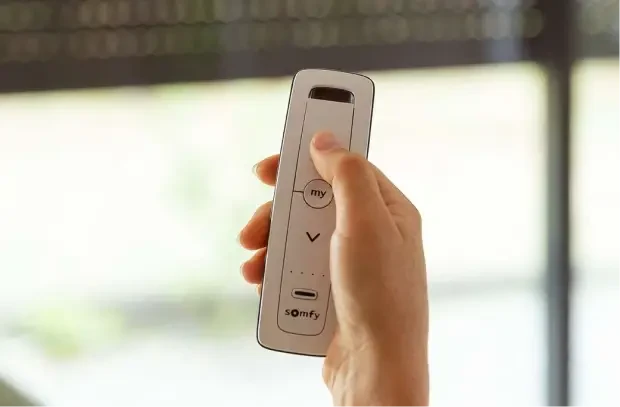
A battery motor goes up exactly like a chain blind: same brackets, same four screws, no electrician. Charge it fully before you hang it, because the charging port is easier to reach on the bench than up a ladder. Then pair the remote and set the top and bottom limits, following the instructions that come with the motor. The remote has to match the motor brand.
A wired motor runs on 240V, so an electrician runs power to the window first, then you hang the blind and plug it in. Don't wire it yourself. Our motorised blinds guide compares battery and wired, and the Acmeda and Somfy motors we use.
Prefer it on paper? Download the instructions for your fit.

Common questions
Can I install roller blinds myself?
Yes. Ours are DIY: you measure, we make the blind to your sizes, and you fit it with a drill, a level and screws to suit your wall. Allow 10 to 20 minutes a blind.
What's the easiest way to install roller blinds?
Get the brackets right and the rest is a click. Mark them, check them with a level, and screw them into timber, a stud or a proper plug.
How do roller blinds fit into the brackets?
Chain end first: line the control up with the tongue on the bracket and seat it. Then lift the other end, slide the pin through the guide and turn the adjuster clockwise until the blind is held firm and won't lift out.
Is it hard to install roller blinds?
No. If you can drill a level hole, you can fit one. The tricky part is the wall: plasterboard with no stud needs a hollow-wall anchor, and brick or tile needs a masonry bit and plugs.
Do roller blinds come with screws?
Ours don't, because a brick wall, a timber architrave and plasterboard all need different fixings. The brackets, bracket covers and chain tensioner are in the box.
Can I reuse my old brackets?
Usually not. Our blinds come with their own brackets, so take the old ones down and fill the holes before you mark up.
Start with free samples and the measuring guide, then see the price as you go. Made to measure in Australia, dispatched in 8 to 15 business days, and you fit it yourself.
Subscribe for new fabrics and install tips.
One email a month: new fabrics, install tips, the occasional honest before/after.
No spam, no daily-deal noise.

It’s never too early to consider window furnishings when you’re planning on renovating or building. Our expert team of design consultants can help create unique solutions and seamless designs and even quote directly off your house plans.





More Info
InspirationAbout UsContact UsOur ArticlesSuccess StoriesPerfect Fit GuaranteeDelivery InformationCustomer ReviewsFrequently Asked QuestionsGet in Touch
Address: 16 Bradwardine Road, Robin Hill NSW 2795
Email: hello@homeblindsaustralia.com.au
Phone: 1300 195 797
More Info
InspirationAbout UsContact UsOur ArticlesSuccess StoriesPerfect Fit GuaranteeShipping & Return PolicyCustomer ReviewsFrequently Asked QuestionsGet in Touch
Address: 16 Bradwardine Road, Robin Hill NSW 2795
Email: hello@homeblindsaustralia.com.au
Phone: 1300 195 797
© Copyright Home Blinds Australia 2026. All Rights Reserved.
Payments Accepted:
