



 Roller blinds
 Double roller blinds
 Roman blinds
 Venetian blinds
 Vertical blinds
 Panel blinds
 Order Free Samples
 Spare Parts
 How To Guides
 Book A Design Consultation
 Inspiration
 Upload Your Plans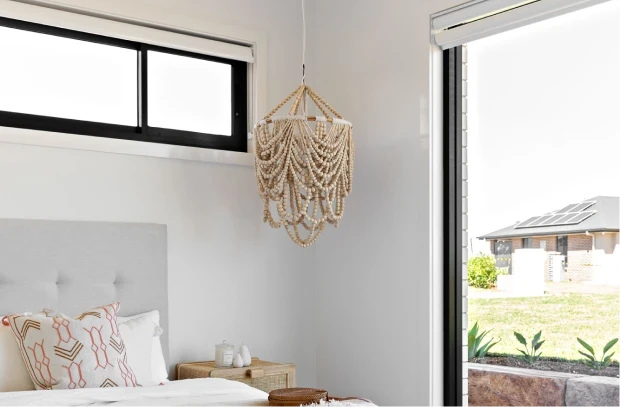
 Curtains
 Double curtains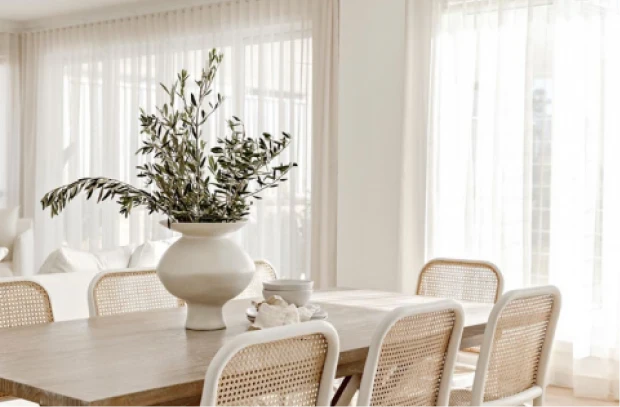
 Design PVC plantation shutters
 Design Australian PVC plantation shutters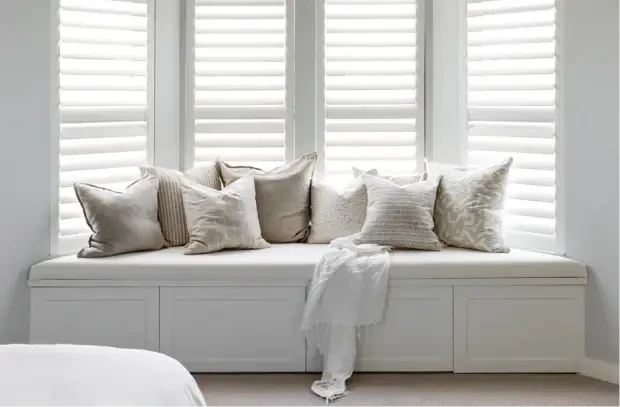
 Design motorised roller blinds
 Design motorised curtains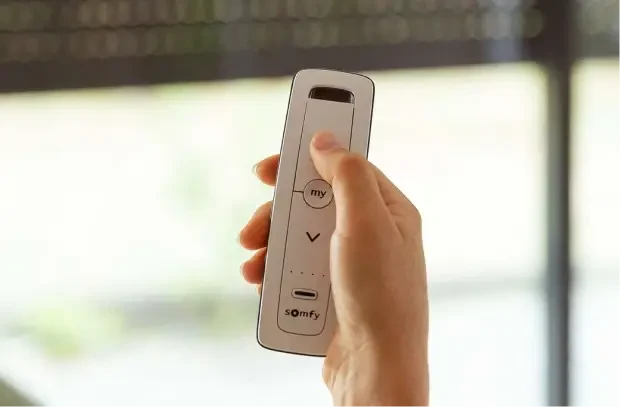
 Success Stories
 Blogs
Blogs FAQ
FAQ
How to measure for blinds
Work in millimetres with a steel tape. Choose inside the window opening or on the wall around it. Then measure the width and the drop (the height to cover) in three places.
Jump to your blind: Roller Double roller Roman Venetian Vertical Panel
Before you start
What you need
Measure every window, even if two look the same.
- A steel tape measure. Cloth tapes stretch.
- A pencil and paper, or the notes on your phone.
- A step ladder for high windows.
- The room name for each window. The designer asks which room each blind is for.
Step 1
Inside or outside the opening?
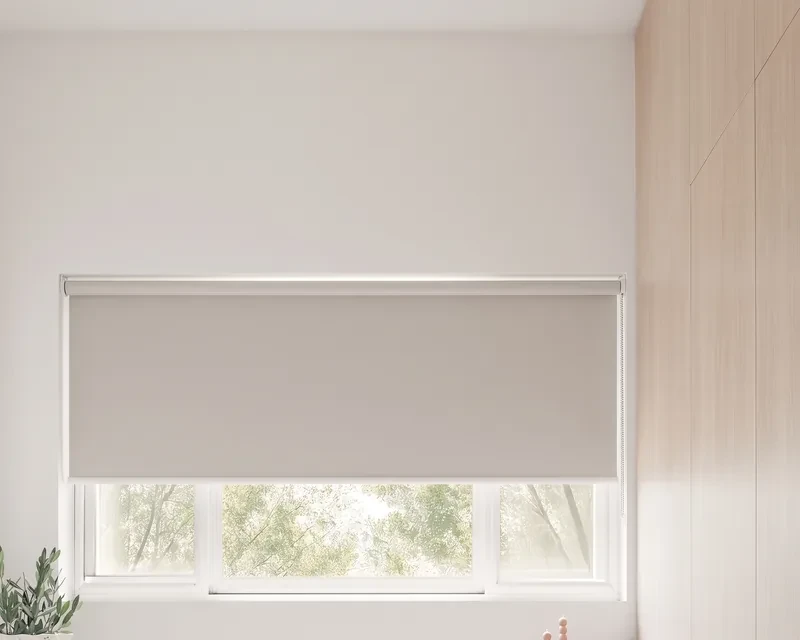
Decide this first, because it changes what you measure. Recess fit means inside the window opening. Face fit means on the wall or frame around it.
Recess fit
Face fit
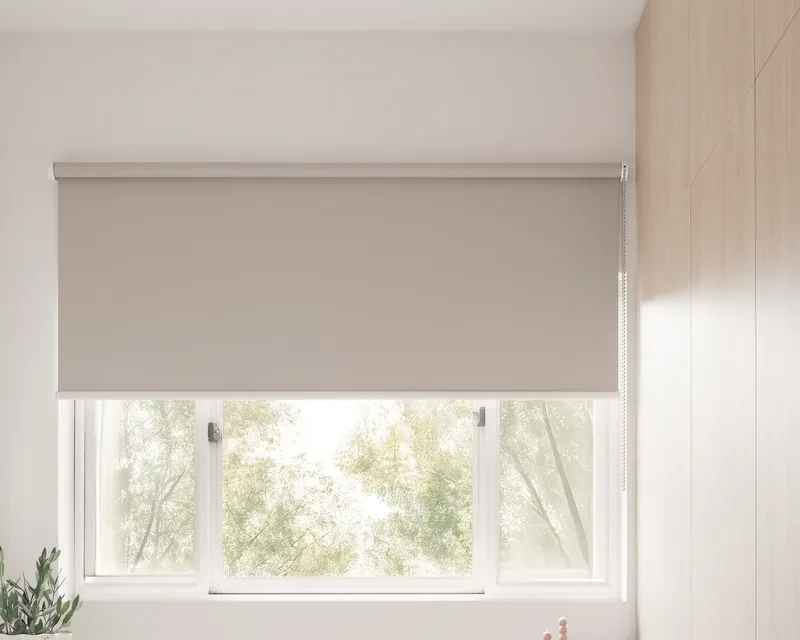
- How deep is deep enough? At least 60 mm for a roller blind, and about 125 mm for a double roller.
- Vertical blinds need a deep opening, because the vanes (the upright strips) hang below the track and swing.
- Handles or winders in the way? If a handle, lock or security screen sticks into the opening, fit the blind on the face.
- US guides call these inside mount and outside mount: the same choice.
| Feature | Recess fit (inside) | Face fit (outside) |
|---|---|---|
| Look | Neat, tucked inside the opening | Covers the window and its frame |
| Light | A thin line shows down each side | Blocks the most light |
| Needs | A deep, square opening with nothing sticking into it | A flat surface above the window to screw into |
| You measure | The exact opening. We take off the gap it needs to run freely | The size you want covered: at least 50 mm past each side, 70 mm above |
Steps 2 to 4
Measure the width and the drop
Measure at the top first, where the brackets will go. We make every deduction, so give us the real numbers.
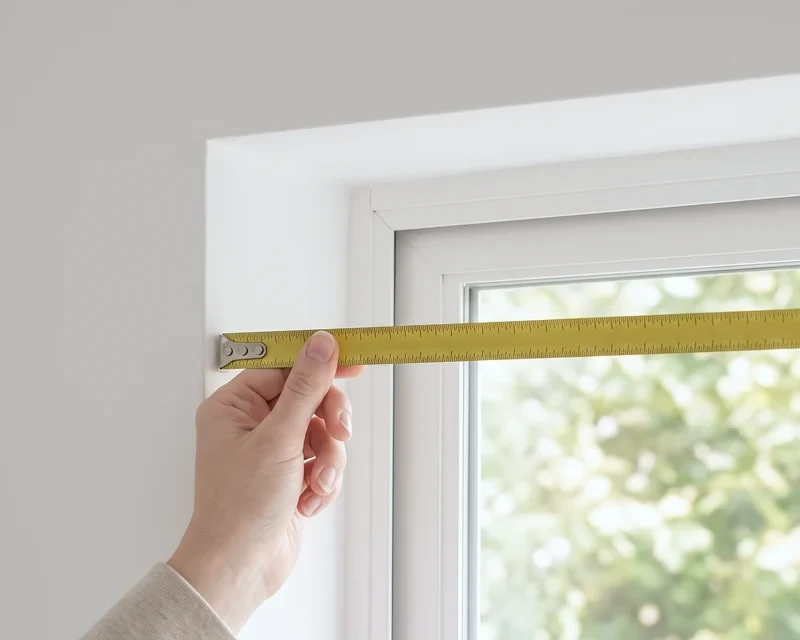
Width
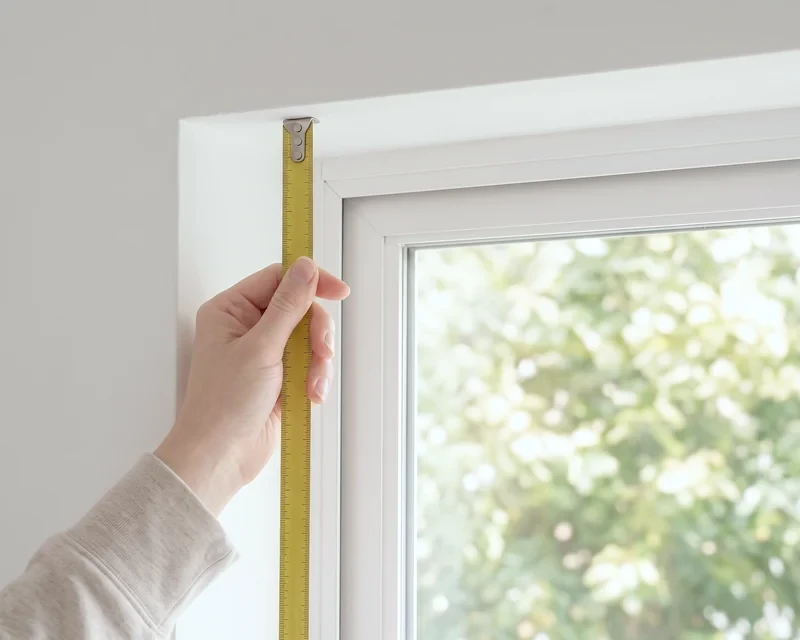
Drop
- 02
Measure the width
Measure across in three places, reading the tape where it meets the far side: the top, the middle and the bottom. For a recess fit, measure inside the opening and give us the smallest, with nothing taken off. For a face fit, give us the width you want covered.
- 03
Measure the drop
The drop is the height to cover, measured at the left, the centre and the right. For a recess fit, measure to the sill and give us the smallest. For a face fit, measure from where the brackets go to where the blind should finish.
- 04
Check and enter your sizes
Write each window as width × drop in millimetres, for example 1,210 × 1,500. If a number looks odd, measure again. Then enter your sizes in the designer for the blind you want.
Your blind
Notes for each blind
The steps are the same for every blind. These are the few things that differ.
Roller blinds
- Recess fit needs at least 60 mm of depth.
- We make them 250 to 3,000 mm wide and 300 to 3,000 mm drop.
- A front roll (fabric off the front of the roll) clears handles. If one sticks out more than 45 mm, choose the 55 mm bracket: it sits further off the wall.
Roller blinds How to install roller blinds Design your roller blind
Double roller blinds
- The double bracket sits further off the wall, so a recess fit needs about 125 mm of depth.
- The Slimline double bracket holds the two blinds closer, for a shallower opening.
- We make them 250 to 2,800 mm wide and 600 to 3,000 mm drop.
Roman blinds
- A roman folds up into pleats at the top. On a tall window, it covers the top of the glass even when raised.
- We make them 600 to 3,000 mm wide and 900 to 3,000 mm drop.
Roman blinds How to install roman blinds Design your roman blind
Venetian blinds
- On a door or a window that opens inwards, choose hold-down clips so the blind doesn’t swing.
- Aluminium: 25 mm from 120 mm and 50 mm from 250 mm, both up to 3,000 mm wide.
- Timber and PVC: 240 to 2,400 mm wide, up to 2,600 mm drop.
Vertical blinds
- Outside the opening is standard. Leave a small gap above the floor or sill, so the vanes swing freely.
- We make them 600 to 5,775 mm wide and 150 to 3,650 mm drop.
Vertical blinds How to install vertical blinds Design your vertical blind
Panel blinds
- Leave a small gap above the floor. For the number of panels, divide the width by about 700 mm and pick the nearest option. We check it.
- We make them 800 to 4,800 mm wide and 900 to 3,300 mm drop.
Panel blinds How to install panel blinds Design your panel blind
Sizes
What sizes do blinds come in?
Made-to-measure blinds have no standard sizes: you give us your size to the millimetre, anywhere in each blind’s range. Wider than the range? Use two blinds that meet in the middle.
| Blind | Width (mm) | Drop (mm) |
|---|---|---|
| Roller | 250–3,000 | 300–3,000 |
| Double roller | 250–2,800 | 600–3,000 |
| Roman | 600–3,000 | 900–3,000 |
| Vertical | 600–5,775 | 150–3,650 |
| Panel | 800–4,800 | 900–3,300 |
| 25 mm aluminium venetian | 120–3,000 | 600–3,000 |
| 50 mm aluminium venetian | 250–3,000 | 600–3,000 |
| PVC venetian | 240–2,400 | 300–2,600 |
| Timber venetian | 240–2,400 | 300–2,600 |
Check
Common measuring mistakes
Five slips that cause most wrong sizes, and how to avoid them.
- Centimetres instead of millimetres. 121 cm is 1,210 mm. Write millimetres every time.
- Measuring once. Windows are rarely square. Three measurements catch it.
- Taking your own deduction on a recess fit. We already do it.
- Forgetting the handle. A handle, lock or winder inside the opening can stop a blind. Fit it on the face instead.
- Assuming two windows are the same. Measure each one.
How much gap should I leave for blinds?
None. Give us the real measurements. For a recess fit, we take off the small gap a blind needs to run freely, so don’t take any off yourself.
Does the width include the brackets?
For a recess fit, give us the width of the opening. We make the whole blind, brackets included, to fit inside it. For a face fit, give us the overall width you want covered.
Should I measure in centimetres or millimetres?
Millimetres. Every size in our designers is in millimetres, and it avoids rounding mistakes.
How do I measure to replace an old blind?
Measure the window, not the old blind. Old blinds were made with their own deductions, and fabric can shrink or stretch. Measure the opening as if it were bare.
What if my window isn’t square?
That’s why you measure in three places. For a recess fit, the smallest width and drop make sure the blind fits the tightest point. If the difference is big, a face fit hides it.
Which blocks more light, recess or face fit?
Face fit. The blind overlaps the wall by at least 50 mm each side, so less light gets round the edges.
How do I measure for curtains?
Curtains are measured from the track, not the window. Run the track at least 150 mm past the frame on each side, and measure the drop from the track to the hem.
What if I get it wrong?
We check every order before it’s made, and we call you if a size looks odd. Add the Perfect Fit Guarantee (from $19 to $59, depending on the product) and we video call you to check your measurements first. If a measuring error means it still arrives the wrong size, we make it again.


Next step
Got your measurements?
Choose your blind in Design & Order and enter your sizes, and the price updates as you go. Not sure which blind? Order up to 10 free samples first.
Compare all blinds Measuring curtains How ordering works All spare parts
Subscribe for new fabrics and install tips.
One email a month: new fabrics, install tips, the occasional honest before/after.
No spam, no daily-deal noise.

It’s never too early to consider window furnishings when you’re planning on renovating or building. Our expert team of design consultants can help create unique solutions and seamless designs and even quote directly off your house plans.





More Info
InspirationAbout UsContact UsOur ArticlesSuccess StoriesPerfect Fit GuaranteeDelivery InformationCustomer ReviewsFrequently Asked QuestionsGet in Touch
Address: 16 Bradwardine Road, Robin Hill NSW 2795
Email: hello@homeblindsaustralia.com.au
Phone: 1300 195 797
More Info
InspirationAbout UsContact UsOur ArticlesSuccess StoriesPerfect Fit GuaranteeShipping & Return PolicyCustomer ReviewsFrequently Asked QuestionsGet in Touch
Address: 16 Bradwardine Road, Robin Hill NSW 2795
Email: hello@homeblindsaustralia.com.au
Phone: 1300 195 797
© Copyright Home Blinds Australia 2026. All Rights Reserved.
Payments Accepted:
