



 Roller blinds
 Double roller blinds
 Roman blinds
 Venetian blinds
 Vertical blinds
 Panel blinds
 Order Free Samples
 Spare Parts
 How To Guides
 Book A Design Consultation
 Inspiration
 Upload Your Plans
 Curtains
 Double curtains
 Design PVC plantation shutters
 Design Australian PVC plantation shutters
 Design motorised roller blinds
 Design motorised curtains
 Success Stories
 Blogs
Blogs FAQ
FAQ

How to clean blinds, curtains and shutters
Dust first, every time. Then go only as wet as the material allows. Screen fabrics, aluminium and PVC wipe clean with a damp cloth. Many blockout and light-filtering fabrics should only be dusted, and timber gets a dry cloth. Curtains follow their care label. Never soak a blind. We make everything on this page, so the care below is for the exact fabrics we use.

The 2-minute routine
Most of the time, a regular dust is all a blind needs.
- Lower it or close it. Roll a roller or roman blind all the way down. Tilt venetian slats or turn vertical vanes closed so they sit flat. Draw curtains closed.
- Dust from the top down with a vacuum on the soft brush, a duster or a dry, lint-free cloth.
- Do the other side. Tilt venetians or turn verticals the other way and dust again. Do the back of a roller if you can reach it.
- Wipe the hardware. A damp cloth on the chain and the bottom bar, and a dry cloth along a curtain track.
Four rules before you use any water
- Dust before you wipe. A wet cloth on a dusty blind just moves the dirt around.
- Check what your fabric allows. Some take a wipe, others are dust-only. The roller table covers every blind fabric we sell.
- Lukewarm water and a little mild detergent, nothing stronger. No bleach, vinegar, sugar soap, solvents, methylated spirits, sprays, polish, scourers or melamine sponges.
- Let it dry before you roll, fold or stack it. Never soak a blind or put one in the washing machine.
Our five-year warranty doesn't cover damage from improper cleaning, or from cleaning products we don't recommend. This guide is what we recommend. If you're unsure, dust it and call us on 1300 195 797.
Roller blinds: blockout, light-filtering and sunscreen
Blockout or light filtering doesn't tell you how to clean a roller. The fabric range does: it's the name you picked in the roller blind designer. Here's what each maker allows after dusting:
| Fabric range | After dusting |
|---|---|
| One Screen and Kleenscreen (sunscreen), One Block (blockout), Skye (blockout or light filtering) | Wipe with a damp cloth, lukewarm water and a little mild detergent |
| Focus and Vibe (blockout) | Wipe down with a damp cloth, lukewarm water and a little mild detergent. Both are very hardy |
| Linesque (blockout or light filtering) | Wipe with a damp sponge, then pat dry with a clean cloth |
| Sanctuary, Jersey, Metroshade, Balmoral and Le Reve (blockout or light filtering) | Dust only. No water |
Choosing a fabric for a spot where the blind will get wet or dirty, like a kitchen, bathroom or laundry? Pick Focus or Vibe. They're very hardy blockout fabrics and they wipe down.
Not sure which fabric you've got? Call us on 1300 195 797 with your order number. To spot clean a fabric that allows it:
- Test a hidden spot first, like a bottom corner on the back, and let it dry before you judge.
- Squeeze the sponge or cloth out well, then dab the mark. Don't scrub.
- Pat it dry and leave the blind down until every part of it is dry. Don't roll it up damp.
Mark on a dust-only fabric that won't brush off? Don't reach for water. Email a photo to hello@homeblindsaustralia.com.au first. A worn chain, bracket or end cap is in roller blind parts.
Double roller blinds
A double roller is two roller blinds on one bracket: a blockout, and a sunscreen or light-filtering blind, each raised and lowered on its own. The two fabrics can need different care (a One Screen sunscreen wipes clean, a Sanctuary blockout is dust-only), so clean them one at a time.
- Raise one blind and lower the other all the way.
- Dust it and find its fabric in the roller table. Spot clean only if that fabric allows it, and let it dry before you roll it up.
- Swap over and do the other blind.
Roman blinds
Lower a roman blind all the way so the pleats open out flat, then dust it with the soft brush. Five of our seven roman fabrics are dust-only: Sanctuary, Jersey, Metroshade, Balmoral and Le Reve. Skye can be wiped with lukewarm water and a little mild detergent, and Linesque with a damp sponge. Let it dry completely before you raise it. If yours has a cord, wind it back onto its cleat.
Venetian blinds: timber, PVC and aluminium
Every venetian starts the same way. Lower it, tilt the slats closed and dust along them, then tilt them the other way and dust again. What comes next depends on the slats (compare all three on our venetian blinds page).
Aluminium venetians
Wipe each slat with a damp cloth. For stubborn marks, add a little mild detergent to the water. Run a dry cloth along them afterwards.
Visionwood (PVC) venetians
Visionwood is PVC with a timber look. Wipe it with a damp cloth, then dry it. It handles steam, so it suits bathrooms, kitchens and laundries.
Timber (wooden) venetians
Our Purewood timber venetians only need a dust with a soft cloth. Keep water off the timber, and don't use polish, oils or sprays. Timber is for dry rooms, so keep it away from steam.
Dust the cords too, then secure them again with the cord device they came with.
Vertical blinds
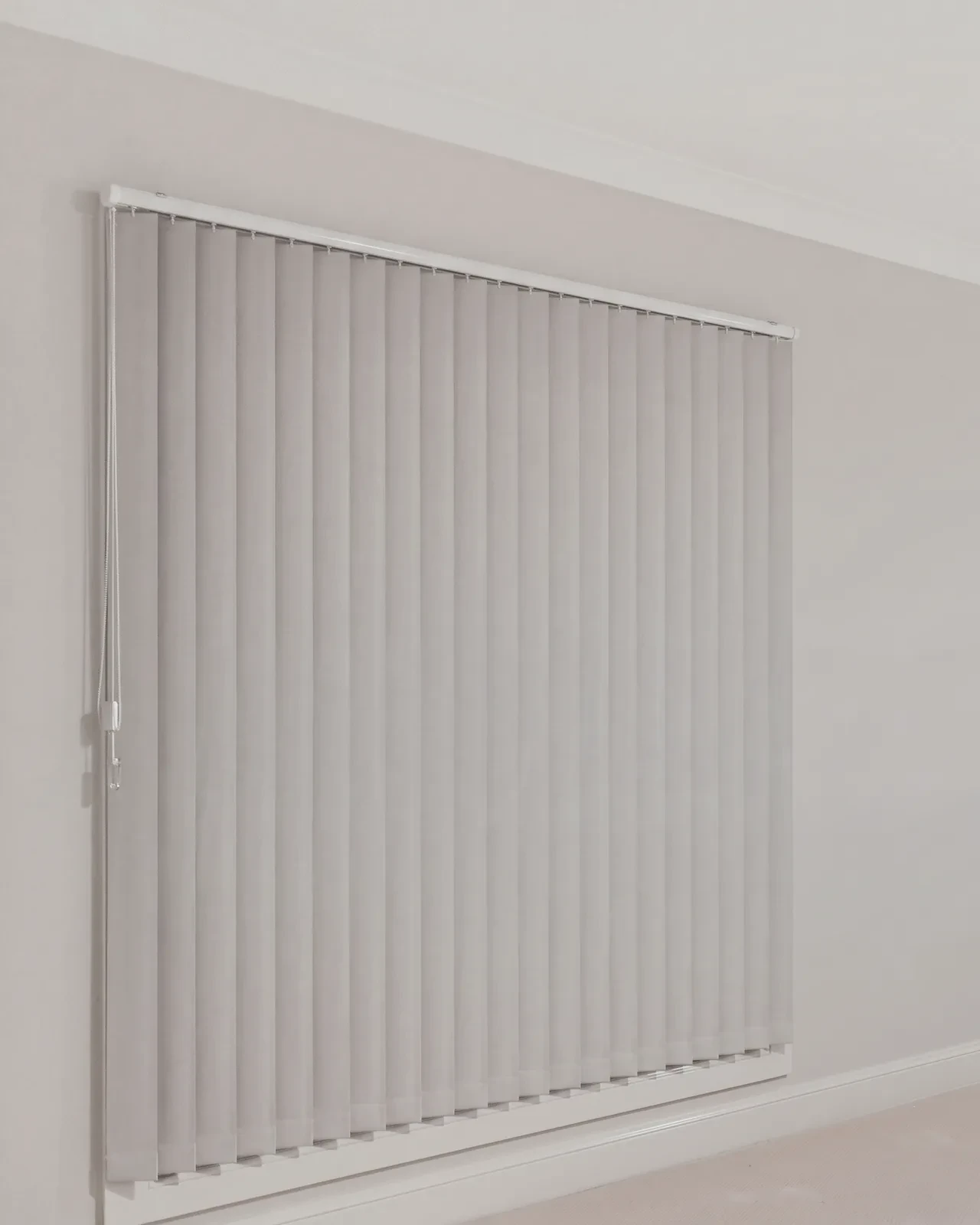
Our vertical blinds have blockout fabric vanes in three ranges: Focus, Vibe and Balmoral. Focus and Vibe are very hardy and wipe down, so they suit a spot that gets wet or dirty. Clean them where they hang.
- Close the vanes with the wand or the chain so they sit flat.
- Dust each vane top to bottom, holding the bottom so it doesn't swing.
- Turn the vanes the other way and do the back.
- Focus and Vibe: wipe marks with a damp cloth, lukewarm water and a little mild detergent. Balmoral is dust-only.
- Leave the vanes closed until they're dry.
Don't take the vanes down to wash them, and don't put them in the washing machine or the bath.
Panel glide blinds
Panel glide blinds use the same fabrics as our rollers, apart from Focus, so the roller table applies. Slide the panels across so they're spread out, then dust each one with a soft cloth or the vacuum brush. Spot clean only if your fabric allows it, and don't stack the panels until they're dry.
PVC plantation shutters
Tilt the louvres closed and dust them with a soft cloth or the vacuum brush, then tilt them the other way and repeat. For a deeper clean, use a slightly damp cloth with a pH-neutral soap. Avoid harsh chemicals, abrasive cleaners and scouring pads. PVC shutters handle moisture, so they suit bathrooms.
Curtains: sheer and blockout

For everyday care, close your curtains and vacuum them gently with the brush attachment, top to bottom, on both sides. For a mark, test a hidden spot first, then blot it with a damp cloth. Don't rub.
To wash them, follow the care label. If you're not sure, have them professionally cleaned. Many labels use a numbered code from the Window Coverings Association of Australia.
Sheer curtains
If the label shows the polyester code (4), you can hand wash them:
- Unhook the curtain from the track and take off any hooks and trims.
- Hand wash in warm water. No bleach, and don't rub or wring.
- Drip dry in the shade, then hang it back up by its hooks while it's still damp so it dries straight.
Blockout curtains
If the label shows a coated or foam-backed code (6 or 6W), or there's no label, use a professional curtain cleaner. Those codes say:
- Don't put them in a home washing machine, don't soak them and don't tumble dry.
- If the label allows hand washing, use cool to warm water, no hotter than 40 °C, with a mild wool wash. Don't rub or wring.
- Hang them by the hooks to dry with the coated sides apart, and don't iron the coated side.
Every one of these codes warns of possible shrinkage of 3%. On a 2,700 mm drop that's about 80 mm, which matters on a curtain made to your measurements. If the length matters, use a specialist curtain cleaner.
Mould and marks
This guide is for indoor blinds and curtains. We don't sell outdoor blinds.
Mould grows where damp sits. Leave a blind down and a curtain closed until it's dry, never roll up a damp blind, and air the room after a shower.
On aluminium, Visionwood and PVC shutters, treat mould like any other mark: a damp cloth (mild detergent on aluminium, pH-neutral soap on shutters), then dry the surface. On fabric, we don't have a mould treatment we can recommend, so don't use bleach or a mould spray. Send us a photo first.
For a steamy room, choose something that wipes clean: aluminium or Visionwood venetians, PVC shutters, or a wipe-clean fabric from the roller table.
When to replace instead of clean
Worn hardware usually means a part, not a new blind. Chains, brackets, end caps, wands, cords and cord locks are all in our spare parts.
It's time for a new blind when the fabric itself is past it: a mark on a dust-only fabric that won't brush off, mould you can't shift, or fabric that's frayed or faded. Replacing them is a DIY job: you measure the window with our measuring guide, design the blind and see your price as you go, we make it to your sizes, and you fit it. You can order up to 10 free samples first.
Questions
What's the easiest way to clean dirty blinds?
Dust them with a vacuum on the soft brush, blinds down or slats closed. Then wipe marks only if the material allows it: aluminium, PVC and screen fabrics do, but many fabric blinds are dust-only.
How do I clean blinds without taking them down?
That's the only way we recommend. Dust both sides where it hangs, spot clean only where the material allows it, and let it dry in place.
Can I wash roller or vertical blinds in the washing machine or the bath?
No. None of the makers of our blind fabrics list soaking or machine washing. Clean them where they hang.
Can I use vinegar to clean blinds?
We don't recommend it. Our care is a damp cloth, plus a little mild detergent where the material allows it, and our warranty doesn't cover cleaning products we don't recommend.
How do professional cleaners clean blinds?
Methods vary, so tell your cleaner your fabric range or slat material before they start, and ask them not to soak fabric blinds or use water on dust-only fabrics.
Can curtains go in the washing machine?
Only if the care label says so. The polyester code asks for a warm hand wash, and coated or foam-backed blockouts must not go in a home washing machine. If you're not sure, have them professionally cleaned.
Measure up for a new blind
You measure, we make it to your sizes, and you fit it.
You may also like

You may also like
Subscribe for new fabrics and install tips.
One email a month: new fabrics, install tips, the occasional honest before/after.
No spam, no daily-deal noise.

It’s never too early to consider window furnishings when you’re planning on renovating or building. Our expert team of design consultants can help create unique solutions and seamless designs and even quote directly off your house plans.





More Info
InspirationAbout UsContact UsOur ArticlesSuccess StoriesPerfect Fit GuaranteeDelivery InformationCustomer ReviewsFrequently Asked QuestionsGet in Touch
Address: 16 Bradwardine Road, Robin Hill NSW 2795
Email: hello@homeblindsaustralia.com.au
Phone: 1300 195 797
More Info
InspirationAbout UsContact UsOur ArticlesSuccess StoriesPerfect Fit GuaranteeShipping & Return PolicyCustomer ReviewsFrequently Asked QuestionsGet in Touch
Address: 16 Bradwardine Road, Robin Hill NSW 2795
Email: hello@homeblindsaustralia.com.au
Phone: 1300 195 797
© Copyright Home Blinds Australia 2026. All Rights Reserved.
Payments Accepted:
