



 Roller blinds
 Double roller blinds
 Roman blinds
 Venetian blinds
 Vertical blinds
 Panel blinds
 Order Free Samples
 Spare Parts
 How To Guides
 Book A Design Consultation
 Inspiration
 Upload Your Plans
 Curtains
 Double curtains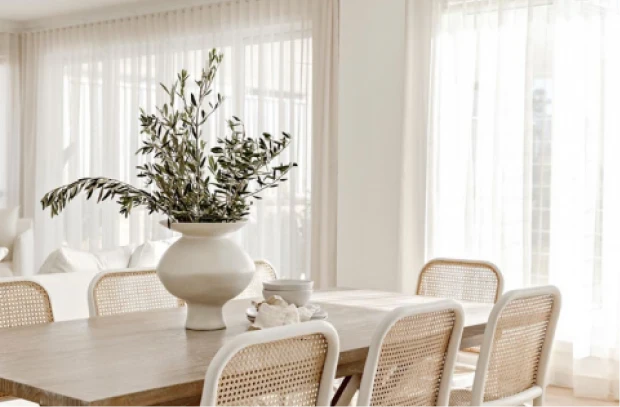
 Design PVC plantation shutters
 Design Australian PVC plantation shutters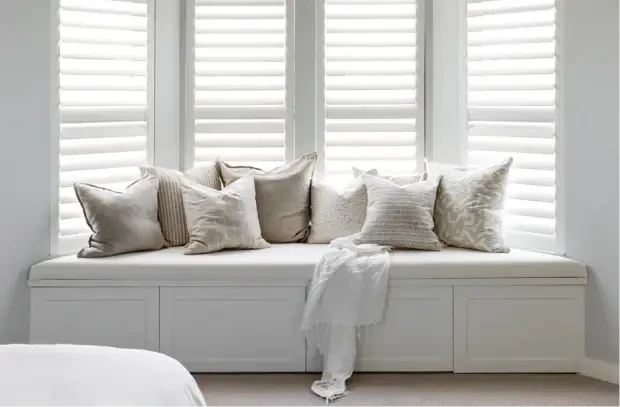
 Design motorised roller blinds
 Design motorised curtains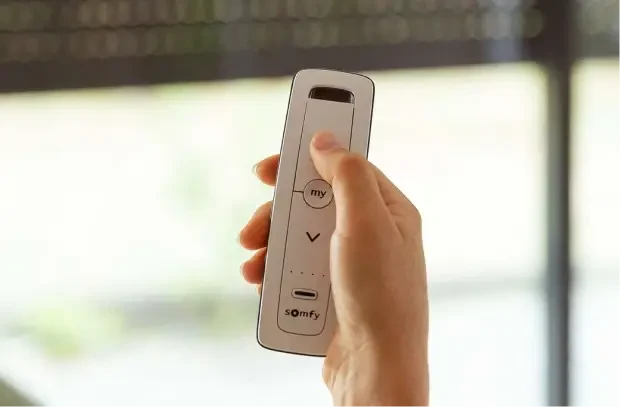
 Success Stories
 Blogs
Blogs FAQ
FAQ

Types of blinds: every style explained, and which room each suits
The main types of blinds are roller, double roller, roman, venetian, vertical and panel glide blinds, plus plantation shutters, which a lot of people call shutter blinds. The big difference is how they open. A roller rolls up, a roman folds, a venetian tilts and lifts, and verticals and panel glides slide to the side. That decides which rooms each one suits.
Blinds, curtains and shutters together are called window coverings, or window furnishings. We make every type on this page to your measurements: you measure the window, design it online and fit it yourself.
Types of blinds at a glance
| Type | Rooms it suits | Light control | How it opens |
|---|---|---|---|
| Roller | Bedrooms, living rooms, kitchens, offices | Blockout, light filtering or sunscreen fabric | Rolls up onto a tube at the top |
| Double roller | Bedrooms, street-facing living rooms | A blockout plus a sunscreen or light-filtering blind | Two rollers on one bracket, each raised on its own |
| Roman | Bedrooms, living and dining rooms | Blockout or light filtering | Folds up into flat pleats |
| Venetian | Bathrooms, kitchens, offices, living rooms | Slats tilt from full light to full privacy | Slats tilt, then the blind lifts |
| Vertical | Sliding doors, wide windows | Blockout vanes; light gets between them | Vanes turn, then draw to the side |
| Panel glide | Sliding and stacker doors, wide windows | Blockout, light filtering or sunscreen | Flat panels slide and stack behind each other |
| Plantation shutters | Bathrooms, laundries, bedrooms, living areas | 89 mm louvres tilt; not a blockout | Panels hinge open like a door, or stay fixed |
Only rollers, double rollers and curtains can be motorised with us. Romans, venetians, verticals, panel glides and shutters are operated by hand.
Roller blinds
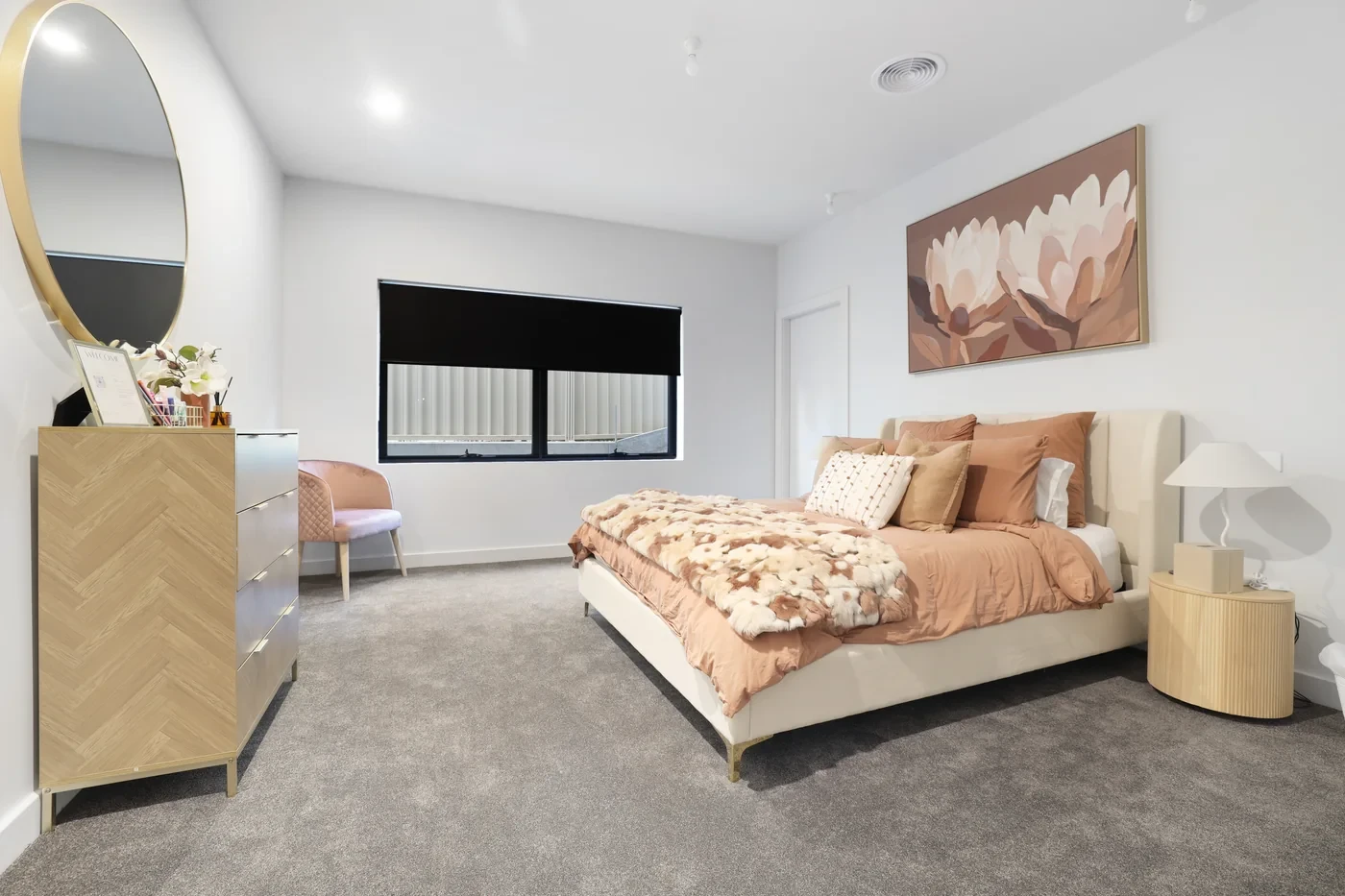
One piece of fabric on a tube. Pull the chain, or press a remote if you add a motor, and it rolls up or stops wherever you leave it. The fabric decides what it does:
- Blockout stops light and gives full privacy. It's the bedroom fabric.
- Light filtering softens daylight and keeps daytime privacy, so it suits living areas.
- Sunscreen keeps your view and cuts glare, but people can see in at night.
The trade-off: a roller is only up or down, with no tilting for half privacy. A recess fit inside the frame needs about 60 mm of depth; a face fit on the wall above overlaps the opening, so less light gets in at the edges. Compare the 40+ colours on our roller blinds page, or open the roller blind designer to see your price.
Double roller blinds
Also called day and night blinds: a blockout blind and a sunscreen or light-filtering blind on one bracket. Leave the translucent one down by day, then pull the blockout down at night. Each runs on its own chain, or you can motorise the front blind or both. It suits a living room that faces the street, or a bedroom you also work in.
The catch is depth. A recess fit needs about 125 mm. If your frame is shallower, a slimline double bracket holds the rolls closer together, or fit it on the face of the wall. Read about double roller blinds, or design a double roller.
Roman blinds
A flat panel of fabric that folds into neat pleats as you raise it. You get the soft look of fabric without the width of curtains, which is why romans turn up in bedrooms, studies and dining rooms. Ours come in blockout or light-filtering fabric, raised with an Acmeda chain drive, a cord and cleat, or a cord lock.
Two things to know. Romans use more fabric than a roller, so they cost more in the same fabric range. And the folds stack at the top, so on a tall window a raised roman still covers the top of the glass. See our roman blinds page, or price one in the roman blind designer.
Venetian blinds
Horizontal slats you tilt and lift. Half tilted, they let daylight in and keep your privacy at the same time, which a roller can't do. Light does get between the slats, so a venetian isn't the blind for a room that has to be dark. We make four, and the material decides the room:
- Purewood: real basswood timber, 50 mm slats, painted finish, five colours. For living rooms and bedrooms, not wet areas.
- Visionwood: PVC with a timber look, in 50 mm or 63 mm slats. It handles moisture, so it's the timber look for kitchens and bathrooms.
- 25 mm slimline aluminium: slim slats in 11 colours. Aluminium doesn't warp or swell, so it suits kitchens, bathrooms, laundries and offices.
- 50 mm aluminium: wider slats in Basic White, Black Satin or Brushed Aluminium.
On a door, add hold-down clips so the blind doesn't swing. Our venetian blinds page puts all four side by side.
Vertical blinds
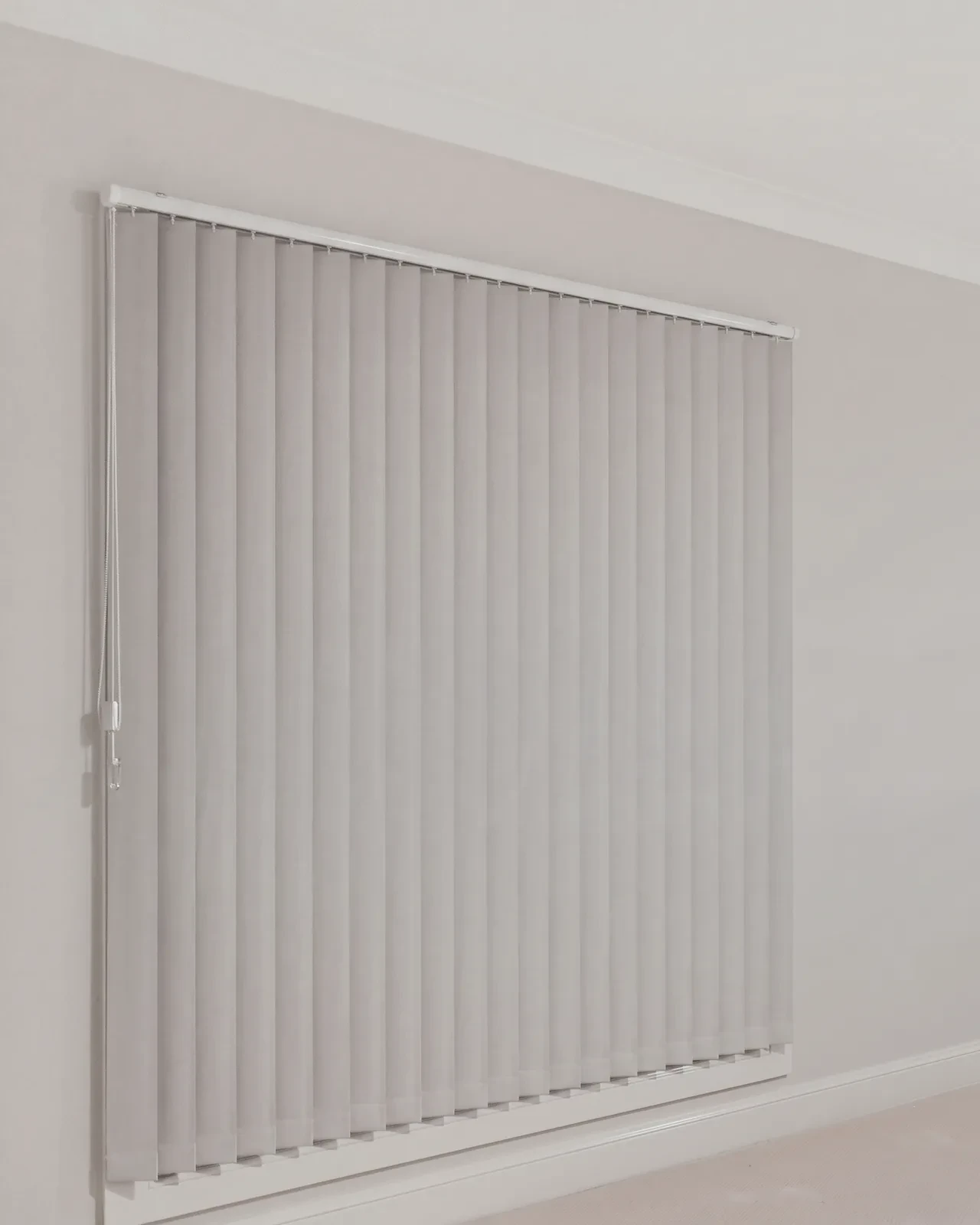
A row of fabric vanes hanging from a track. Turn the wand and the vanes rotate; draw them and they stack to the side, left, right, centre or split. Because they stack sideways instead of rolling up, width isn't a problem, which makes them the practical choice for sliding doors.
Ours are blockout fabric only, with 127 mm vanes as standard or 89 mm for small windows. Light still passes between the vanes, so a bedroom that has to be dark wants a roller or curtain instead. Each vane is weighted at the bottom, with no chain joining them. Face fit is standard, as a recess fit needs a deep recess. More on vertical blinds, or design yours and see the price.
Panel glide blinds
Wide, flat fabric panels that slide along a track and stack behind each other. Picture a vertical blind with a few big panels instead of lots of vanes. The panels overlap when closed, so there are fewer gaps for light.
They take the same blockout, light-filtering and sunscreen fabrics as our rollers, so the slider can match the windows. Fewer, wider panels look cleaner; more panels stack into a smaller space. Even stacked, they cover roughly one panel's width of glass, so stack them on the side you don't walk through. See our panel glide blinds, or design a panel blind.
Plantation shutters (shutter blinds)
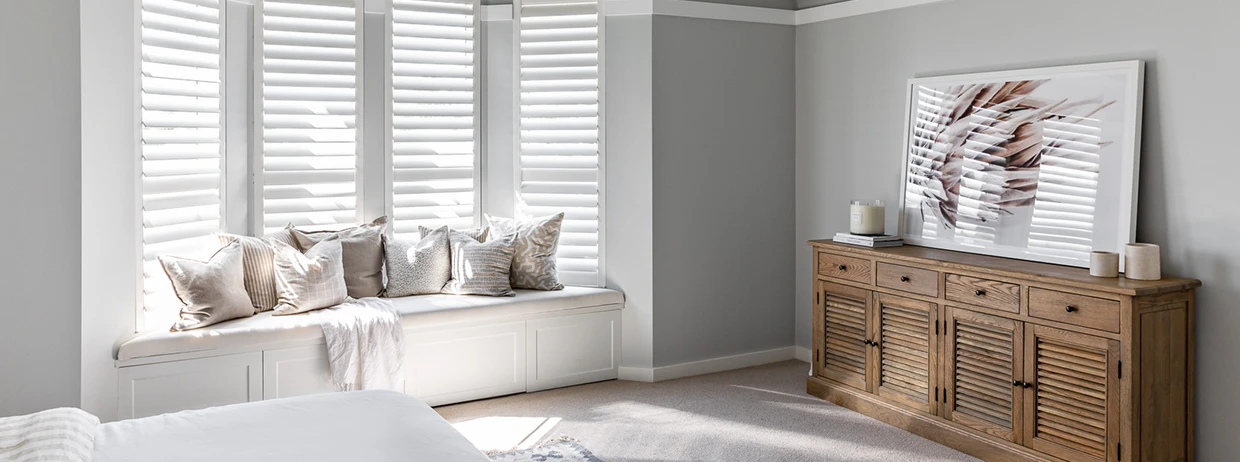
Search for shutter blinds or plantation blinds and you'll land here. Strictly, they aren't blinds: they're panels in a frame fixed around the window, with 89 mm louvres you tilt to set the light. Hinged panels swing open like a door; fixed panels stay put while the louvres still tilt.
We make two, both in PVC: PVC Plantation Shutters in White or Snow White, and Australian PVC Plantation Shutters in White. PVC handles moisture, so they suit bathrooms and laundries as well as bedrooms. A reveal fit needs at least 65 mm of depth so the louvres clear the glass. Shutters aren't a blockout, as small gaps around the panels are normal. They're made to order (allow 4 to 6 weeks) and take longer to fit than a blind. More on our plantation shutters page.
And curtains?
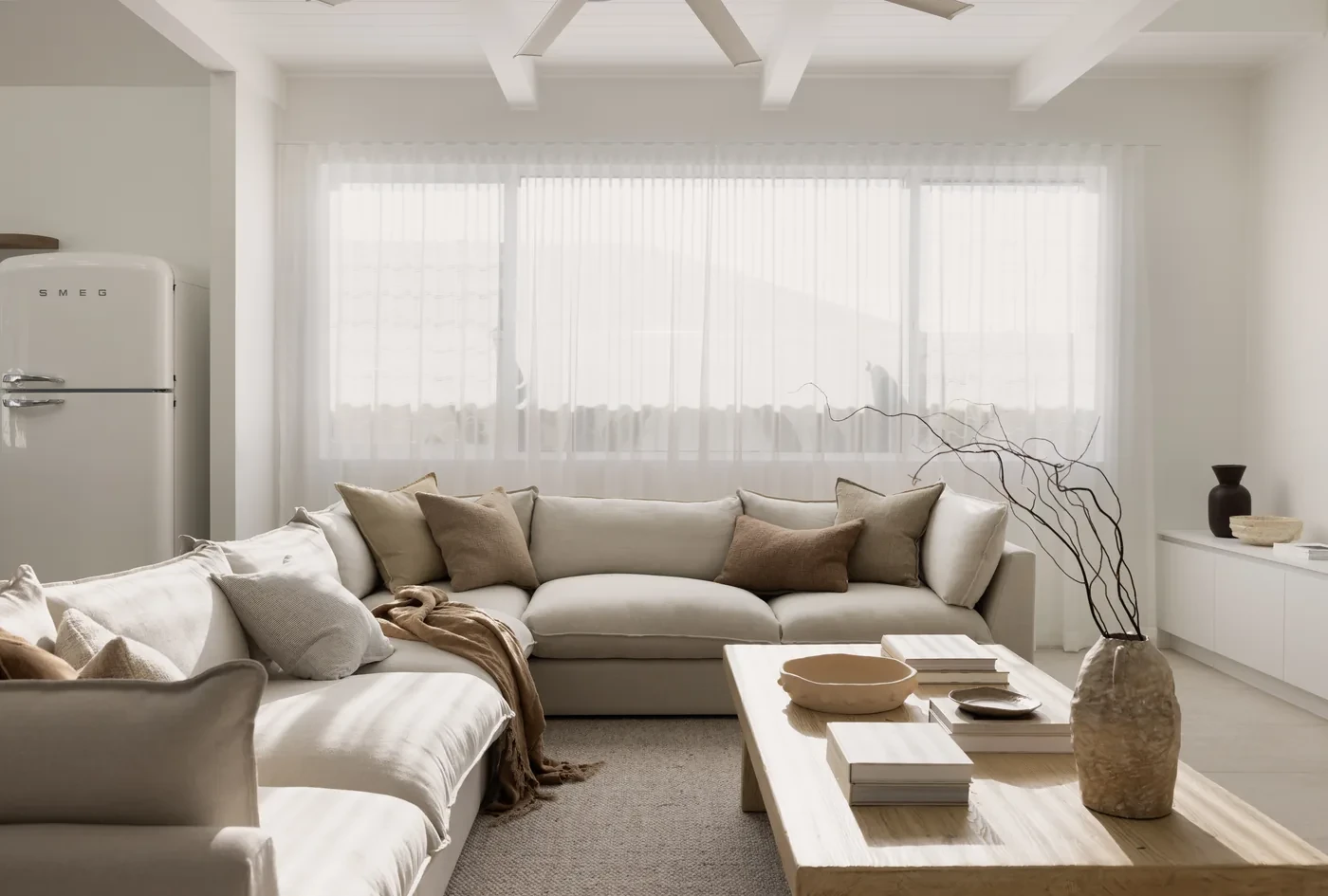
Not blinds, but plenty of rooms have both. Ours are sewn to your measurements in Australia, in sheer or blockout fabric, with an S-fold or pinch pleat heading on a ceiling or wall track. A sheer in front of a blockout roller gives you soft light by day and a dark room at night. The track comes with brackets and instructions; hanging it is a job for two people. See our curtains.
Which type of blind for which room
- Bedrooms: a blockout roller, face fit for the darkest room. A double roller if you also want daylight, or a blockout roman for a softer look. Skip verticals and venetians where sleep matters.
- Living rooms: a sunscreen or light-filtering roller keeps the view; a double roller if you face the street. Romans and Purewood venetians bring fabric or timber in.
- Kitchens: a sunscreen roller over the bench, a roller in Focus or Vibe blockout (very hardy fabrics that wipe down), or an aluminium or Visionwood venetian that wipes clean.
- Bathrooms and laundries: a roller in Focus or Vibe, Visionwood or aluminium venetians, or PVC shutters. Not real timber.
- Sliding doors: verticals or panel glides, stacked away from where you walk.
- Home offices: a sunscreen roller to cut screen glare, or a 25 mm aluminium venetian you can tilt as the sun moves.
Measuring and fitting: what DIY means for each type
Every type works the same way. You measure, design it online and see the price, we make it to your sizes, and you fit it. Nobody comes to your house; that part is yours.
- Check the depth. A recess fit needs about 60 mm for a roller, 125 mm for a double roller and at least 65 mm for a shutter. Verticals usually go on the face of the wall. Too shallow? Choose a face fit.
- Measure in millimetres with a steel tape. Width at the top, middle and bottom; drop at the left, centre and right. For a recess fit, use the smallest of each. Our guide to measuring for blinds has videos for common Australian windows.
- We make it. Blinds and curtains are made in Australia to your sizes and dispatched in 8 to 15 business days.
- Fit it yourself. A roller blind is two brackets, four screws, a drill and a level: about twenty minutes a window once you've done the first. Buy fixings for your wall; we don't include them because every wall is different.
Need a part later? See our spare parts range.
Questions people ask about types of blinds
What are the different types of blinds?
Roller, double roller, roman, venetian (timber, PVC or aluminium), vertical and panel glide blinds, plus plantation shutters, often called shutter blinds.
What are the most common types of blinds in Australia?
Roller blinds. They suit almost any window, the three fabrics cover most jobs, and they're the simplest blind to measure and fit.
What are window coverings?
Anything fitted to a window to control light and privacy: blinds, curtains and shutters. Window furnishings means the same thing.
Are shutter blinds the same as plantation shutters?
Usually, yes. People search for shutter blinds or plantation blinds, but the product is a plantation shutter: panels in a frame with tilting louvres. Unlike a blind, it doesn't roll or lift away; the panels hinge open or stay fixed.
Can I install blinds myself?
Yes. Everything we make is sent for you to fit. Most blinds need a drill, a level and fixings for your wall. Each product has its own install video, and if you get stuck, call us on 1300 195 797.
Order free samples
Up to 10 swatches, posted free, so you can see the fabric in your own light.
You may also like

You may also like
Subscribe for new fabrics and install tips.
One email a month: new fabrics, install tips, the occasional honest before/after.
No spam, no daily-deal noise.

It’s never too early to consider window furnishings when you’re planning on renovating or building. Our expert team of design consultants can help create unique solutions and seamless designs and even quote directly off your house plans.





More Info
InspirationAbout UsContact UsOur ArticlesSuccess StoriesPerfect Fit GuaranteeDelivery InformationCustomer ReviewsFrequently Asked QuestionsGet in Touch
Address: 16 Bradwardine Road, Robin Hill NSW 2795
Email: hello@homeblindsaustralia.com.au
Phone: 1300 195 797
More Info
InspirationAbout UsContact UsOur ArticlesSuccess StoriesPerfect Fit GuaranteeShipping & Return PolicyCustomer ReviewsFrequently Asked QuestionsGet in Touch
Address: 16 Bradwardine Road, Robin Hill NSW 2795
Email: hello@homeblindsaustralia.com.au
Phone: 1300 195 797
© Copyright Home Blinds Australia 2026. All Rights Reserved.
Payments Accepted:
