



 Roller blinds
 Double roller blinds
 Roman blinds
 Venetian blinds
 Vertical blinds
 Panel blinds
 Order Free Samples
 Spare Parts
 How To Guides
 Book A Design Consultation
 Inspiration
 Upload Your Plans
 Curtains
 Double curtains
 Design PVC plantation shutters
 Design Australian PVC plantation shutters
 Design motorised roller blinds
 Design motorised curtains
 Success Stories
 Blogs
 FAQ

Plantation Shutters Buying Guide: Pros, Cons and How to Choose
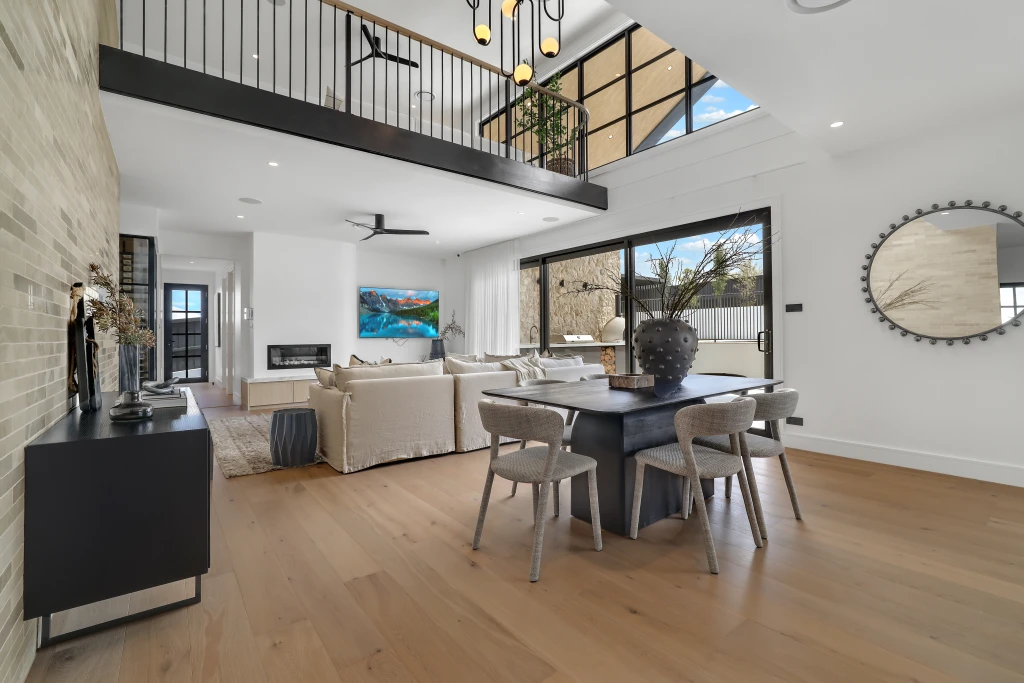
Plantation shutters are a frame of panels with louvres that tilt. They're a good buy for bathrooms, street-facing rooms and any window where you want a built-in look with no cords. They're a poor buy if you want a pitch-dark bedroom, or the lowest-cost way to cover a window. Ours are DIY: you measure, we make them to your sizes, and you fit them. This guide goes through each choice in the order our designer asks for it.
Which plantation shutters should you buy?
We make two shutters. They share the same frames, panel layouts and size range: 250 to 3,000 mm wide and 280 to 2,700 mm drop. The difference is inside the louvres and stiles (the stiles are the upright sides of each panel).
- PVC Plantation Shutters: solid PVC louvres and stiles, in White or Snow White. This is our lower starting price.
- Australian PVC Plantation Shutters: made in Australia, with an aluminium core inside the PVC louvres and stiles and mortise-and-tenon joints. White only.
Both use 89 mm blades, both carry a 5-year warranty on materials, mechanisms and workmanship, and both take about 4–6 weeks to make. The aluminium core is there to keep the blades and stiles straight and true. If you're torn, price the same window in both designers and see what the step up costs you.
What blade size do you need?
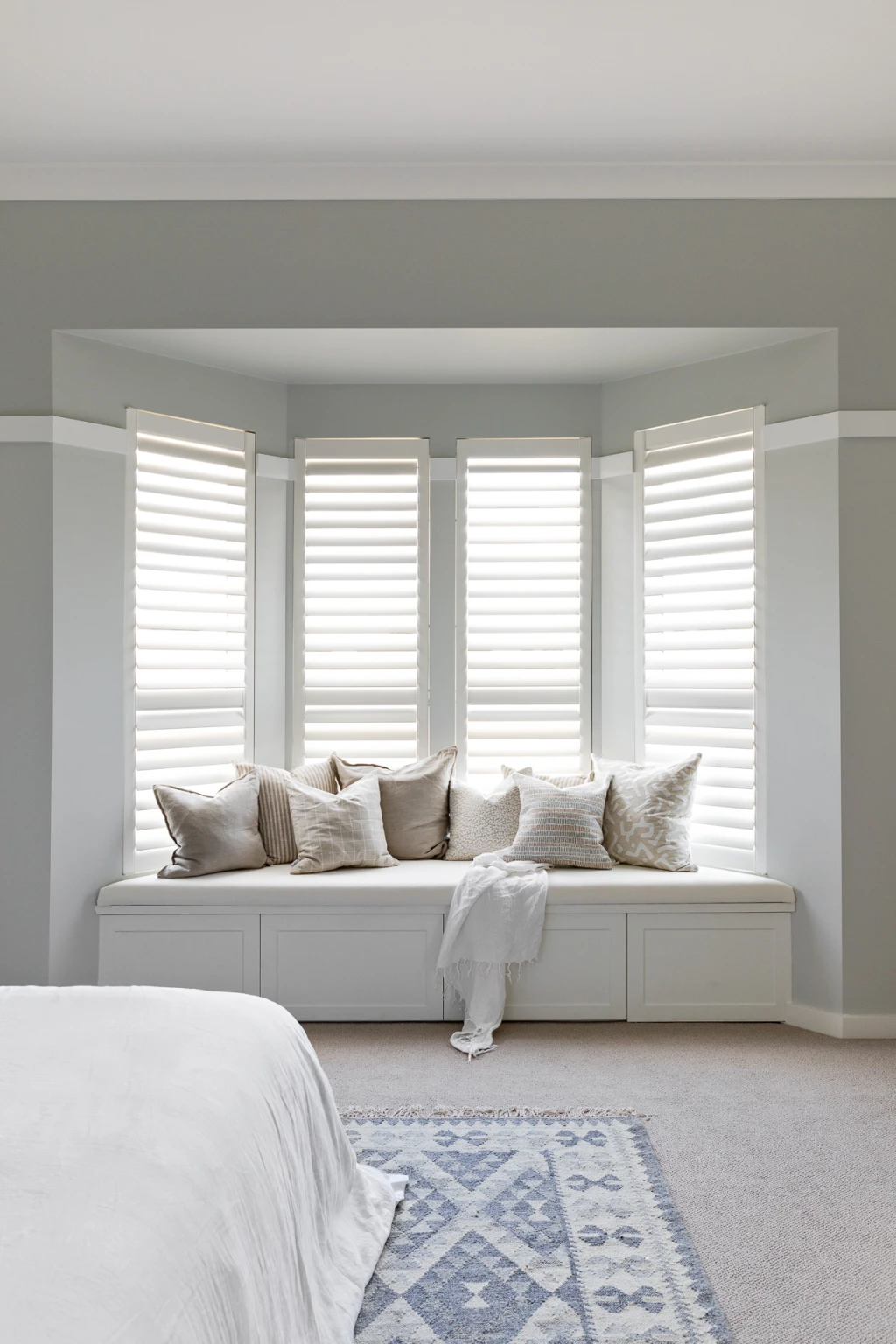
You don't have to choose. All our shutters use an 89 mm blade, the louvre that tilts. Larger blades sold elsewhere give fewer louvres and more view, but need more room to tilt.
What the blade really decides is depth. To sit inside the window reveal, our shutters need at least 65 mm of depth so the louvres clear the glass. Measure to anything that sticks out, like a window handle or a winder, not just to the glass.
Inside the reveal or on the face?
The frame is what the panels hang in, and it decides the fit. You'll pick one of four:
- L frame (48 R): sits inside the reveal and returns onto the face. The standard inside fit.
- Bullnose face frame (48 FZ): a rounded frame on the wall that covers the edge of the opening. The usual face fit.
- Flat face frame (62 F): a wider, flat frame for wide trims or an uneven surround.
- U channel: a slim channel at the top and bottom, for fixed panels only.
You also choose a full frame, which goes all the way round, or a three-sided frame that leaves the sill open so you can still use it.
Our rule of thumb: go inside the reveal if you have 65 mm of depth and a square opening, because it looks built in. Go on the face if the reveal is shallow or tiled, or the opening is out of square. The measuring section below shows how to check that.
How many panels, and which way do they open?
A shutter is a set of panels in a frame, and you can have one to four. The designer only shows the counts that work for your width. As a rough guide, one panel covers 250 to 920 mm, two go up to 1,840 mm, three up to 2,760 mm, and four take you to our 3,000 mm limit.
The layout codes look cryptic until you know the letters:
- L or R: a panel hinged on the left or the right.
- F: a fixed panel. It doesn't open, but its louvres still tilt.
- T: a post between panels, so panels can hinge off the middle of the frame.
- D: a bi-fold panel that folds onto the one beside it as it opens.
So LR is two panels that meet in the middle. LTR puts a post between them. L-DR adds a bi-fold on the right, so a wide right-hand side folds in two instead of swinging one big panel into the room.
Hinged panels swing open so you can clean the glass or open the window. Fixed panels stay put. We don't make sliding shutters on a track, so for a big sliding door have a look at our blinds for sliding doors instead.
Keep an eye on panel width. Panels wider than 700 mm can sag slightly over time, which is normal for PVC shutters because of their weight. On a wide window, one more panel keeps each one narrower.
Do you need a mid rail?
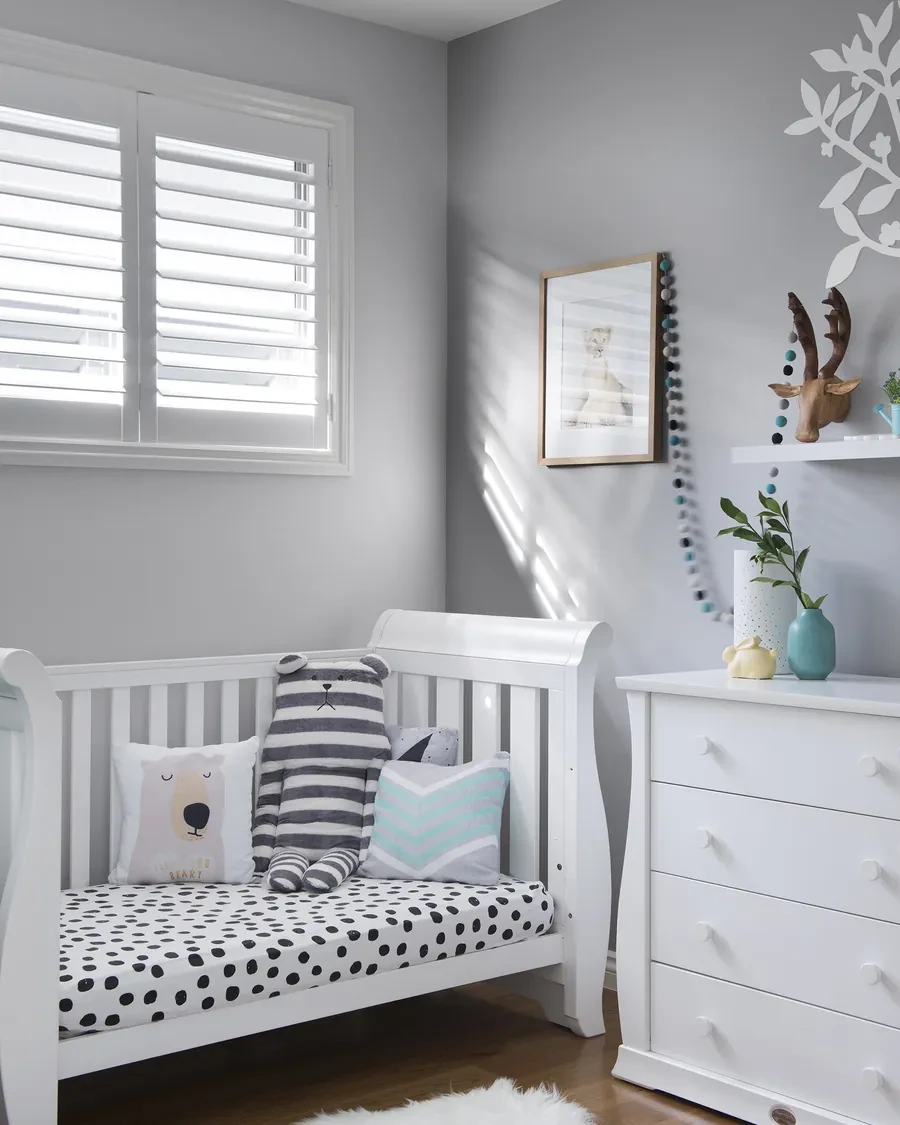
A mid rail is a bar across the panel, so the top and bottom louvres tilt separately. Close the bottom half for privacy and leave the top open for light.
On tall shutters it isn't optional. The designer moves you to one mid rail once the drop reaches 1,700 mm, and to two once it reaches 2,200 mm. You can keep the standard height or set your own. If your window has a cross bar, line the mid rail up with it so it doesn't cut across the view.
Are plantation shutters good for bathrooms and kitchens?
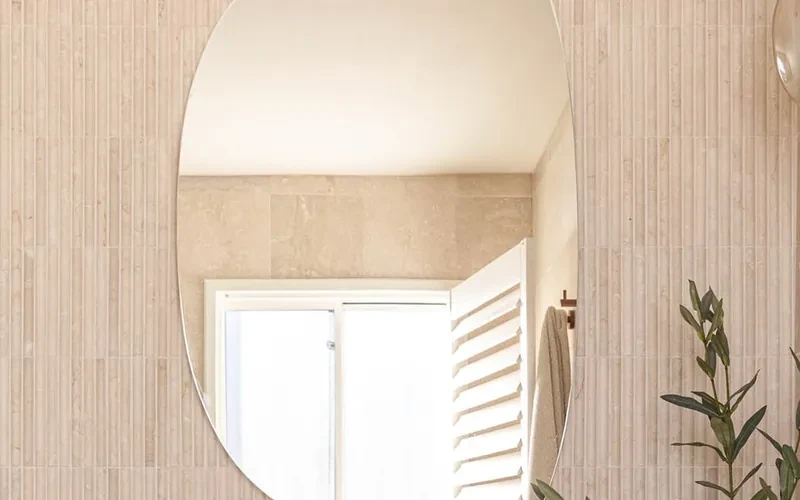
Yes, and this is where PVC earns its place. It handles steam and won't warp, crack or swell, so both of our shutters suit bathrooms, ensuites, laundries and kitchens as well as bedrooms.
A couple of things help in wet rooms. If the window never opens, fixed panels are simpler. If the reveal is tiled, a face frame is usually the easier fit. To clean them, use a damp cloth with a mild, pH-neutral soap, and skip harsh chemicals and scourers.
Plantation shutters pros and cons
The honest list, before you spend the money.
The good
- One tilt of the louvres sets the light and the privacy.
- No cords or chains hanging at the window.
- Very little upkeep: a dust or a wipe, and nothing to paint or seal.
- PVC copes with steam, so a bathroom can match the bedroom next door.
- The frame becomes part of the window, so it looks fitted rather than hung.
The not so good
- They usually cost more than a blind for the same window.
- They don't black a room out. Light gets in at the edges and between the louvres. For a dark bedroom, a blockout roller blind does that job, because its fabric stops the light.
- Hinged panels swing into the room, so check for bedheads, taps and benchtops, or choose fixed panels.
- An inside fit needs 65 mm of depth and a square opening.
- They're made to order and take about 4–6 weeks.
Still deciding between shutters, blinds and curtains? Our guide to curtains, blinds or shutters compares all three.
How to measure for plantation shutters
You need a steel tape and a few minutes a window. Work in millimetres.
- Measure the width at the top, middle and bottom, and the drop on the left, centre and right.
- Inside the reveal: give us the smallest width and the smallest drop.
- Measure both diagonals, corner to corner. If they differ by more than 5 mm, the opening is out of square and a face frame is the better choice.
- Check the depth of the reveal. You need at least 65 mm clear.
- On the face: give us the outside size of the frame you want.
There's a measuring video on our plantation shutters page. If you'd like a second set of eyes, the Perfect Fit Guarantee is a paid add-on that starts with a video call, where we check your measurements before we make the shutter.
Can you fit plantation shutters yourself?
Yes. The frame screws into the reveal or onto the wall, then the panels drop onto their hinges. You'll need a drill, a level and a second pair of hands. In short:
- Lay the frame pieces face down on carpet or a towel and join them. Each piece is marked top, bottom, left or right, and a gentle tap with a hammer helps if they're tight.
- Inside the reveal: line the frame up with the front of the window using a straight edge, screw the four corners, then add a screw at every hinge.
- On the face: line the top of the frame up with the top of the architrave, screw the centre top and then the corners, and repeat for the bottom and sides.
- Lift each panel onto its hinges and push in the hinge pin. When the louvres are fully closed they face upwards, with the hinge facing forward.
- If a panel rubs at the top or bottom, loosen the hinge screws slightly, raise or lower it, then fit the locking screw and the cover strip.
The full steps, the video and a bi-fold PDF are in our plantation shutter install guide. If your window doesn't look like the one in the video, call 1300 195 797 and a person will talk it through. Need a replacement part down the track? Start at our spare parts.
How long do they take, and how is the price worked out?
Every shutter is made to order and takes about 4–6 weeks. Delivery is quoted by size at checkout, and you see it before you pay. The price depends on the size, the frame, the number of panels and any mid rails, and the designer updates it with every choice, so you can try a fixed panel against a hinged one before you commit.
Are plantation shutters worth the money?
If you want light control, privacy and no cords in one product, and you're happy with a built-in look, yes. If the main job is a dark room, a blockout roller blind is the better buy.
What's the difference between your two shutters?
Both are PVC with the same frames, layouts and sizes. The Australian PVC Plantation Shutter is made in Australia and has an aluminium core inside its louvres and stiles. The PVC Plantation Shutter is solid PVC and starts at a lower price.
Will the louvres hit my window handles?
Inside the reveal, the louvres need 65 mm of clear depth. Measure from the front of the reveal to the handle, not just to the glass. If there's less than 65 mm, choose a face frame.
How do I clean plantation shutters?
Dust them with a soft cloth, or a vacuum with a brush attachment. For marks, use a slightly damp cloth and a pH-neutral soap. Avoid harsh chemicals and scourers.
What warranty do the shutters have?
Five years on every shutter, covering materials, mechanisms and workmanship. The full terms are on our warranty page.
Design your shutters
Pick a shutter, enter your width and drop, and see your price as you choose each option.
You may also like

You may also like
Subscribe for new fabrics and install tips.
One email a month: new fabrics, install tips, the occasional honest before/after.
No spam, no daily-deal noise.

It’s never too early to consider window furnishings when you’re planning on renovating or building. Our expert team of design consultants can help create unique solutions and seamless designs and even quote directly off your house plans.





More Info
InspirationAbout UsContact UsOur ArticlesSuccess StoriesPerfect Fit GuaranteeDelivery InformationCustomer ReviewsFrequently Asked QuestionsGet in Touch
Address: 16 Bradwardine Road, Robin Hill NSW 2795
Email: hello@homeblindsaustralia.com.au
Phone: 1300 195 797
More Info
InspirationAbout UsContact UsOur ArticlesSuccess StoriesPerfect Fit GuaranteeShipping & Return PolicyCustomer ReviewsFrequently Asked QuestionsGet in Touch
Address: 16 Bradwardine Road, Robin Hill NSW 2795
Email: hello@homeblindsaustralia.com.au
Phone: 1300 195 797
© Copyright Home Blinds Australia 2026. All Rights Reserved.
Payments Accepted:
