


 Roller Blinds
 Double Roller Blinds
 Panel Blinds
 Roman Blinds
 Vertical Blinds
 Purewood Venetian Blinds
 Visionwood Venetian Blinds
 Order Free Samples
 Spare Parts
 How To Guides
 Book A Design Consultation
 Inspiration
 Upload Your Plans
 Curtains
 Double Curtains
 PVC Plantation Shutters
 Australian PVC Plantation Shutters
 Motorised Blinds
 Motorised Curtains
 Success Stories
 Blogs
Blogs FAQ
FAQ
Post Title
Short excerpt goes here...
Read More

post-publish_date
A roller blind is a sheet of fabric on an aluminium tube, raised and lowered by a chain or a motor. It's the simplest window covering there is, which is exactly why it's in more Australian windows than anything else. The fabric does all the work, the fit decides how well it does it, and everything else is an option. This guide covers all of it in the order you'll meet it in the configurator. (Not sure a roller is the right product at all? Start with the types of blinds and curtains guide.)
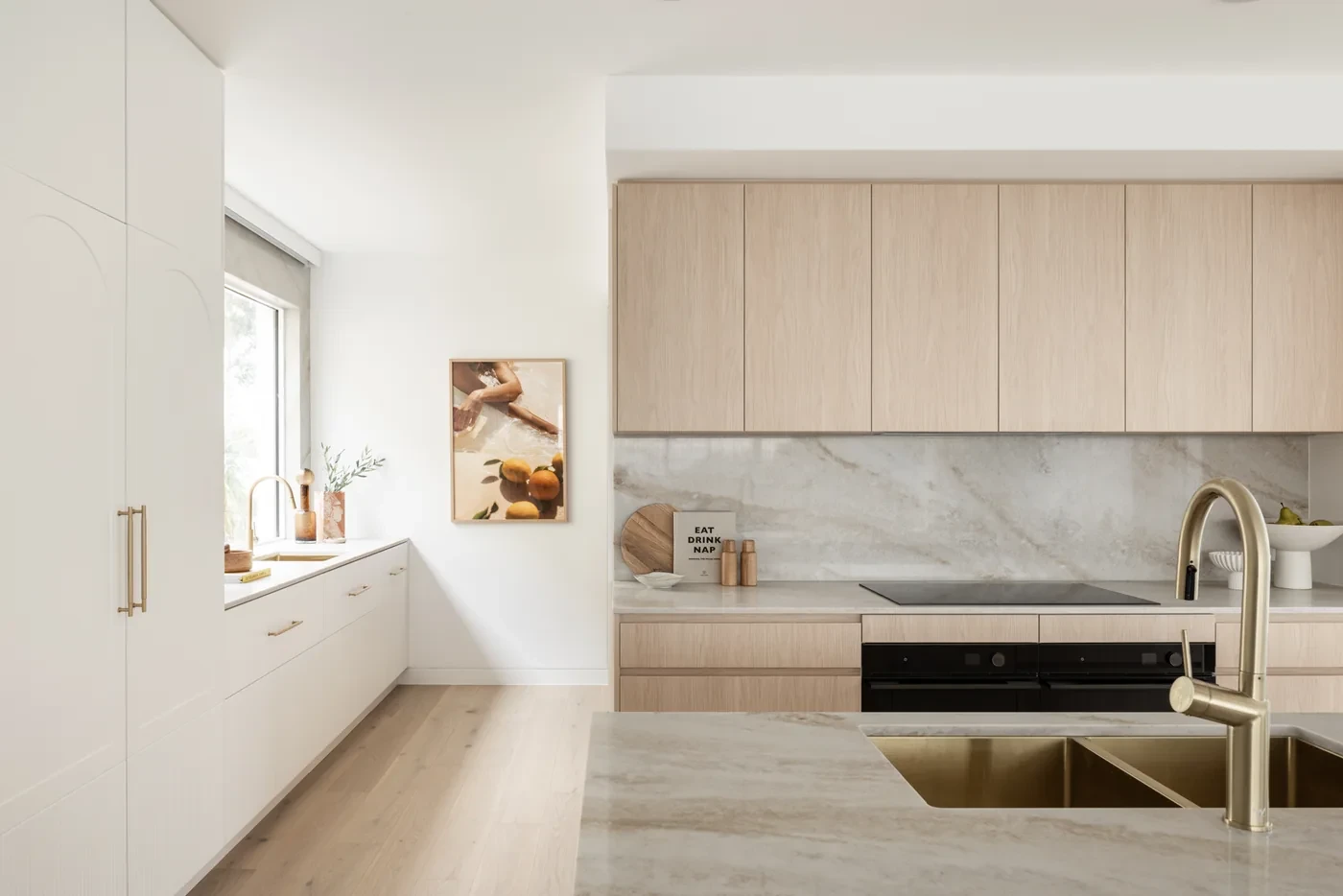
A sunscreen roller in a kitchen in a HAAUS build. Half down, it takes the glare off the bench and you can still see out.
The tube sits in two brackets at the top of the window. On one end is the control — a chain drive on most of ours, or a motor inside the tube on a motorised blind. The fabric wraps around the tube and hangs down to a weighted base rail that keeps it flat. Pull the chain one way and the tube turns and lets fabric down; pull the other way and it winds back up. That's the whole machine.
Ours are built on Rollease Acmeda hardware with a 45mm heavy-duty aluminium tube and an aluminium base rail, which is why we're comfortable putting a five-year warranty on them. A good tube matters more than it sounds: a thin one bows on a wide blind and the fabric tracks sideways as it rolls.
One more thing to know about how it hangs. The configurator asks for a roll direction. Back roll (the default) has the fabric coming off the back of the tube, closest to the glass, which gives you the tightest fit and the least light around the edges. Front roll brings the fabric off the front, so it hides the tube and clears window handles that would otherwise catch the fabric. If you have a winder or a handle in the way, pick front roll.
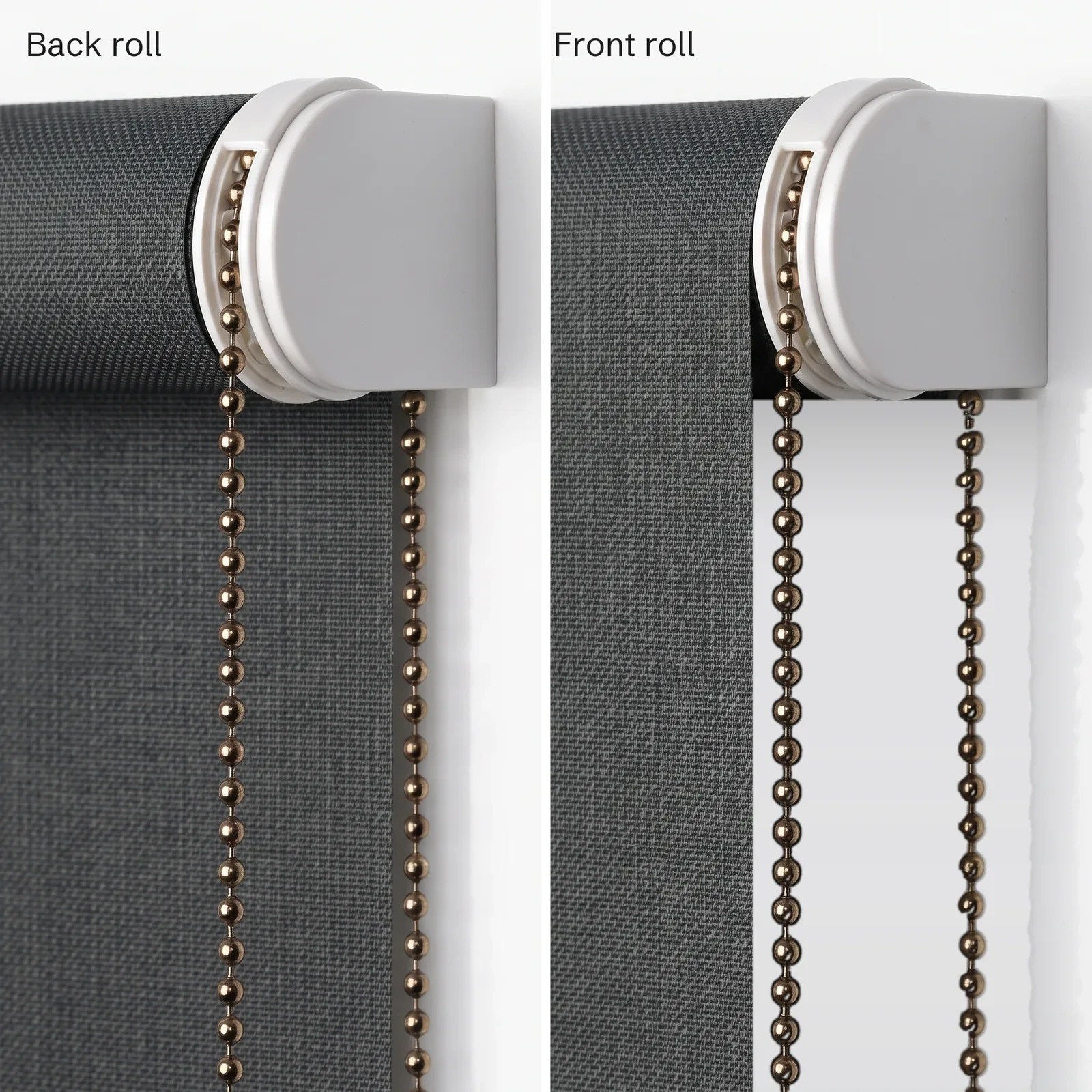
Back roll on the left, front roll on the right. Same blind, same bracket; the fabric just leaves the tube on the other side.
This is the only decision that really matters, so don't rush it. Every roller fabric falls into one of three families:
| Fabric | What it does | Privacy | Put it in |
|---|---|---|---|
| Blockout | Opaque, coated fabric. No light through the cloth at all; the only light in a room comes around the edges. Also the warmest in winter and the coolest in summer | Total, day and night | Bedrooms, nurseries, media rooms, any west window you only use at night |
| Light filtering | A closed weave that turns direct sun into a soft, even glow. You can't see through it either way | Good by day and night, though shapes show against the light | Bathrooms, living rooms and bedrooms that want to be bright but private |
| Sunscreen | An open mesh woven from coated yarn. Cuts glare and a good share of heat while you keep the view out | Daytime only — at night with the lights on, people can see in | Living rooms, kitchens, offices, anywhere you're in during the day and the view matters |
Sunscreens come in different openness — the share of the weave that's actually open. A tighter weave blocks more glare and gives a little more privacy; a more open one gives a clearer view. Darker sunscreens are easier to see through than pale ones, which surprises people — the colour guide and the privacy guide go into why. Our blockout ranges include fabrics like Focus and One Block; the screens include One Screen and Kleenscreen. The swatch card tells you which family each one belongs to.
Can't decide between two? Put both on the window with a double roller: sunscreen at the front for the day, blockout behind for the night. It's the answer for a street-facing living room or a bedroom you also work in.
Order free samples before you order blinds. Colour on a screen is a guess; a swatch taped to your actual window at midday is not. Hold sunscreens up to the glass and look through them, and put blockouts against the wall to see how the colour reads in your light.
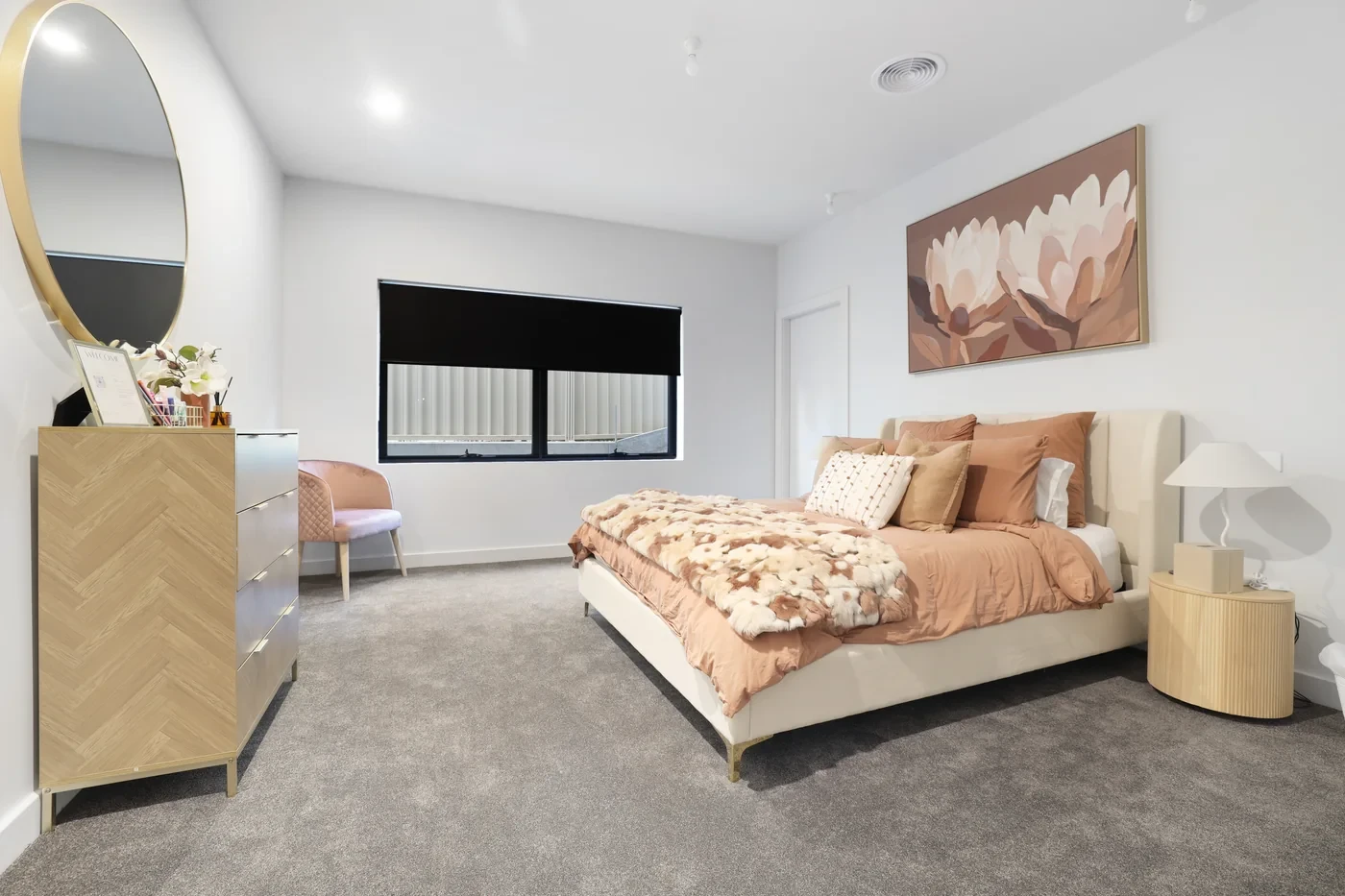
A black blockout roller in a bedroom. Darker blockouts read darker at the edges than pale ones — same opaque cloth, less glow.
For more real installs, see blockout blinds in real Australian homes.
This is the second decision, and it changes how you measure, so settle it before you get the tape out.
Our measuring guides walk through both with a video, and if you're nervous, the Perfect Fit Guarantee remakes the blind free if the measurement is wrong — up to five blinds a household, as long as you tell us within 14 days of unpacking.
| Option | What it is | Worth it when |
|---|---|---|
| Control side | Which end the chain (or motor) is on | Always — put the chain on the side away from the bed, the cot or the door swing |
| Chain colour | White, black or a metal chain | Match it to the fabric or the window frame; black chain on a charcoal sunscreen disappears |
| Pelmet (fabric-wrapped or metal) | A shallow box over the tube | You want the hardware hidden, or you need the light gap over the top of the roll closed — bedrooms and media rooms |
| Motor | Battery or hard-wired motor inside the tube, remote or app | High windows, banks of three or more, kids' rooms, or you just don't want a chain. Our motorisation guide covers the Somfy and Acmeda options |
| Double bracket | Two blinds on one set of brackets | You want day and night fabrics on the same window — see double roller blinds |
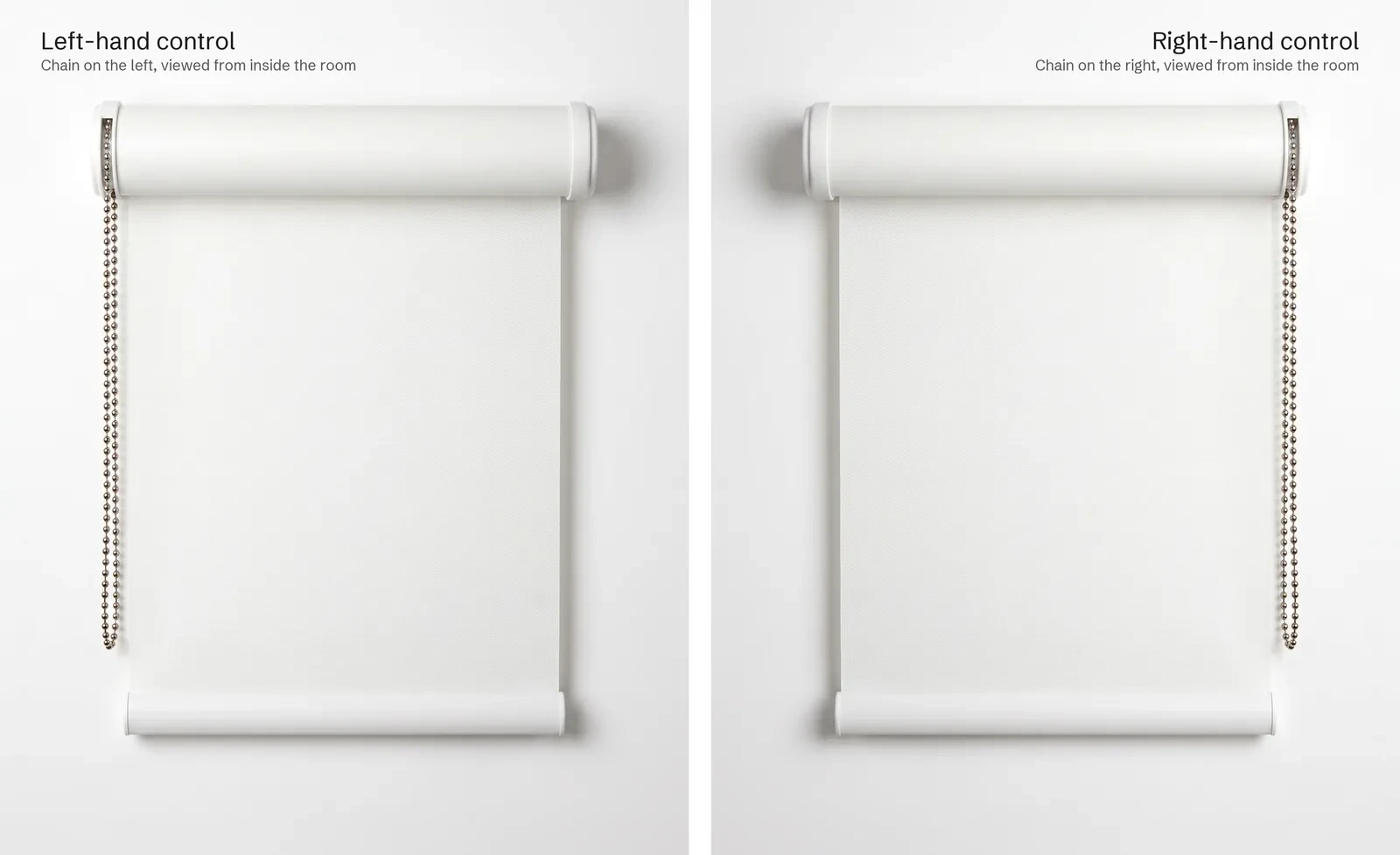
Control side: left-hand or right-hand, as you look at the blind from inside the room
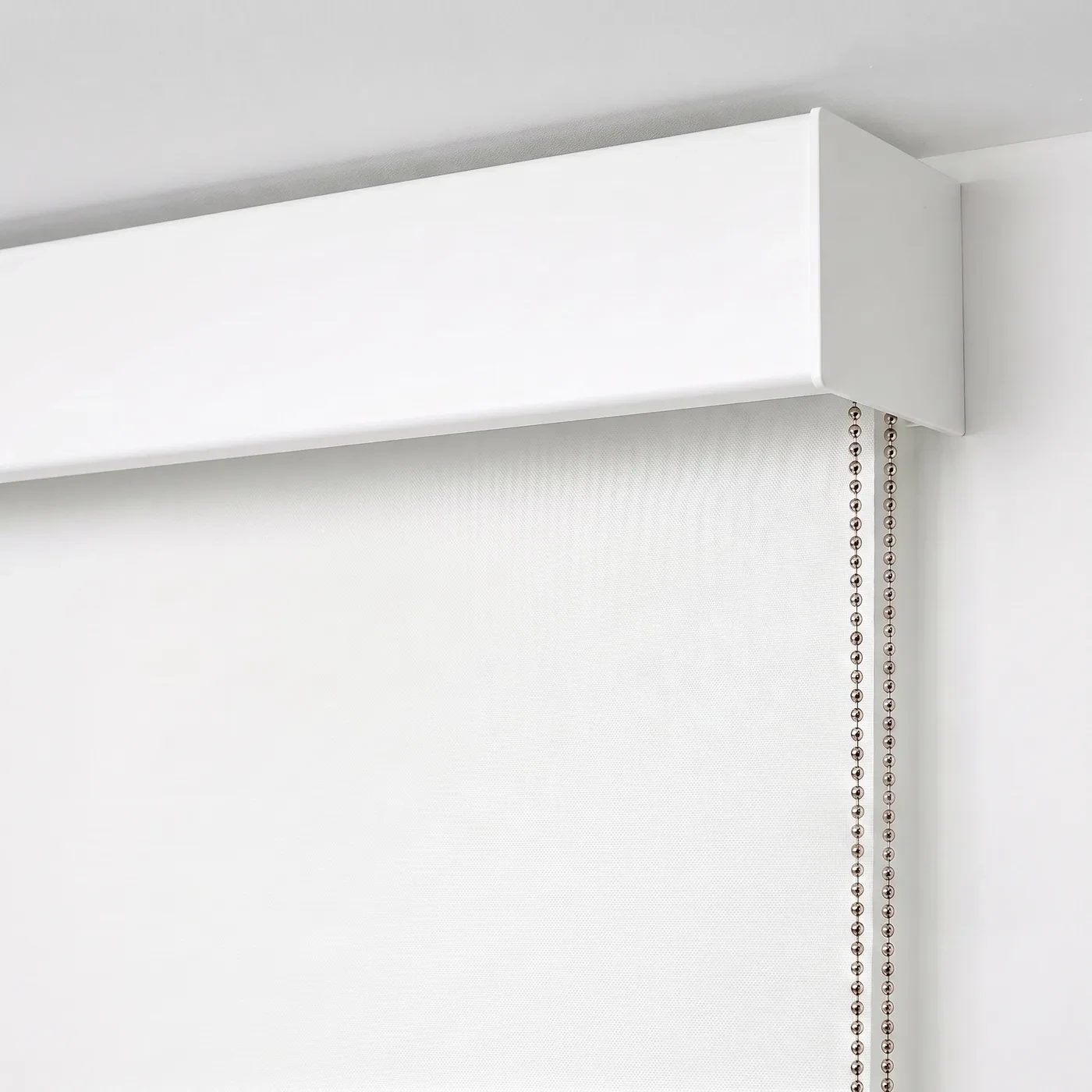
A white metal pelmet over the tube — hides the hardware and closes the light gap at the top
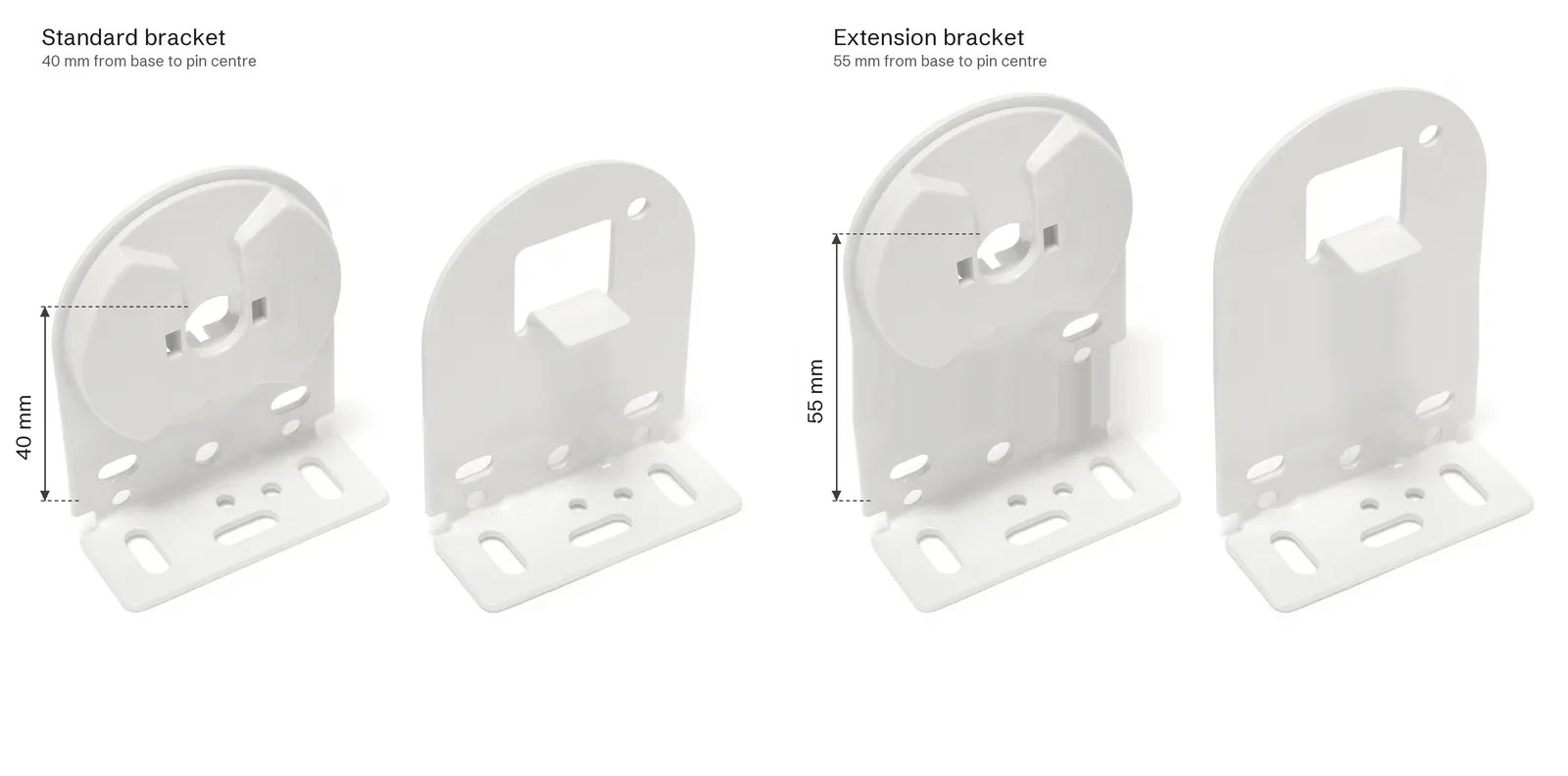
Standard bracket (40mm) and extension bracket (55mm) — the extension clears handles and architraves on a face fit
What you don't need to pay extra for: the chain tensioner (the P-clip that holds the chain against the wall) comes with every chain blind and the law says you fit it wherever the chain hangs within 1.6 metres of the floor. Fit it. It's not optional and it takes one screw.
| Room | Fabric | Fit | Notes |
|---|---|---|---|
| Bedroom | Blockout | Face fit, pelmet | Dark colour reads darker at the edges |
| Nursery / kids | Blockout | Face fit | Chain away from the cot, tensioner fitted — or motorise it. See the nursery guide |
| Living room | Sunscreen, or sunscreen + blockout double | Recess or face | Dark sunscreen for the clearest view; pale for the most heat reflection |
| Kitchen | Sunscreen or light-filtering | Recess | Screen fabrics wipe clean; keep the base rail clear of the tap |
| Bathroom | Sunscreen or coated blockout | Face fit above the tiles | Screen fabric only where the glass is frosted or the outlook is private — see the bathroom guide |
| Home office | Sunscreen | Either | Kills the glare on the screen without a dark room |
| West-facing anything | Sunscreen by day, blockout for the hottest hours | Face fit | Our summer heat guide goes deeper |
| Rental | Whatever the room needs | Recess | Four screws, takes down in five minutes and moves with you |
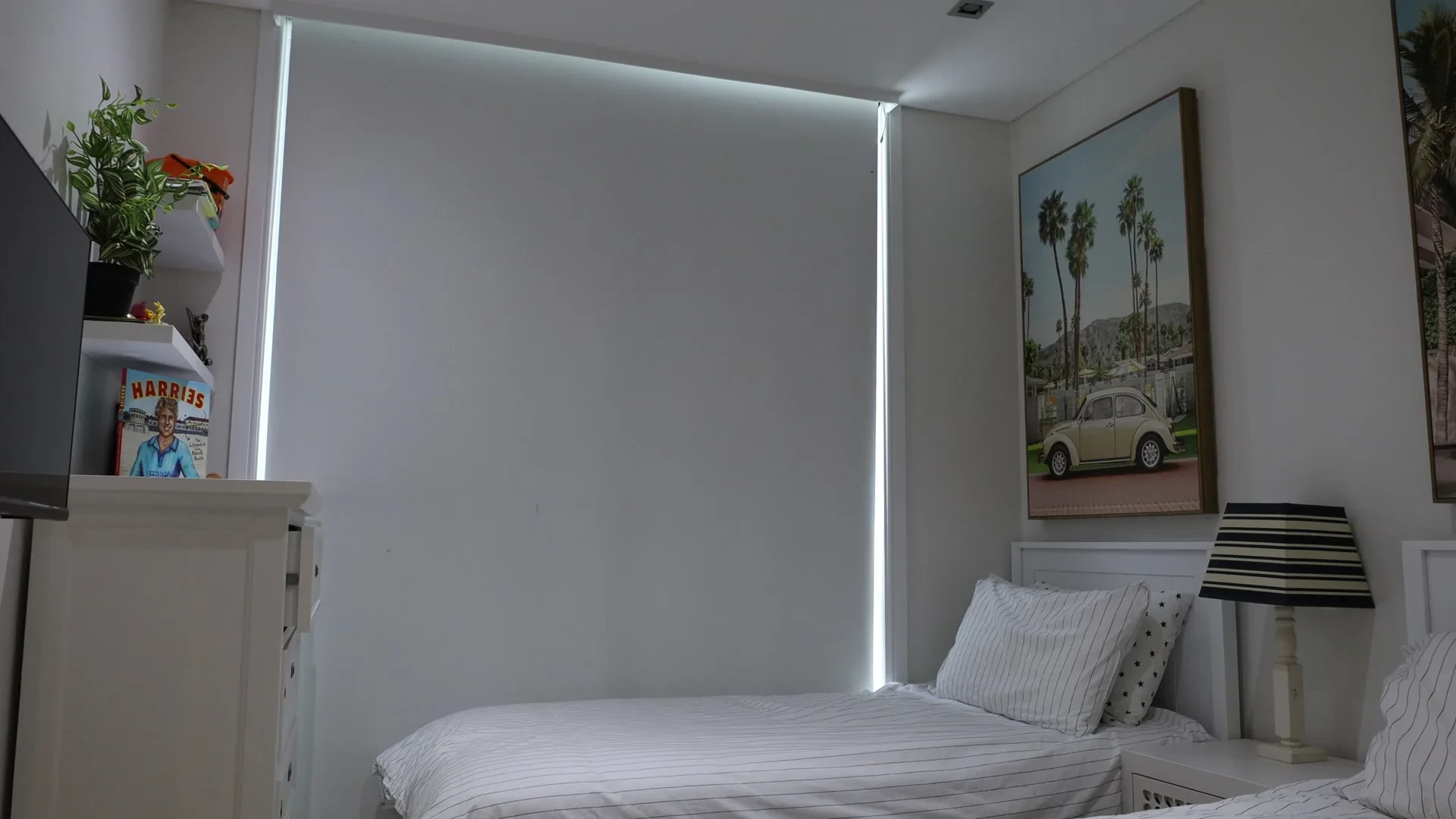
A blockout roller down in the kids' room at Harries and Emily's place in Bondi. The slim lines of light at the sides are what a recess fit leaves; a face fit would close them.
A single roller handles most domestic windows comfortably. As a blind gets very wide the fabric roll gets heavy and fat, the chain gets harder to pull, and a motor starts to make sense. Very wide openings — a three-metre slider, say — are often better as two blinds side by side, a panel glide or a vertical blind. Very narrow windows have a floor too: motors in particular need a minimum width to fit inside the tube, and the configurator will tell you if you're under it.
The configurator prices the blind live as you change size and fabric, so you'll see exactly what a bigger window or a different fabric family costs before you commit. A small blockout roller is the least expensive thing we make; a wide motorised sunscreen with a pelmet is the top of the roller range. Everything in between is a slider.
The short version is below; the full walkthrough of ordering online covers each step and what happens if something goes wrong.
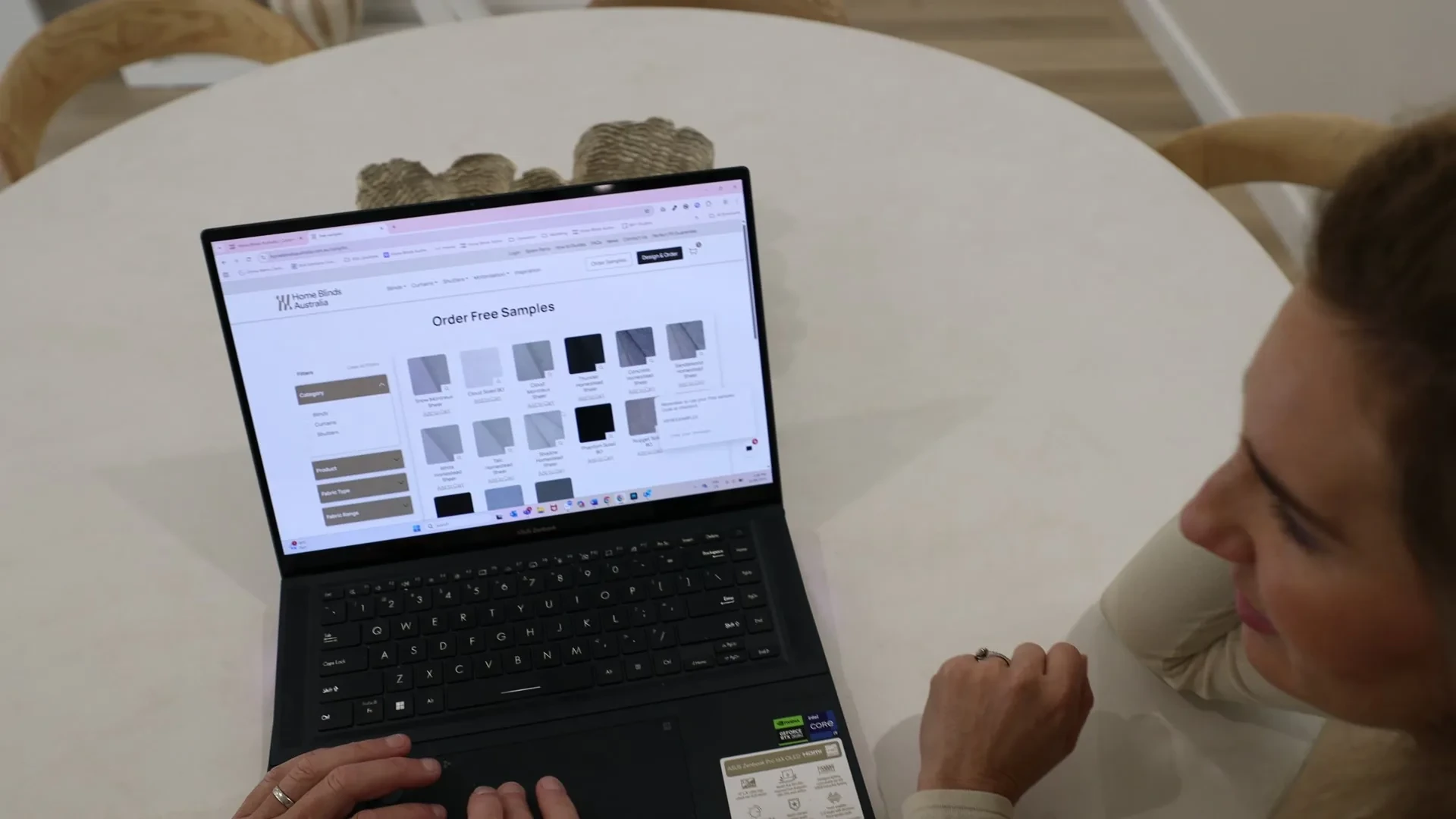
Emily ordering samples from the kitchen table. This is genuinely step one.
Dust it with a soft brush or the upholstery tool on the vacuum every few weeks. Spot-clean marks with a damp cloth and a little mild soap — don't soak the fabric, and don't use anything abrasive on a coated blockout. If a blind starts rolling unevenly, it's nearly always a bracket that's not level; loosen, re-level, tighten. Screen and coated fabrics wipe clean, which is why they go in kitchens and bathrooms. The care guide covers every fabric and product.
By fabric: blockout, light-filtering and sunscreen. By configuration: single, double (two blinds on one bracket) and motorised. Everything else — pelmets, chain colour, control side — is an option on one of those.
A blockout roller, face fitted with a pelmet, is the most cost-effective way to make a bedroom dark. Pick a darker colour if you want the least glow at the edges.
Face fit it so the fabric overlaps the window by about 50mm each side, and add a pelmet to close the gap over the top of the roll. A recess-fit blind will always leave a slim strip of light at each edge.
From outside, yes, when the lights are on inside. Sunscreen is a daytime privacy fabric. Use a blockout or light-filtering fabric, or a double roller, where night privacy matters.
Usually 10 to 15 working days from order, because every blind is made to your measurements in Australia. Delivery cost is calculated at checkout from your postcode.
No. Every wall is different, so we leave the fixings to you — timber screws into a stud or architrave, plugs for brick, hollow-wall anchors for plasterboard. The brackets and chain tensioner are included.
Pick the fabric, choose the fit, see the price as you go. Or start with free samples and hold them up to the window first. Made to measure in Australia, five-year warranty.
One email a month: new fabrics, install tips, the occasional honest before/after.
No spam, no daily-deal noise.

It’s never too early to consider window furnishings when you’re planning on renovating or building. Our expert team of design consultants can help create unique solutions and seamless designs and even quote directly off your house plans.





More Info
InspirationAbout UsContact UsOur ArticlesSuccess StoriesPerfect Fit GuaranteeDelivery InformationCustomer ReviewsFrequently Asked QuestionsGet in Touch
Address: Address example with unitsU 1/56 Sydney, Australia.
Email: hello@homeblindsaustralia.com.au
Phone: 1300 195 797
Address: 16 Bradwardine Road, Bathurst, NSW, Australia.
Email: hello@homeblindsaustralia.com.au
Phone: 1300 195 797
© Copyright Home Blinds Australia 2026. All Rights Reserved.
Payments Accepted:
